

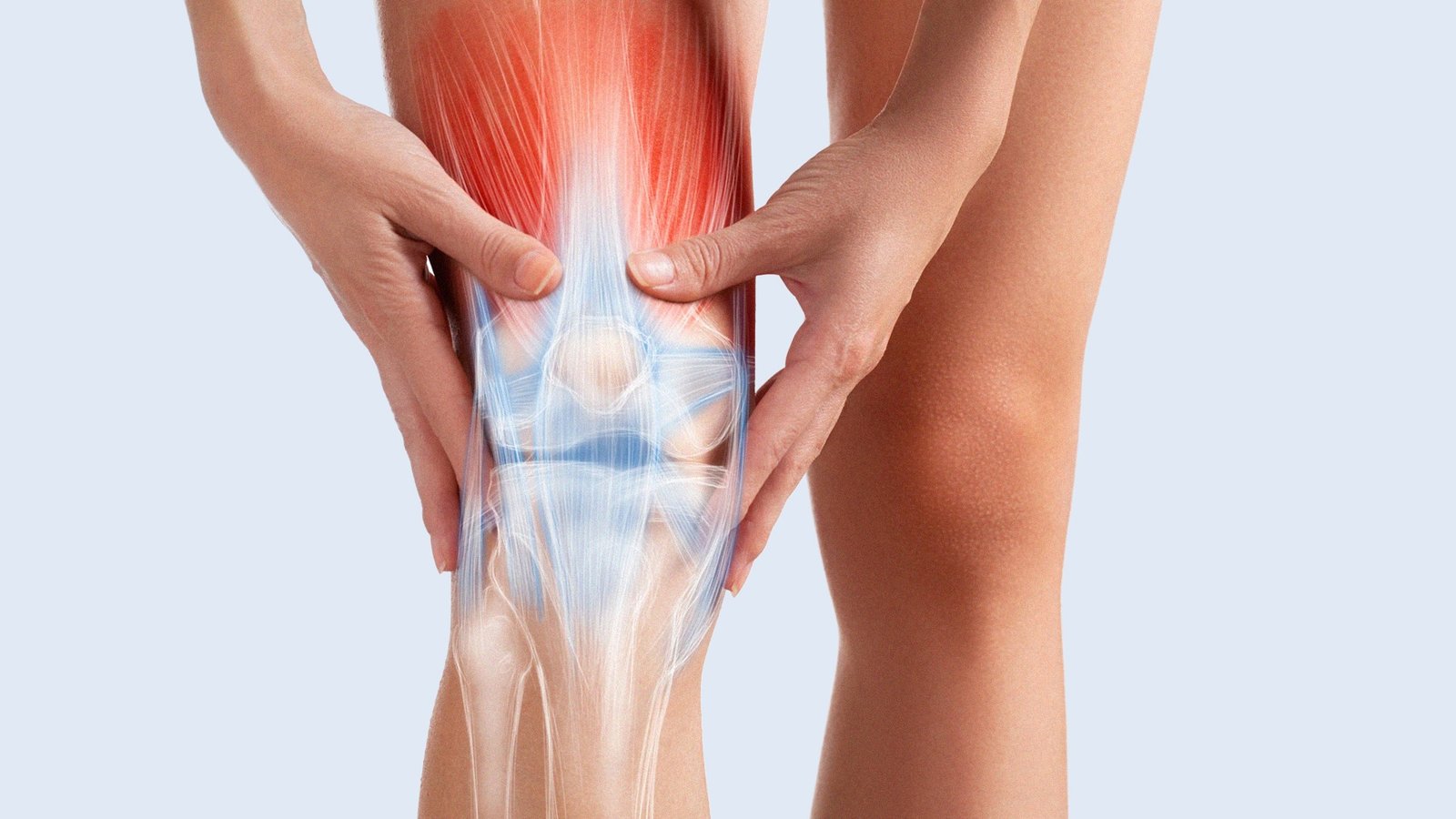
Knee osteoarthritis is amongst the most common and costly joint diseases globally. This has led to more treatment over the years, no longer limited to conventional exercise programs, but with more enhanced treatments like injections and regenerative therapy. But this has brought about confusion as well due to the increased number of treatment options.
The question patients and healthcare providers are posing nowadays is:
Is exercise still the most effective first-line treatment in 2026?
Recent statistics show that, despite the current trend in healthcare innovation, not all solutions are linked with long-term value. This points to a bigger issue in contemporary healthcare in terms of making the difference between data-driven results and over-hyped interventions in the treatment of knee joints in osteoarthritis.
We are convinced that in healthcare or business, the most important aspect of success is evidence-based decision-making, rather than trends at AMG Medical. This blog discusses what the recent studies have to say and why exercise remains a cornerstone in treatment strategies for osteoarthritis knee joints.
What is knee osteoarthritis?
Knee osteoarthritis occurs when cartilage in your knee joint is broken and the bones come into contact with each other. This friction is painful, and swelling occurs in the knee, resulting in stiffness. Osteoarthritis is a degenerative joint disease and a result of wear and tear. It is quite common, and the knee is one of the most affected joints due to long-term stress.
Your knee has osteoarthritis (OA), a long-term progressive condition that is incurable. Many treatments, including osteoarthritis of the knee joint treatment options, can help slow progression and manage symptoms. Lifestyle changes and physiotherapy exercises for knee osteoarthritis also play an important role in improving mobility. However, the condition may worsen over time and sometimes lead to disability, requiring continuous medical monitoring and possible surgical intervention.
Symptoms and Causes
Symptoms of osteoarthritis of the knee
The most common symptom of knee osteoarthritis is knee pain. You may have pain in your knee when you apply pressure on the knee, when you move, or even when you are seated. Other symptoms of OA in the knee are:
- Your knee feels stiff, especially after you first get up or you’ve been sitting for a long time.
- Your knee is puffy or bloated.
- You hear a cracking or grinding noise when you move your knee.
- Your knee is unsteady and is apt to give way or wobble.
- When you attempt to move it, your knee is stuck there or seems to be locked.
Knee osteoarthritis may cause the following complications:
As knee arthritis progresses, it can cause some additional negative side effects, including:
- Joint instability: The muscles that support your knees may weaken, so the joint is less stable as you begin using your knees less. This may influence your walking and increase your chances of injury.
- Bone spurs: Bony lumps called bone spurs may appear on your bones as a result of loss of cartilage in your joint and friction on your bones. These may lead to increased friction and irritation in your joint.
- Baker’s cyst: When a tear in the joint capsule causes the synovial membrane that lines the joint capsule to pop out of the tear, it traps joint fluid in the pop-out, creating a cyst behind your knee joint.
- Mood disorders: Being OA may increase your chances of anxiety and depression. New restrictions, mobility issues, and chronic pain may all play a role. These may also be aggravated by your mood.
What the Latest Evidence (2026) Actually Shows
Recent studies are still supporting the importance of exercise in the treatment of knee osteoarthritis. Exercise is the surest long-term remedy, even in the current osteoarthritis knee joint management strategies.
As pointed out in a 2026 evidence review on Medical Xpress, treatments such as injections (containing corticosteroids, hyaluronic acid, and PRP) can provide short-term benefits, but none of them provide strong long-term effects and joint repair, and exercise is always effective in the context of improving overall functioning and symptom management.
This is an important insight in today’s healthcare landscape. Innovation usually presents new alternatives but not necessarily new solutions. Most of the time, it just validates the usefulness of methods that have already been established to be useful. This confirms the need to use data and evidence instead of assumptions in making treatment decisions.
Comparing Modern Treatments: Hype vs. Long-Term Value
Injections and regenerative therapies are some of the contemporary treatments that are promoted as superior therapies. But they tend to be of temporary relief. Conversely, exercises for osteoarthritis knees continue to provide long-term gains in mobility and pain control.
Although PRP and stem cell treatments are trendy, their outcomes remain unreliable. Exercise is the best method in the treatment of knee joints in osteoarthritis because it has long-term benefits, since it is not costly or dangerous.
Why This Matters for Healthcare Providers
For clinicians and hospital decision-makers, these insights highlight the need to move beyond a “one-size-fits-all” approach.
Key implications include:
- Greater emphasis on personalized treatment plans
- Integration of multiple therapeutic strategies
- Increased focus on advanced clinical interventions when necessary
This shift reflects a broader trend in healthcare: prioritizing evidence-based, patient-specific care over generalized treatment protocols.
The Role of Precision in Orthopedic Care
As treatment approaches evolve, the importance of precision in orthopedic procedures and interventions becomes increasingly critical.
In cases where conservative treatments provide limited relief, healthcare providers may turn to:
- Minimally invasive procedures
- Joint preservation techniques
- Surgical interventions
In all such scenarios, the quality and reliability of surgical instruments directly impact:
- Procedural accuracy
- Patient safety
- Clinical outcomes
AMG Medical: Supporting Advanced Orthopedic Care
At AMG Medical, we understand that evolving clinical evidence demands equally advanced medical solutions.
Our orthopedic and surgical instruments are designed to:
- Deliver precision and control during procedures
- Support consistent and reliable outcomes
- Meet international quality and compliance standards
- Enable healthcare providers to adapt to modern treatment approaches
By focusing on quality, innovation, and global compliance, AMG Medical supports hospitals and surgical teams in delivering better patient care.
Opportunities for Healthcare Procurement & Distributors
As treatment strategies for knee osteoarthritis continue to evolve, procurement leaders and distributors must adapt to changing clinical demands.
This creates opportunities to:
- Source high-quality, precision-focused medical instruments
- Partner with reliable manufacturers aligned with global standards
- Support healthcare providers with advanced treatment solutions
- Expand into growing orthopedic and rehabilitation markets
Partnering with AMG Medical enables distributors to stay ahead in a rapidly evolving healthcare landscape.
Why Exercise Remains the First-Line Treatment
Exercise is a first-line treatment because it is proven to be effective, safe, and even available in 2026. It is also scientifically proven and modifiable by physiotherapy interventions on knee osteoarthritis, thus it can be used in the long term.
In practice, osteoarthritis knee exercises are cost-effective, scalable, and long-term. It is the reason why all modern osteoarthritis of the knee joint treatment guidelines revolve around exercise.
Final Thoughts:
So, is exercise still the first-line treatment for knee osteoarthritis in 2026?
Yes—but with an important shift.
While exercise remains essential, it is no longer seen as a standalone solution for every patient. Instead, it forms part of a broader, integrated treatment approach.
This reflects a larger truth:
The most effective solutions are not always the newest—but the ones that consistently deliver results.
This highlights an important lesson that extends beyond healthcare. Whether in medicine or business, the most effective solutions are not always the newest ones, but the ones that consistently deliver results. At AMG Medical, we believe in focusing on strategies that are backed by data, designed for scalability, and built for long-term impact. Structured physiotherapy exercises for knee osteoarthritis remain one of the most effective long-term solutions for managing the condition.
Conclusion
The latest evidence does not eliminate the role of exercise in managing knee osteoarthritis—but it does challenge its position as a universal first-line treatment.
Instead, the future of osteoarthritis care lies in:
- Integrated treatment approaches
- Personalized patient care
- Precision-driven medical solutions
For healthcare providers, procurement teams, and distributors, this shift represents both a challenge—and a significant opportunity to improve outcomes and deliver greater value.