


Overview
Hospitals and healthcare networks are facing additional pressure in the current healthcare environment to control costs while delivering the best patient care. Surgical procurement, especially, is critical in achieving both financial efficiency and clinical performance. This case study highlights how AMG Medical “Precision instruments. Trusted care. Global reach.” worked closely with Al Faisaliah Medical Center, a leading healthcare facility in Riyadh, Saudi Arabia, to optimize procurement processes without sacrificing quality.
Through a strategic sourcing and supply optimization approach, the hospital achieved a 20% reduction in procurement expenses while maintaining consistent access to high-quality, precision-driven surgical equipment and solutions.

Client Background
Dr. Khalid Al-Mutairi, Director of Surgical Operations at Al Faisaliah Medical Center, oversees procurement and operational efficiency across multiple surgical departments. As patient volumes increased and healthcare costs continued to rise, the hospital faced growing pressure to reduce procurement expenses while ensuring uninterrupted access to reliable surgical instruments for daily procedures.
The hospital required a trusted global partner capable of delivering certified products, scalable supply chain support, and long-term procurement efficiency without compromising clinical quality and surgical performance.
Challenges
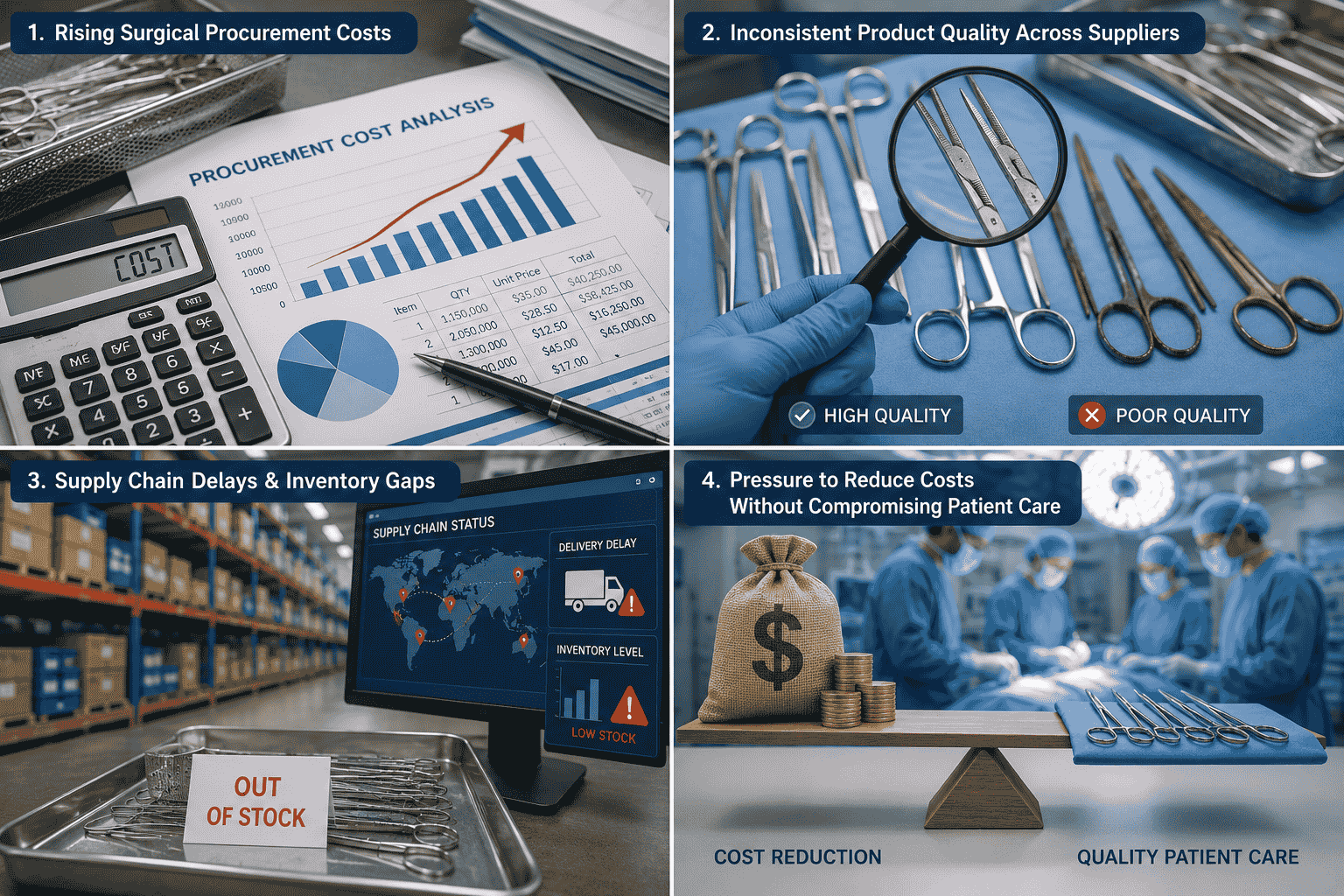
1. Rising Surgical Procurement Costs
The hospital’s fragmented procurement processes resulted in rising costs, varying prices, and sourcing from numerous vendors. Such increases in costs were impacting operating budgets and reducing the efficiency of the purchase process for other departments that used general surgical and specialty instruments.
2. Inconsistent Product Quality Across Suppliers
Working with multiple suppliers resulted in variations in product quality and performance. This inconsistency posed problems for surgical teams, which needed uniform, high-quality tools to perform precise surgeries and ensure reliable patient care.
3. Supply Chain Delays and Inventory Gaps
Because of the erratic delivery schedules and stock limitations, sometimes surgeries were delayed, and operational procedures were affected. The hospital required a more efficient procurement and distribution system so that the continuity of care and access to essential surgical instruments and supplies were maintained.
4. Pressure to Reduce Costs Without Compromising Patient Care
The main challenge was to deliver measurable cost savings without compromising the level of quality, reliability, and compliance that is expected in this modern surgical setting.
Strategic Approach
1. Consolidated Procurement Strategy
A streamlined procurement process was adopted by having the buying done through one trusted supplier. This decreased supplier fragmentation, ensured pricing consistency, and streamlined purchasing management for various surgical departments.
2. Introduction of High-Quality Precision Solutions
The hospital was equipped with precision-engineered instruments and surgical equipment that meet international standards, ISO and CE. These products performed well in a variety of surgical disciplines, were durable, and reliable.
3. Optimized Inventory & Supply Chain Management
To bring in a scalable supply chain solution, a 360-degree view of the inventory was created to avoid stock accumulation. This allowed for timely deliveries, prevented running out, and provided an efficient operation throughout the hospital network.
4. Long-Term Cost Efficiency Without Quality Trade-offs
The focus was not just on lowering prices in the immediate term, but also on increasing value over time by using longer-lasting instruments, which would decrease the need for replacement in the future and the maintenance costs. This approach enabled the hospital to keep quality standards and to control expenses.
Implementation Process
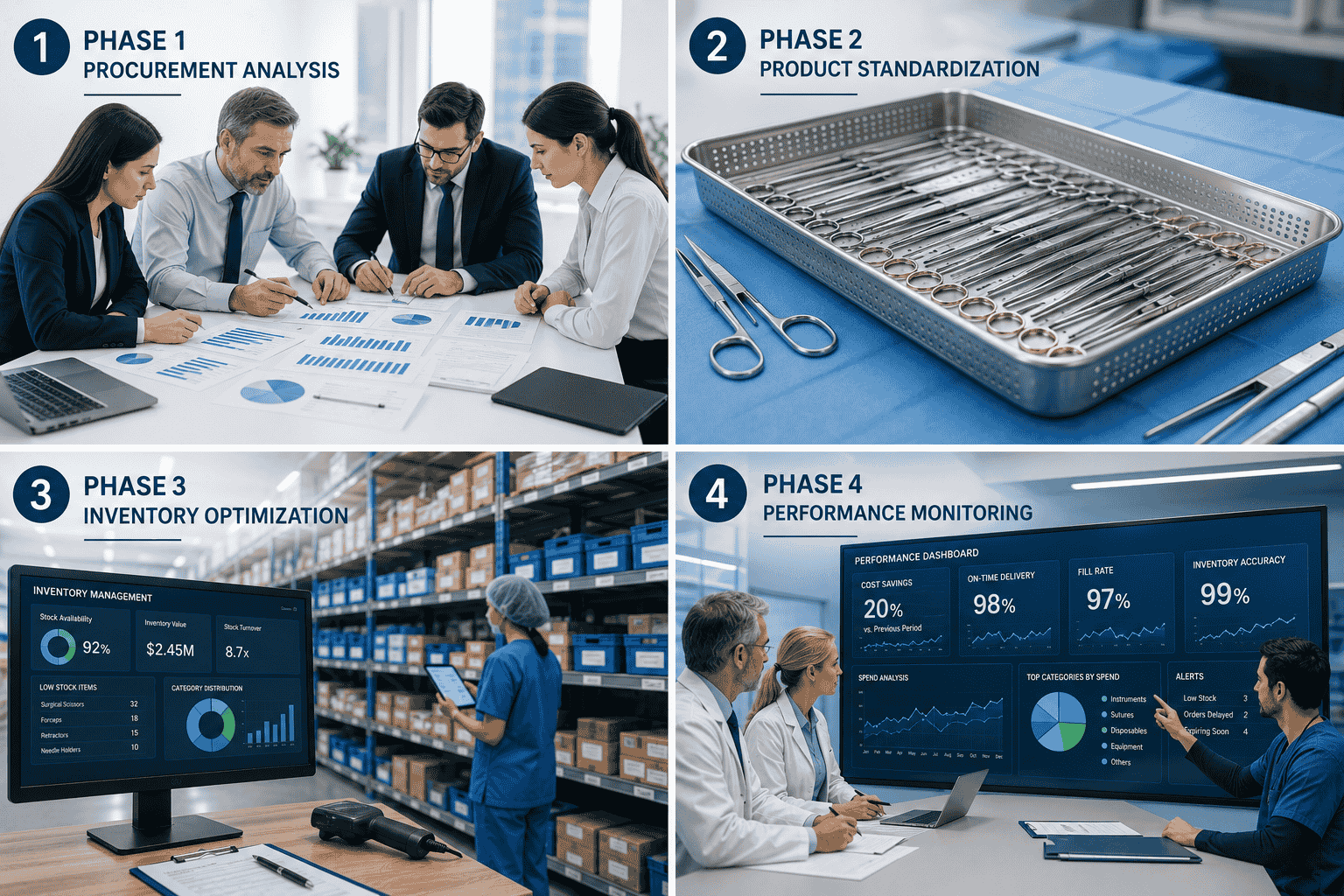
Phase 1: Procurement Analysis & Cost Assessment
The hospital’s procurement process, vendor organization, procurement patterns, and cost drivers were thoroughly analysed. This evaluation identified consolidation and optimization opportunities with suppliers.
Phase 2: Product Standardization & Supplier Integration
A standardised Instrument Set (IS) for general surgery was put in place to suit the clinical and operational requirements of the hospital. The switch was made gradually to preclude any disruption of surgical schedules.
Phase 3: Inventory Optimization & Supply Chain Alignment
The hospital’s inventory management process was optimized through improved forecasting, streamlined ordering systems, and reliable delivery scheduling. This reduced procurement inefficiencies and improved stock availability for critical procedures.
Phase 4: Performance Monitoring & Continuous Improvement
Continuous collaboration with procurement and surgical teams helped monitor cost savings, inventory efficiency, and product utilization. This performance-driven approach ensured sustainable long-term results and ongoing operational improvements.
Results & Impact
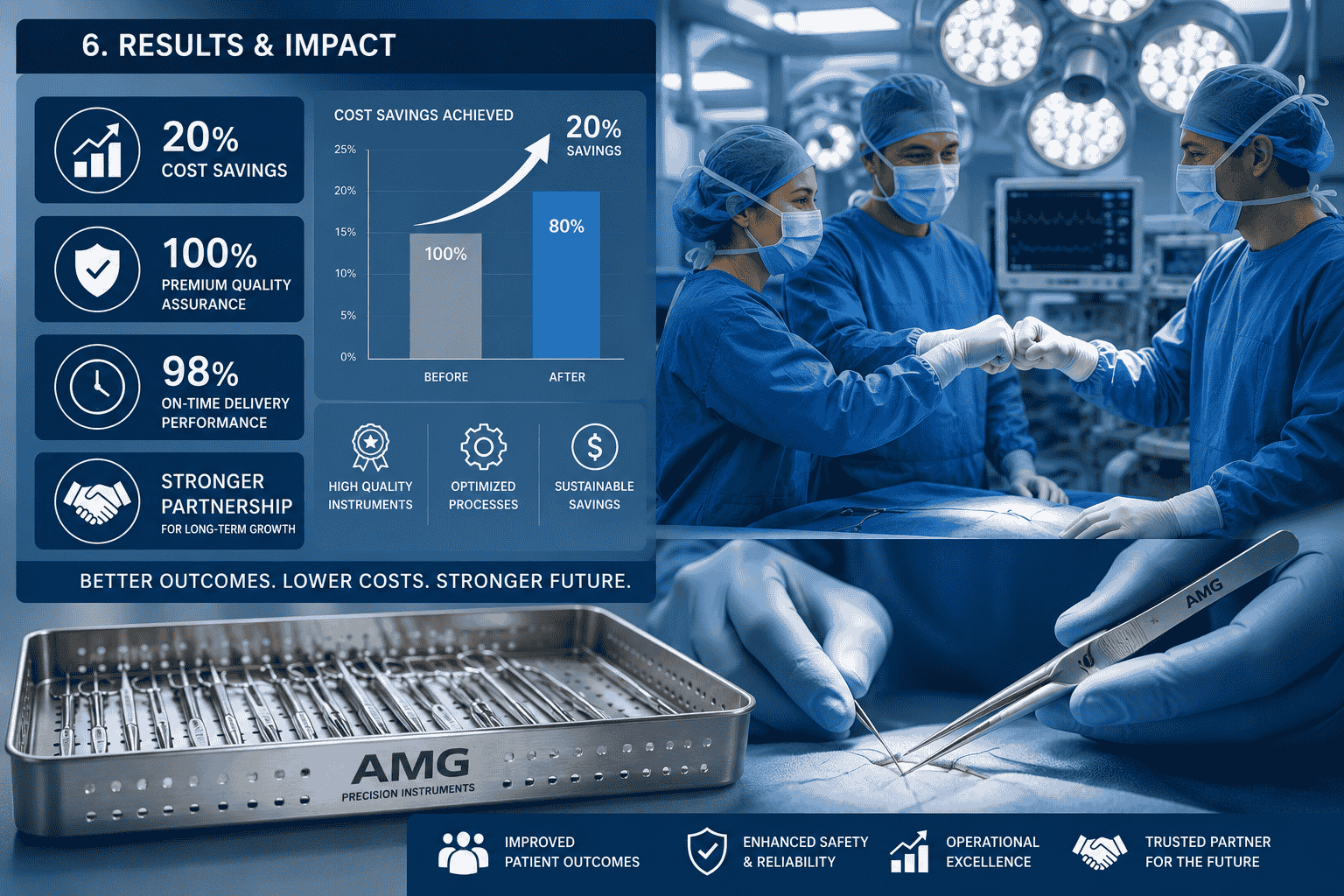
As part of this strategic procurement optimization initiative, Al Faisaliah Medical Center achieved a 20% reduction in procurement costs without compromising clinical performance or product quality. Standardized sourcing and improved inventory management significantly enhanced operational efficiency while reducing administrative complexity.
The adoption of high-quality surgical instrument solutions improved consistency across surgical departments, resulting in smoother workflows and increased confidence among medical teams. In addition, a reliable supply chain minimized delivery delays and inventory shortages, ensuring uninterrupted patient care and dependable access to critical surgical instruments and supplies.
These improvements further reinforced AMG’s medical reputation as a trusted surgical instruments manufacturer dedicated to delivering cost-effective, high-quality healthcare solutions worldwide.
Conclusion
This case study demonstrates how healthcare organizations can achieve meaningful cost savings while maintaining the highest standards of surgical quality and reliability. Through precision-engineered products, scalable procurement solutions, and trusted supply chain support, AMG Medical helps hospitals optimize operational efficiency without compromising patient outcomes.
As a trusted name among global surgical instrument manufacturers, AMG Medical continues to provide innovative, compliant, and cost-effective solutions designed to support healthcare providers across Saudi Arabia and international healthcare markets.