

Introduction
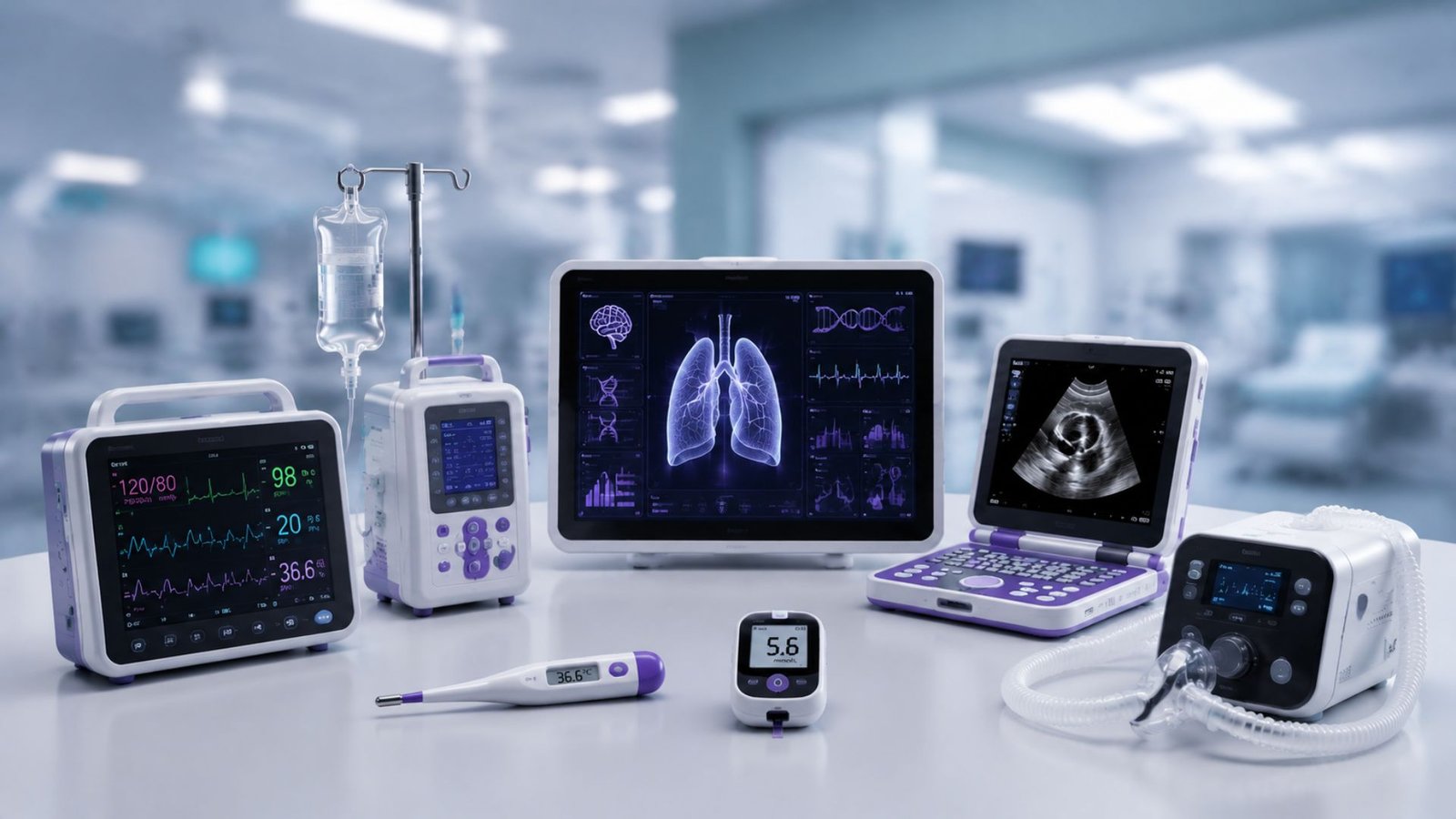
The field of healthcare is transforming like never before. Biomedical devices are essential tools for patient care, ranging from health monitoring devices that can be worn to cardiac devices used in the body, through high-tech diagnostic imaging systems to surgical platforms with robots. These innovations enable doctors and other health care providers to detect diseases earlier, to provide more targeted treatments, and to achieve better patient results in nearly every medical specialty.
The impact of biomedical technology is expanding in the world by a mile a minute. The increasing demand for advanced healthcare solutions has also led to a growing importance of biomedical device manufacturers for novel developments in technology that will enhance patient care globally. World Health Organization (WHO) states that medical devices play a vital role in the prevention, diagnosis, treatment, and rehabilitation of diseases and illnesses, and are a key element in the health care systems around the world. Moreover, market research shows that the global medical devices market is expected to reach USD 900 billion by the end of this decade thanks to technological advancements, an aging population, and the growing demand for personalized healthcare solutions. Healthcare is becoming more data-driven and patient-centric, and medical devices are key to creating the shift in healthcare delivery.
At AMG Medical, we understand the significance of quality biomedical technologies to improving the quality of healthcare delivery. Medical devices will continue to influence the future of medicine by promoting innovation, precision, and reliability.
What Are Biomedical Devices?
A tool, machine, implant, software system or technological solution that are used for the diagnosis, monitoring, prevention, treatment or management of medical conditions. These technologies are part of the engineering and medical field and involve biomedical science and/or engineering principles to improve human health.
Some are simple, such as thermometers and blood pressure monitors, others are more complex, such as MRI scanners, the robotic surgical platforms and pacemakers and wearable health monitoring technologies.
They are used across numerous healthcare settings, including:
- Hospitals
- Clinics
- Surgical centers
- Rehabilitation facilities
- Diagnostic laboratories
- Home healthcare environments
Types of Biomedical Devices
1. Biomedical Equipment
Biomedical equipment is the backbone of any healthcare organization, playing a vital role in patient care, clinical assessments, and diagnosis. They are the equipment that helps physicians and other medical practitioners deliver accurate care in hospitals, clinics and diagnostic centres in an efficient way.
Common Types of Biomedical Equipment:
- MRI Systems
- CT Scanners
- Ultrasound Machines
- X-Ray Systems
- ECG Machines
- Defibrillators
- Diagnostic Imaging Equipment
- Medical Diagnostic Instruments
- Hospital Diagnostic Equipment
Biomedical equipment technology can be used by the healthcare providers to identify the disease at an early stage, improve diagnosis and deliver improved evidence based treatment.
2. Monitoring Devices
Monitoring devices continuously track a patient’s physiological parameters and provide real-time clinical data. These devices are essential in critical care units, operating rooms, emergency departments, and home healthcare settings.
Common Types of Monitoring Devices:
- Patient Monitoring Systems
- Blood Pressure Monitors
- Pulse Oximeters
- Cardiac Monitoring Devices
- Temperature Monitoring Devices
- Home Health Monitors
- Multi-Parameter Monitors
- Wearable Health Monitoring Devices
By providing continuous data, monitoring devices support effective patient monitoring, allowing healthcare professionals to detect changes in patient conditions quickly and intervene when necessary.
3. Life Support Systems
Life support systems are designed to sustain vital body functions in critically ill patients. These devices are commonly used in intensive care units (ICUs), emergency care settings, and surgical environments.
Common Types of Life Support Systems:
- Ventilators
- Anesthesia Machines
- Respiratory Support Systems
- Oxygen Concentrators
- Nebulizers
- Critical Care Support Equipment
- Intensive Care Unit (ICU) Devices
- Emergency Life Support Equipment
These systems play a crucial role in maintaining respiratory and physiological stability while patients receive treatment and recover from serious medical conditions.
4. Therapeutic Devices
Therapeutic devices actively assist in the treatment, rehabilitation, and management of medical conditions. They help improve patient recovery, reduce symptoms, and enhance overall quality of life.
Common Types of Therapeutic Devices:
- Infusion Pumps
- Dialysis Machines
- TENS Therapy Units
- Pain Management Devices
- Deep Brain Stimulation Systems
- Rehabilitation Equipment
- Physical Therapy Devices
- Radiation Therapy Equipment
These therapeutic devices support healthcare providers in delivering targeted treatments while helping patients achieve better clinical outcomes and long-term health improvements.
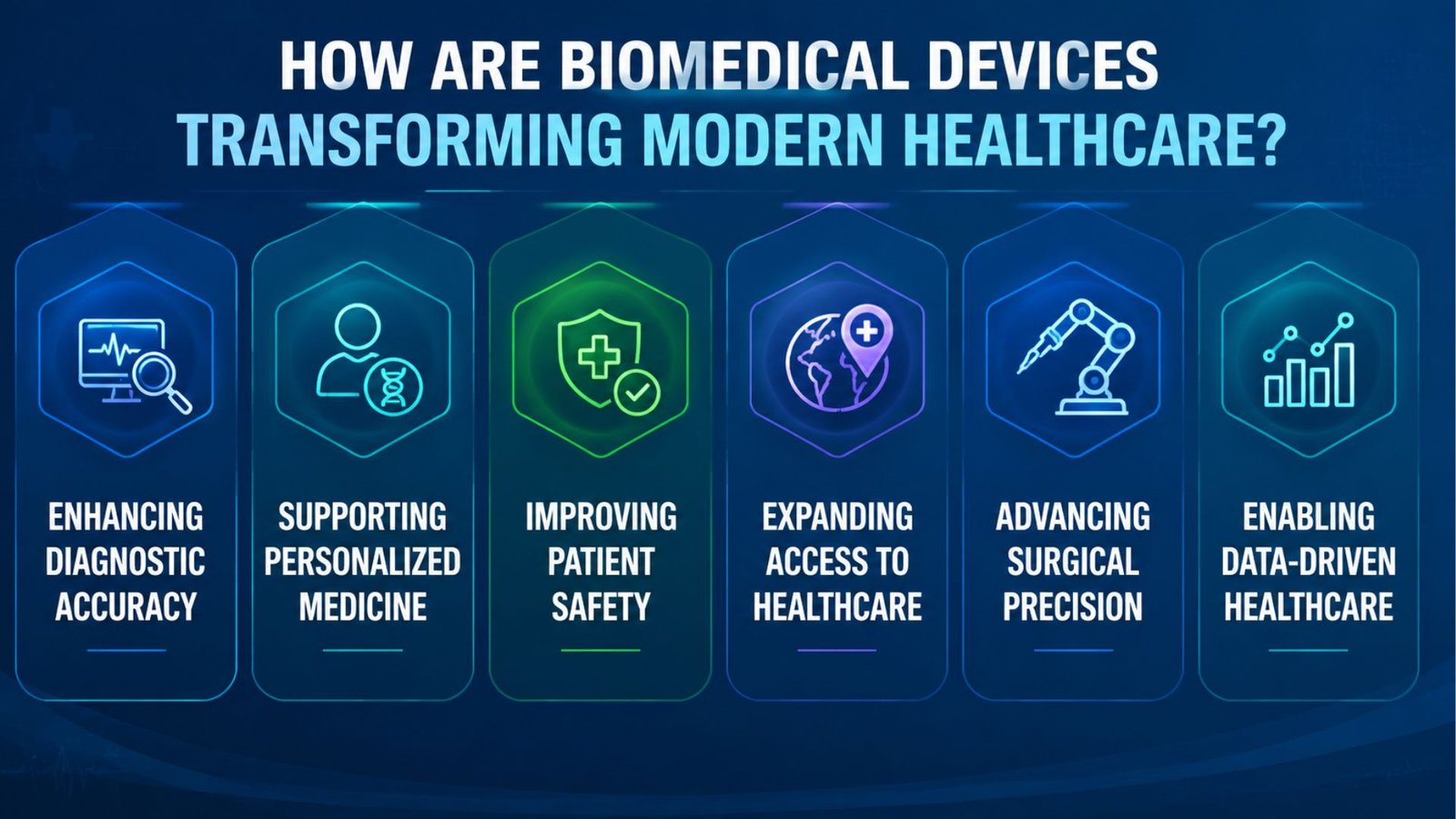
How Are Biomedical Devices Transforming Modern Healthcare?
Enhancing Diagnostic Accuracy
One of the most significant contributions of biomedical technology is its ability to improve diagnostic precision. Advanced imaging systems, laboratory technologies, and AI-assisted diagnostic tools help clinicians detect diseases earlier and more accurately.
Earlier diagnosis often results in better treatment outcomes and reduced healthcare costs.
Supporting Personalized Medicine
Modern healthcare is increasingly moving toward personalized treatment approaches.
Advanced medical technologies collect patient-specific data that enables clinicians to develop individualized treatment plans.
Wearable devices, remote monitoring technologies, and advanced diagnostic systems all contribute to more customized patient care.
Improving Patient Safety
Modern healthcare systems provide continuous monitoring and automated alerts that help healthcare professionals identify complications before they become critical.
Real-time data collection improves clinical decision-making and enhances patient safety throughout the care journey.
Expanding Access to Healthcare
Telemedicine platforms, remote monitoring devices, and portable diagnostic tools are making healthcare more accessible to patients in underserved and remote regions.
These technologies help bridge healthcare gaps while improving care delivery efficiency.
Advancing Surgical Precision
Modern surgical technologies have transformed operating rooms worldwide. Robotic systems, image-guided navigation, and minimally invasive technologies allow surgeons to perform procedures with greater precision and control.
This often leads to:
- Smaller incisions
- Reduced tissue trauma
- Faster recovery times
- Lower complication rates
- Improved surgical outcomes
Enabling Data-Driven Healthcare
Advancements in biomedical equipment tech are helping healthcare organizations improve operational efficiency and clinical decision-making through real-time data integration.
Healthcare organizations increasingly use this information to:
- Improve treatment protocols
- Monitor population health
- Predict patient risks
- Optimize healthcare resources
The integration of data analytics and biomedical technologies is creating smarter, more efficient healthcare systems.
Key Benefits of Biomedical Devices
The widespread adoption of advanced healthcare technologies offers numerous advantages, including:
- Improved diagnostic capabilities
- Enhanced treatment precision
- Better patient monitoring
- Increased healthcare efficiency
- Reduced hospital stays
- Greater patient engagement
- Enhanced clinical outcomes
- Improved quality of life
These benefits continue to drive investment and innovation throughout the healthcare industry.
Challenges and Future Opportunities
Despite their tremendous benefits, these medical technologies also present challenges related to:
- Regulatory compliance
- Data security and privacy
- Interoperability between systems
- Cost management
- Technology adoption
However, emerging innovations such as artificial intelligence, machine learning, and connected healthcare ecosystems are expected to further accelerate the evolution of biomedical technology in the coming years.
Future healthcare technologies will likely become increasingly intelligent, predictive, and personalized, helping healthcare providers deliver even more effective care.
Why Biomedical Innovation Matters to AMG Medical
At AMG Medical, we understand that healthcare advancements depend on reliable, high-performance technologies. Biomedical device manufacturers are helping redefine standards of care by improving accuracy, efficiency, and patient outcomes across diverse clinical environments.
Our commitment to quality, innovation, and healthcare excellence aligns with the growing demand for technologies that empower healthcare professionals and improve patient experiences.
Conclusion
Biomedical devices have become indispensable components of modern healthcare. From diagnosis and monitoring to treatment and rehabilitation, these technologies are transforming how healthcare is delivered around the world.
As innovation continues to accelerate, biomedical technology will play an even greater role in improving patient outcomes, supporting personalized medicine, and expanding access to high-quality healthcare. Healthcare organizations that embrace these technologies are better positioned to deliver safer, more efficient, and more effective care.
At AMG Medical, we remain committed to supporting healthcare biomedical innovation and advancing the future of patient-centered care through quality-driven medical solutions.
One Response