

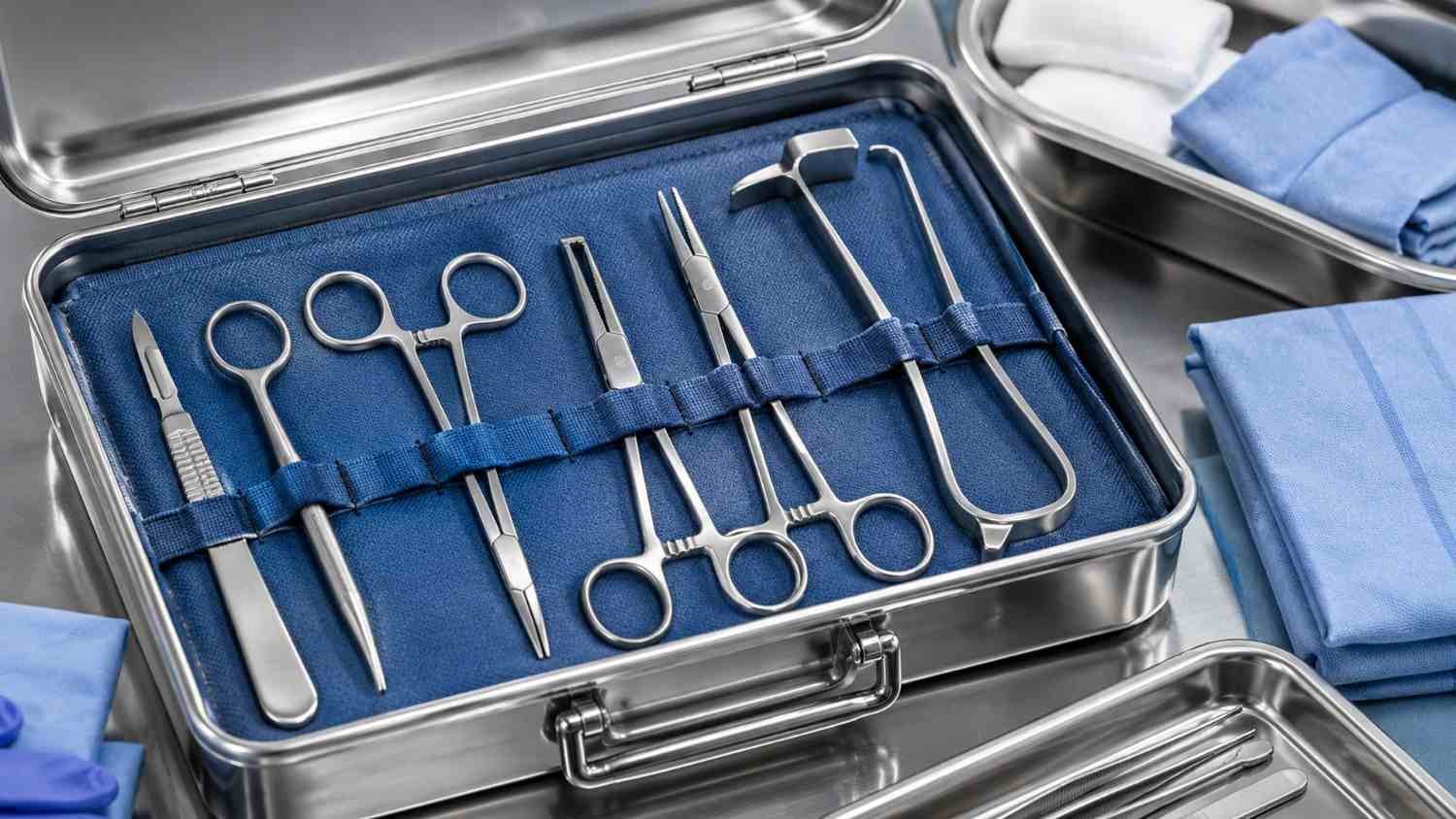
A surgical kit is an orderly array of instruments that aid in a particular surgical procedure. A well-prepared kit will not have just any old tools in it but will have tools of several types, such as cutting, grasping, clamping, retracting, dissecting, and suturing.
These instruments are crucial for novices who are starting their career in the healthcare profession so as to gain familiarity with the operating room. Every instrument has a distinct function, and understanding the function of each instrument aids in understanding how surgical teams prepare for and execute procedures.
Depending on a surgeon’s needs, specialty, type of surgery, and type of medical facility, the contents of a surgical kit may differ. A general surgery kit might be made up of basic cutting and grasping tools, and a specific surgery kit may be made up of instruments for ENT, orthopedic, gynecological, cardiovascular, or other approaches.
What Is a Surgical Kit?
A surgical kit consists of instruments that are used together in a specific surgical procedure or set of related procedures. Usually, instruments are arranged in an orderly fashion for easy identification and availability for surgical teams.
Depending on the use, a kit can include any of the following: reusable stainless-steel instruments and specialized devices, or procedure-specific parts. Reusable surgical equipment should be appropriately cleaned, inspected, sterilized, and prepared for use in accordance with the healthcare facility’s procedures and manufacturer’s guidelines.
In hospitals and surgical centers, well-prepared kits can aid in streamlining the preparation of operating rooms and ensure that the necessary equipment is ready for use when it is needed.
Why Surgical Kits Are Important in the Operating Room
A well-prepared surgical kit can help surgical teams to be organized and ensure that the necessary tools are ready when needed. Its importance includes:
- More Rapid Operating-Room Preparation: Supplies the instruments needed for a procedure efficiently prior to the actual procedure.
- Enhanced Instrument Organization: Maintains important surgical instruments in an orderly fashion for quick retrieval.
- Improved Workflow: Allows surgical teams to move smoothly between different stages of a procedure.
- Faster Procedure Time: The appropriate tools are available to reduce interruptions from missing tools.
- Organized Kits: Staff can easily identify and find specific instruments.
- Standardized Kits: This facilitates a more consistent preparation process when multiple procedures are performed using the same kit.
- Improved Team Coordination: Surgeons, nurses, and surgical assistants can now work more efficiently in a clear, organized way with the instruments.
Essential Categories of Surgical Instruments
Although surgical kits differ according to their purpose, most contain instruments that perform several fundamental functions. The knowledge of these categories will give a good overview of surgical instrumentation.
Cutting Instruments
Cutting instruments are used to slice open, sever, or cut sutures and other materials.
Scalpels
The scalpel is one of the most familiar surgical instruments. It is sharp, has a handle, and is mainly used for making accurate cuts through the skin and flesh.
Depending on the procedure and the type of incision that is needed, various shapes and sizes of blades can be used.
Surgical Scissors
Surgical scissors are used for cutting tissue, sutures, dressings, and materials. They come in various lengths, shapes, and tips.
Some kinds of scissors cut softer tissues, and others that will cut heavier materials.
Grasping and Holding Instruments
Grasping instruments are used by surgeons to hold, stabilize, manipulate, or move tissue or other materials during surgery.
Forceps
There are various types of forceps, such as toothed, smooth, straight, and curved forceps. There are a variety of designs for different levels of grip, and they are chosen based on the tissue or material being used.
Tissue Forceps
Tissue forceps are used to hold and move tissue. They have a jaw design that allows them to handle an object in a controlled way during surgery.
Dressing Forceps
Dressing forceps are typically used for dressings, gauze, and other materials. They may also be helpful in the preparatory and wound care processes.
Knowing the difference between the different types of forceps is crucial,l as using an unsuitable instrument could impact handling and surgical control.
Clamping and Hemostatic Instruments
Clamping instruments are used to temporarily secure tissues, vessels,s or other structures. Hemostatic instruments are of special significance when it comes to bleeding control during surgical procedures.
Hemostats
Hemostatic forceps or hemostats are forceps with jaws that use a locking device to keep them closed.
Various sizes and jaw shapes are offered for different applications. When used properly, the locking mechanism enables the surgical team to keep the pressure under control while the instrument is in place.
Artery Forceps
Artery forceps are another type of clamp that is often used for hemostasis. They have a design that enables them to grip blood vessels and tissues in a controlled manner during suitable procedures.
Retracting Instruments
Retractors are used to spread open any tissues away from the surgical field to allow the surgeon and assistant the best access and visibility.
Retractors may be:
- Handheld
- Self-retaining
- Fixed or adjustable
- It’s intended for particular body regions.
The choice of retractor will depend on the surgical location and the degree of exposure needed.
To the new user, it should be noted that retractors do not cut or hold tissue as forceps do. They are mostly used for providing exposure of the surgical site.
Suturing Instruments
Once a surgical procedure reaches the closure stage, specialized instruments are used to handle needles and sutures.
Needle Holders
Needle holders are used to hold a needle for suturing. Typically, they come with jaws that offer a controlled grip and handles that enable precise manipulation.
There are various types of needle holders for various procedures and needle sizes.
Suture Scissors
Suture scissors are a type of scissors used to cut sutures. They are configured so that the healthcare professional can efficiently cut suture material during or after the wound closure.
Probing and Dilating Instruments
The surgical kit may contain instruments for examining, exploring, or enlarging anatomical openings in a gentle manner.
Probes
A surgical probe is a thin instrument that may be used to investigate or inspect anatomical structures during some surgical procedures.
Dilators
Dilators are used to dilate an anatomical opening over a period of time, if necessary. They are used in the appropriate procedure and indication.
The instruments illustrate how variations exist in surgical kits, and not all surgical procedures are the same.
Suction Instruments
A clear surgical field is significant in a lot of operations. Suction instruments are used to suck blood, fluid, or other substances out of the operating field.
Different types of suction devices can be used in different procedures,d depending on the amount of fluid to be removed.
They are readily available for use to enhance visibility and maintain a more controlled surgical environment.
How Surgical Instruments Are Organized in a Kit
The organization of a surgical kit is an important part of operating-room preparation. The instruments are typically grouped based on the needs of the procedure and the surgical team’s workflow.
One common organisation is to cluster instruments by function, like:
- Cutting instruments
- Grasping instruments
- Clamping instruments
- Retractors
- Suturing instruments
- Suction instruments
- Procedure-specific tools
When it comes to operating field preparation, organized placement ensures a smooth process and efficient identification of instruments by trained personnel.
The specific sequence, however, should be in line with the health care facility’s protocol and the needs of the procedure.
How to Choose the Right Surgical Kit
When choosing a surgical kit, several factors, including the type of surgery, clinical needs, instrument quality, and the workflow of the healthcare facility,y need to be taken into account.
Consider the Procedure
First, the nature of the surgery for which the kit will be employed should be taken into account. Various combinations of instruments are required for different procedures.
Evaluate Instrument Quality
Good instruments should have suitable quality of material, precision, durability,y and reliable mechanical performance.
Check Sterilization Compatibility
Reusable instruments need to be compatible with the facility’s validated cleaning/sterilisation. Always adhere to the manufacturer’s instructions.
Consider Ergonomics
The weight, balance, grip, and handle of the instrument can affect usability,y particularly in long procedures.
Assess Long-Term Value
Aside from the initial purchase price, durability, maintenance, replacement, and total cost of ownership are factors to consider when dealing with healthcare facilities.
The Importance of Surgical Instrument Quality
The reliability and performance over time of these instruments may be influenced by the quality of the instruments within the kit. Durability is another important factor with surgical instruments that are repeatedly handled, cleaned, sterilized, and used in a clinical setting.
Many surgical tools that are reusable are made of medical-grade stainless steel, which is strong, resistant to corrosion, and can be sterilized when processed.
There is also a need for precision manufacturing. The instrument jaws, hinges, handles,s and locking mechanisms must operate properly and reliably.
As such, it is essential to compare manufacturers/suppliers when purchasing for a healthcare procurement team.
Cleaning, Sterilization and Maintenance
To ensure surgical instruments can be reused, they must be properly cared for. Instruments should be processed following accepted standard infection control procedures and manufacturer’s guidelines after use.
The most important maintenance activities are:
- Promptly sanitize after use
- Checking for damage or wear.
- Lubrication (if applicable)
- Validated sterilization
- Appropriate storage
Conducted instrument functionality assessments regularly.Carried out periodic instrument functionality assessments.
Corroded, cracked, misaligned, and mechanically damaged instruments should be assessed before returning to clinical use.
With good instrument maintenance, the useful life of a surgical kit can be extended, and instrument performance can be maintained.
Common Mistakes Beginners Should Avoid
Learning about surgical instruments involves more than memorizing their names. Beginners should also understand the importance of correct identification, handling, and processing.
Common mistakes include:
Confusing Similar Instruments
Many forceps and clamps look similar but serve different purposes. Beginners should learn to identify instruments based on their design and function.
Ignoring Instrument Condition
Damaged, misaligned, or worn instruments should not be treated as fully functional simply because they are part of a kit.
Overlooking Sterilization Requirements
Reusable instruments must be processed according to validated procedures and manufacturer instructions.
Focusing Only on Appearance
An instrument may look similar to another tool while having a completely different clinical purpose. Function and intended use are more important than appearance alone.
Surgical Kits for Different Medical Specialties
Not every surgical kit is designed for general surgery. Specialized healthcare departments may require instruments specifically developed for their procedures.
Examples include:
- General surgery kits
- ENT surgical kits
- Orthopedic instrument sets
- Gynecological surgical kits
- Cardiovascular instrument sets
- Ophthalmic surgical kits
- Neurosurgical instrument sets
The instruments included in each kit should correspond to the procedures and anatomical structures involved.
This specialization allows healthcare facilities to prepare more efficiently while ensuring surgical teams have access to appropriate instruments.
The Role of Reliable Surgical Instrument Suppliers
Healthcare organizations need dependable suppliers when purchasing surgical kits and individual instruments. Supplier selection can influence product quality, availability, delivery performance, and long-term procurement efficiency.
When evaluating a supplier, healthcare facilities should consider:
- Manufacturing quality
- Product consistency
- Regulatory compliance
- Instrument availability
- Delivery reliability
- Customer support
- Product documentation
- Long-term supply capabilities
Working with an experienced supplier can help hospitals establish standardized instrument portfolios and maintain more consistent procurement practices.
How AMG Medical Supports Healthcare Organizations
AMG Medical supports hospitals, surgical centers, healthcare providers, and medical distributors with surgical and medical equipment designed to meet the requirements of modern healthcare environments.
For healthcare procurement teams, access to reliable surgical instruments is important for maintaining operating-room readiness and supporting consistent clinical workflows. Product quality, manufacturing standards, durability, and dependable supply all contribute to long-term procurement value.
By focusing on quality and reliable medical supply solutions, AMG Medical helps healthcare organizations source surgical products that align with their clinical and operational requirements.
Conclusion
A surgical kit is more than a collection of medical tools. Each instrument has a specific function, and the combination of cutting, grasping, clamping, retracting, suturing, and other instruments allows surgical teams to perform procedures in an organized and controlled manner.
For beginners, understanding the basic categories and purposes of surgical instruments provides an important foundation for learning about operating-room practices. For healthcare facilities, selecting high-quality instruments and maintaining them properly can support reliability, efficiency, and long-term value.
The ideal surgical kit depends on the procedure, clinical requirements, instrument quality, sterilization processes, and the healthcare facility’s established protocols. By selecting appropriate instruments and working with reliable suppliers, healthcare organizations can build surgical kits that support the needs of modern clinical teams.
Faqs
What is included in a basic surgical kit?
A basic surgical kit may include cutting instruments, forceps, clamps, retractors, needle holders, scissors, and other instruments depending on the intended procedure.
What is the most important instrument in a surgical kit?
There is no single most important instrument because each tool serves a different purpose. The appropriate instruments depend on the type of surgical procedure being performed.
Are all surgical kits the same?
No. Surgical kits are generally prepared according to the specific procedure, medical specialty, clinical requirements, and preferences of the healthcare facility or surgical team.
How should reusable surgical instruments be maintained?
Reusable instruments should be cleaned, inspected, sterilized, and stored according to the healthcare facility’s validated procedures and the manufacturer’s instructions.
Why is instrument quality important?
High-quality instruments can provide more consistent performance, durability, and reliable handling during repeated clinical use, supporting both surgical workflows and long-term procurement value.