

Client Overview
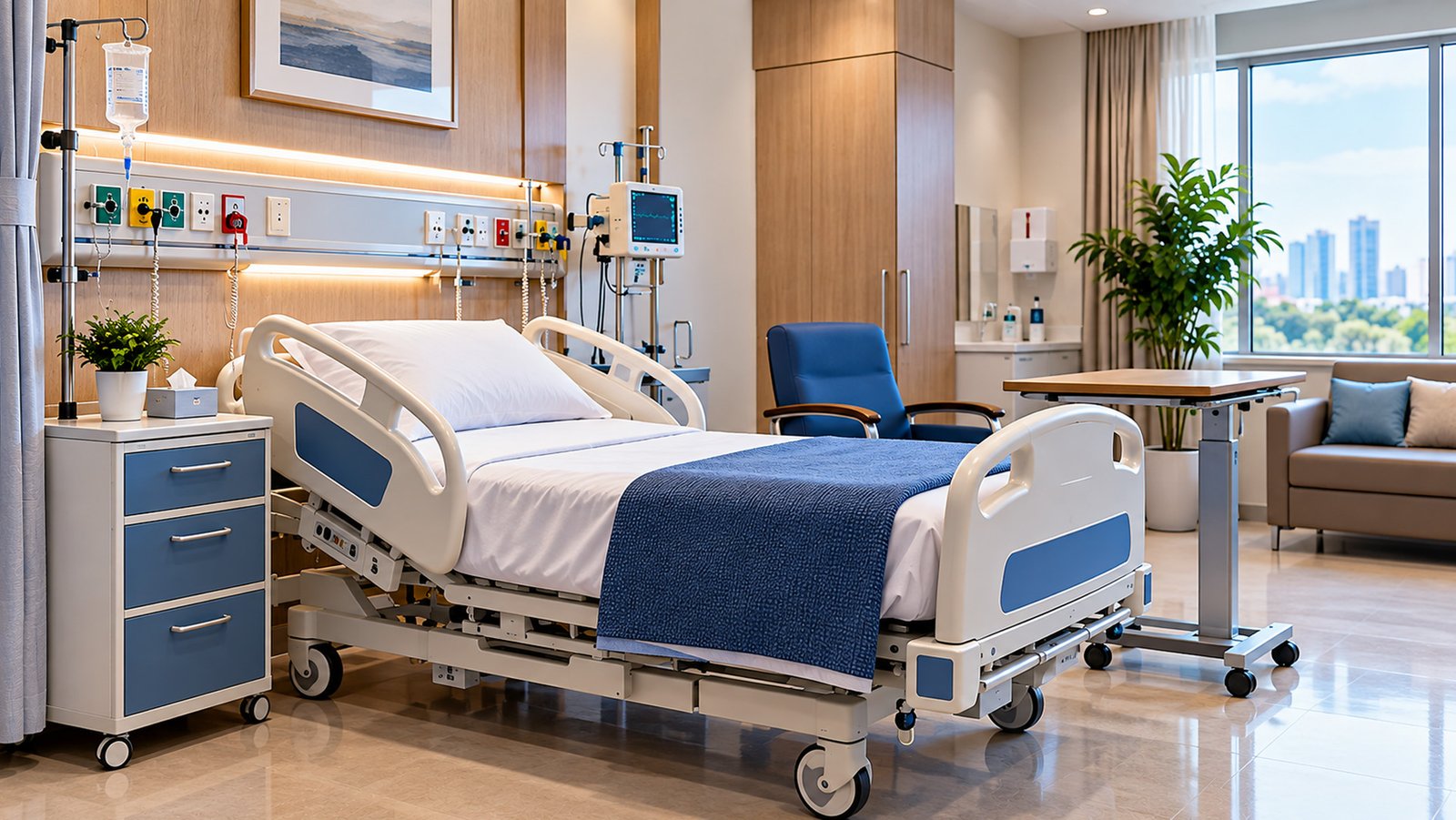
The Procurement & Administration Department of a Confidential Multi-Specialty Hospital in Pakistan was upgrading the furniture in its patient-care and clinical areas. The department wanted one dependable supplier who could provide furniture that holds up under daily use, keeps patients comfortable, helps staff work smoothly, and stays easy to clean.
The project covered patient rooms, examination areas, treatment spaces, and other clinical departments. The Confidential Multi-Specialty Hospital did not want to just place an order and hope for the best. It wanted help with choosing the right products, setting clear specifications, and planning delivery so that everything was ready for use. Since furniture works alongside other hospital equipment in these areas, it had to fit the way each department operates.
The Challenge
Over time, the hospital had bought furniture from different sources. Designs, sizes, build quality, and materials did not match, so patient areas looked and worked differently from one room to the next. Some pieces were also worn out from years of constant use.
Replacing items one by one would not have solved the problem. It would have led to mismatched layouts, repeated purchases, and more disruption for staff and patients.
The Procurement & Administration Department was looking for hospital furniture suppliers in Pakistan who could meet a few practical needs: durability, hygiene, patient comfort, and easy maintenance. It preferred a partner that understood how products are built, much like a hospital furniture manufacturer would, rather than a general trader. On top of that, every department had different requirements, and the changeover had to happen while the hospital kept running normally.
Our Solution
We started by sitting down with the Procurement & Administration Department to understand what the hospital had, what it needed, and which areas were the priority. We looked at the condition of the existing furniture, how each department used it, and where replacement mattered most.
From there, we matched furniture types to different clinical and patient-care areas. As with most hospital equipment decisions, one choice affects many departments, so we checked every product for how it is built, how well it works in daily use, how long it lasts, and how easy it is to clean.
Our goal was not just to swap old furniture for new. We wanted the Confidential Multi-Specialty Hospital to end up with a consistent setup that would keep working for it in the long run.
How We Chose the Right Products
Choosing furniture for a hospital is not the same as buying it for an office or a hotel. Hospitality furniture manufacturers design mainly for looks and guest comfort, while a hospital needs furniture made for clinical use. Together with the Procurement & Administration Department, we looked at:
- Size of the furniture and the space available
- Patient comfort and ease of access
- Strength and durability of the structure
- Surface materials and how easy they are to clean
- What each department actually needs
- Maintenance and long-term use
- How well the furniture fits the existing layout
Hospitals often deal with several hospital medical equipment suppliers at the same time, and this is how mismatched products build up. Working from one plan helped avoid that.
This also helped the hospital look beyond the purchase price. The decision was based on how well each item would work in a real hospital over time.
How the Project Worked
 Step 1: Understanding the hospital’s needs
 Step 1: Understanding the hospital’s needs
We began with discussions between the hospital’s Procurement & Administration Department and our supply team to identify priority areas. We reviewed the condition of the current furniture, what each department needed, and how daily operations would be affected. This gave us a clear plan for what to replace or upgrade first.
Step 2: Turning needs into specifications
We converted those requirements into clear product specifications. Patient rooms, examination areas, treatment spaces, and administrative areas were handled separately because each one needs something different. Every product was checked for durability, ease of use, build quality, maintenance, and suitability for regular hospital use. This is also where furniture from hospitality furniture manufacturers falls short, because it is built for hotels and not for constant clinical use.
Step 3: Organized supply
After the specifications were finalized, we coordinated supply according to the hospital’s priorities. Keeping everything under one plan made purchasing simpler and delivery better organized, including hospital medical supplies and equipment that had to arrive alongside the furniture. We also made sure hospital operations were not interrupted while new furniture was coming in.
Step 4: Delivery and setup in the hospital
Delivery was planned around the hospital’s schedule. Products were prepared for their intended areas so the team at the Confidential Multi-Specialty Hospital could place them in their workflows and patient-care spaces without confusion. Throughout this stage, our focus was to cause as little disruption as possible.
Results
The Confidential Multi-Specialty Hospital now has more consistent and better-functioning furniture across its priority areas. Because supply was coordinated through one plan instead of many different sources, the mismatch in furniture has been reduced.
Furniture was chosen according to what each department really needed, not with a one-size-fits-all approach. This made things easier for staff and more comfortable and practical for patients.
For the Procurement & Administration Department, the process also brought clarity. It now has clear specifications to refer to, a better understanding of what to buy, and a standard to follow when other areas need upgrading. The same approach can guide future purchases of hospital equipment as well.
Key Outcomes
- More consistent furniture across the hospital
- Furniture that better matches each department’s needs
- More organized procurement and supply
- Stronger focus on durability and long-term use
- Better comfort for patients and easier work for staff
- Easier cleaning and maintenance
- Less variation between furniture in different departments
- A clear, structured approach for future furniture purchases
Key Takeaway
Choosing among hospital furniture suppliers in Pakistan takes more than comparing products and prices. Furniture and other hospital equipment are used all day, every day, so they have to be practical for staff, comfortable for patients, and easy to look after for years.
By starting with a proper assessment, choosing products against clear specifications, and coordinating the supply carefully, AMG Medical helped the Procurement & Administration Department of the Confidential Multi-Specialty Hospital improve its furniture while keeping clinical work and daily operations the top priority.
This project also shows why it helps to work with a partner who understands healthcare environments, whether you are comparing a hospital furniture manufacturer or hospital medical equipment suppliers, and who can match products to a hospital’s long-term needs.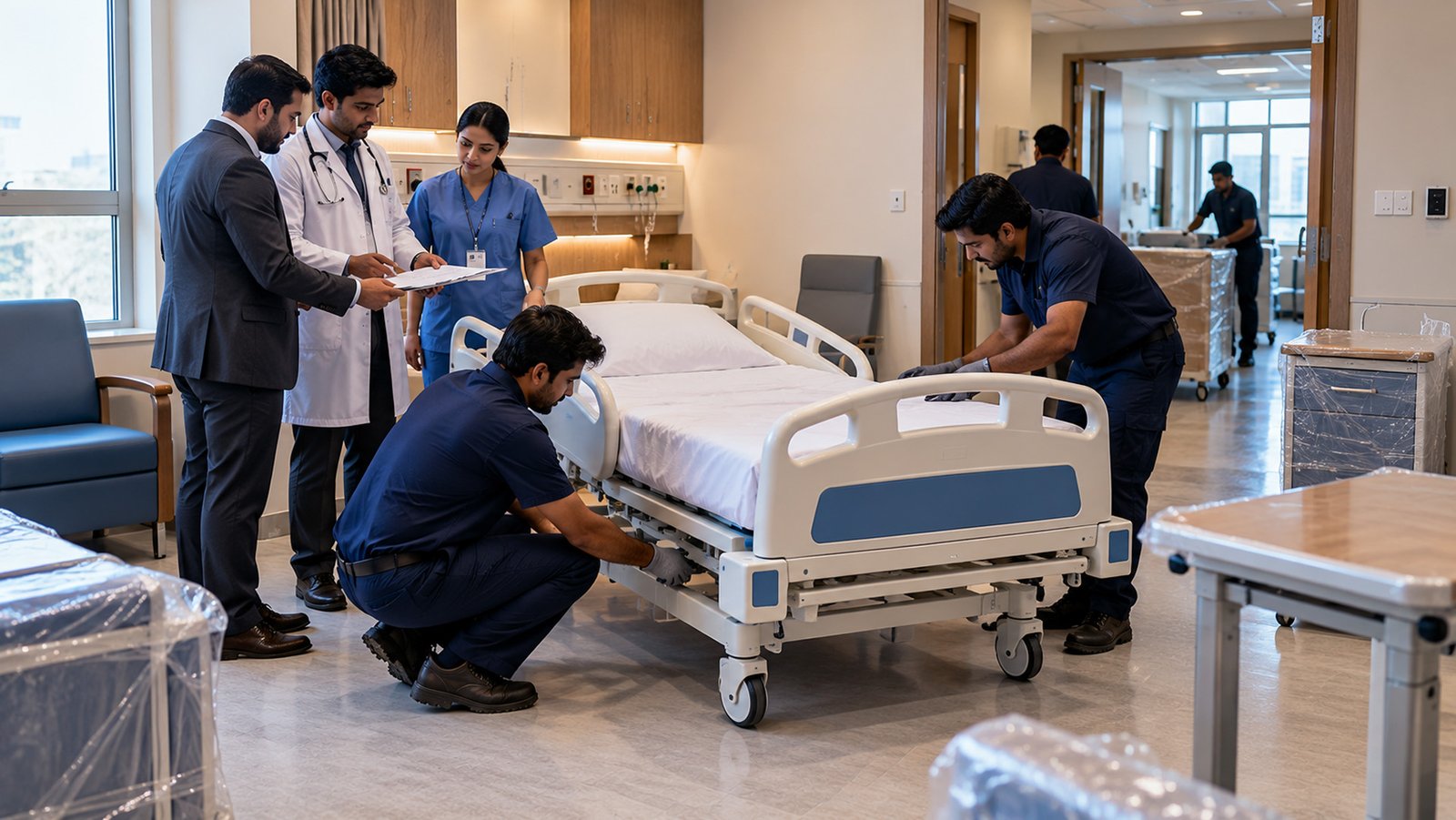
One Response