

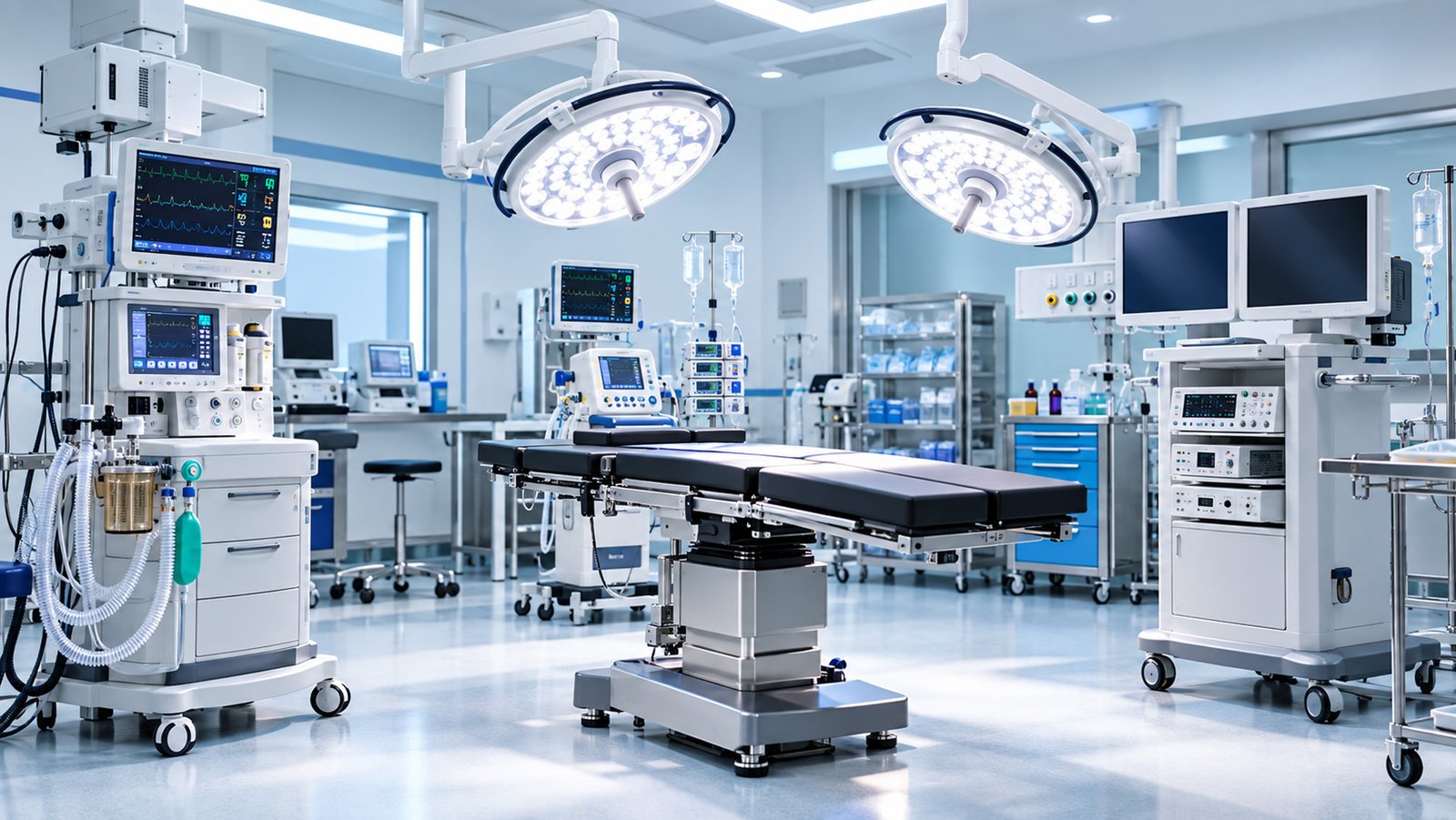
Medical technology is vital to modern healthcare. Healthcare facilities such as hospitals, clinics, laboratories, and rehabilitation centers need biomedical equipment that can aid in accurate diagnosis, effective treatment, patient monitoring, and routine work.
However, supplier selection is a key aspect of healthcare procurement in Pakistan, particularly for biomedical and medical equipment. Healthcare organizations require a product that provides quality, functionality, durability, and the right technical specifications.
AMG Medical is a healthcare supply business, dedicated to the delivery of medical and surgical solutions to healthcare organisations and distribution partners. It offers a range of products across various healthcare segments, meeting the requirements of healthcare providers and buyers in Pakistan and the global pharmaceutical industry.
What Is Biomedical Equipment?
Biomedical equipment is medical technologies and systems that help in patient monitoring, diagnosis, treatment, rehabilitation, and care. These products combine medical information, engineering, and technology to assist healthcare professionals in clinical settings.
The biomedical equipment list may differ significantly between facilities of varying types and sizes. A general hospital might need a variety of equipment, and a specialized clinic or diagnostic center may need more specific equipment.
Some typical categories are:
- Diagnostic equipment
- Patient monitoring equipment
- Life-support systems
- Therapeutic equipment
- Rehabilitation equipment
- Laboratory equipment
- Hospital equipment
- Surgical equipment
- Patient-care equipment
The selection is dependent upon the clinical services being provided, the patient needs, the infrastructure available, and the procurement goals of the facility.
Biomedical Equipment List for Healthcare Facilities
Healthcare entities can start their biomedical devices list by determining their true clinical and operational needs.
For a hospital, this equipment could include equipment for emergency care, intensive care, diagnostics, surgery, rehabilitation, and general patient care. Technical and operational requirements vary for each department.
When hiring a procurement team, they should take into account:
- Intended clinical application
- Equipment specifications
- Required capacity
- Ability to integrate with current systems; interoperability with current systems.
- Ease of operation
- Maintenance requirements
- Product durability
- Applicable regulatory requirements
- Availability of technical support
A needs-based procurement process can minimise the waste of extra resources in healthcare facilities.
Medical Instruments and Biomedical Technology
Biomedical Technology is just a single facet of a contemporary healthcare setting. Medical equipment plays a vital role in the field of healthcare, helping doctors to examine, diagnose, and treat patients and conduct surgeries.
Medical instruments include simple examining devices to elaborate surgical devices. Their accuracy, material, usefulness, and durability can affect the effectiveness of any clinical techniques.
That is why it’s crucial to consider the Biomedical Technology and medical instruments to be used, the standards required for the medical instruments, the reliability of the suppliers, and the instrument value for your long-term use.
Why Quality Matters in Biomedical Devices
Healthcare equipment is typically required to operate in challenging environments and must be reliable. Equipment can be used for long periods of time, cleaned many times, or used several times by various HCWs.
Therefore, changes to biomedical devices should be evaluated in terms of:
- Product quality
- Technical specifications
- Safety considerations
- Reliability
- Intended application
- Ease of maintenance
- Support by the manufacturer or supplier.
- Regulatory requirements
Don’t choose a product because it is cheaper to buy when you first start using it. The lifespan, maintenance needs, and appropriateness for the clinical setting should also be taken into account when considering its use in healthcare organizations.
Understanding the Role of Medical Equipment Manufacturers
Healthcare procurement teams typically do a lot of research on suppliers and medical equipment manufacturers when deciding on a healthcare technology purchase. But it is not the only criterion to decide if a supplier is suitable.
Healthcare buyers should consider:
Product Quality
Equipment should be suitable to the purpose, application, and expected life of the facility.
Technical Documentation
Specifications and product documentation enable procurement and technical stakeholders to make informed decisions.
Compliance
As appropriate to the product and target market, relevant certifications, registrations, and regulations should be considered.
Supply Capability
A reliable supplier should be able to control product availability, orders, and delivery expectations.
Support
Maintenance information, spare parts, technical assistance, and after-sales support become important during the equipment’s lifecycle.
Biomedical Engineering Equipment for Modern Healthcare
Biomedical engineering plays a critical role in healthcare technology management. In this field, engineers and technical teams are responsible for the selection, installation, maintenance, performance assessment, safety, and lifecycle management of medical equipment.
Therefore, a biomedical engineering equipment list should not only include the equipment necessary for clinical use, but also the technical requirements to properly manage this equipment:
Installation Requirements: Sourcing the installation to ensure that equipment is correctly installed based on the manufacturer’s specifications and facility requirements.
Calibration: Regular calibration is needed to ensure equipment accuracy and reliability.
Preventive Maintenance: Scheduled maintenance to detect potential problems and extend the life of the equipment.
Equipment Testing: Regular testing of equipment to check the function, safety, and performance of the equipment.
Technical Training: Providing relevant training for healthcare and technical staff to ensure that they can operate equipment correctly.
Spare Parts: Making sure vital replacement parts are on hand when needed for maintenance or repair.
Service Arrangements: Defining secure technical support and servicing services in the life cycle of the product.
Replacement Planning: Planning for improvement or replacement of equipment at the end of its useful life.
Taking these factors into account when purchasing biomedical technology can facilitate the efficient management and operation of technology at health care facilities for long-term reliability.
Quality and Compliance in Healthcare Equipment
When purchasing medical technology, quality and regulatory compliance must be taken into consideration. Depending on the product type, use, and destination market, requirements may differ.
When purchasing healthcare equipment, you should check the standards and documentation of the equipment you are interested in. Certifications should not be considered a substitute for technical specifications and product suitability, but should be evaluated in context.
A quality-driven supply approach is based on the correct product, documentation, and the sourced, inspected, and controlled supply of products.
AMG Medical’s Healthcare Supply Approach
AMG Medical provides healthcare organizations and distribution partners with a wide selection of medical and surgical products. It is also used for the development and manufacture of surgical instruments, diagnostic equipment, biomedical instruments, life support equipment, therapeutic equipment, rehabilitation equipment, and hospital equipment.
The company’s focus is on quality, reliability, and international healthcare supply. Its mission, “Precision instruments. Trusted care. Global reach.”, is a reflection of its mission to help healthcare professionals and organizations in various markets.
Healthcare procurement teams can benefit from this kind of supplier relationship if equipment needs are not just a one-time purchase, but ongoing equipment supply, product consistency, and effective communication.
Building a Better Biomedical Procurement Strategy
By using a structured procurement strategy, healthcare organizations can make sure that they are getting the right equipment for their needs.
The following are examples of a practical process:
Identify Clinical Requirements
Identify equipment needs, such as the departments, procedures, and healthcare services that need equipment.
Define Technical Specifications
Set up the needed functionality, capacity, compatibility, and operating requirements.
Evaluate Suppliers
Evaluate product quality, documentation, supply capacity, support, and experience.
Review Compliance
Determine the Standards and regulatory requirements that apply to a range of products and target markets.
Consider Lifecycle Costs
Rethink the upfront cost and maintenance, spare parts, servicing, and replacement needs.
Plan future needs
When choosing equipment, healthcare facilities need to ask themselves if the equipment they purchase can accommodate the growth or changes in clinical services.
Biomedical Equipment for Hospitals and Clinics
For large hospitals, you’re likely to need a wide range of equipment in various departments, but for smaller healthcare facilities, you might need a more selective list.
For instance, a hospital might need the latest monitoring, diagnostic, life support, surgical, and rehabilitation equipment. The main business of a clinic can be primarily examination and diagnostic equipment, monitoring equipment, and patient-care equipment.
That’s why no single equipment package is suitable for all health care facilities. The procurement process always needs to be driven by the clinical and operational needs of the organization.
The Importance of Reliable Medical Instruments
In addition to large biomedical systems, healthcare establishments need reliable instruments for their medical and surgical operations.
Quality medical instruments should be made or supplied to meet the appropriate quality requirements for the intended use. All of these elements can affect their long-term usability: material selection, precision, ergonomics, durability, maintenance.
Therefore, healthcare organizations need to consider instruments within the context of their clinical supply strategy, and not as stand-alone purchases.
Supporting Healthcare Procurement in Pakistan
Healthcare companies in Pakistan consist of hospitals, clinics, diagnostic centers, laboratories, distributors, and special healthcare institutions that have varying procurement needs.
This is because healthcare buyers might have a need for a different mix of products, technical information, documentation, and delivery arrangements, which a supplier serving this market must be aware of.
Therefore, when choosing a supplier, it is important to take into account the product as well as the supplier’s capacity to provide full service for the procurement process.
Final Thoughts
Reliable biomedical equipment is an essential part of modern healthcare infrastructure. Each category has a particular role to play in patient care, ranging from diagnosis and monitoring to therapeutic, rehabilitation, and life support.
Healthcare organizations should evaluate the quality, technical specifications, applications, compliance, upkeep, reliability of the supplier, and the usefulness of the biomedical instrument when reviewing a biomedical equipment list.
By implementing a well-defined procurement plan, hospitals, clinics, and healthcare organizations can choose equipment that will meet the needs and requirements of their clinical teams.
AMG Medical provides Healthcare organizations and healthcare providers with a wide range of medical products at various price points, enabling them to identify and procure reliable medical solutions in Pakistan and the international market with a quality healthcare supply approach.
FAQs
What should be included in a biomedical engineering equipment list?
It can include clinical equipment as well as equipment-related requirements such as calibration, testing, maintenance, servicing, technical support, and lifecycle management.
How should hospitals select biomedical devices?
Hospitals should consider intended use, technical specifications, quality, applicable regulatory requirements, maintenance needs, supplier reliability, documentation, and long-term operating costs.
What should I look for in medical equipment manufacturers?
Healthcare buyers should evaluate product quality, technical documentation, compliance, supply capability, product range, maintenance support, and experience in the relevant healthcare market.
Why are medical instruments important?
Medical instruments are used for examination, diagnosis, treatment, and surgical procedures. Their quality, precision, durability, and suitability for the intended application are important considerations during procurement.
Why is supplier selection important for biomedical equipment?
A reliable supplier can support consistent product quality, documentation, availability, delivery, technical information, and ongoing equipment requirements.
Does AMG Medical supply biomedical equipment in Pakistan?
Yes. AMG Medical’s healthcare product portfolio includes biomedical and medical equipment alongside surgical instruments and other healthcare solutions, serving healthcare organizations and distribution partners in Pakistan and international markets.