

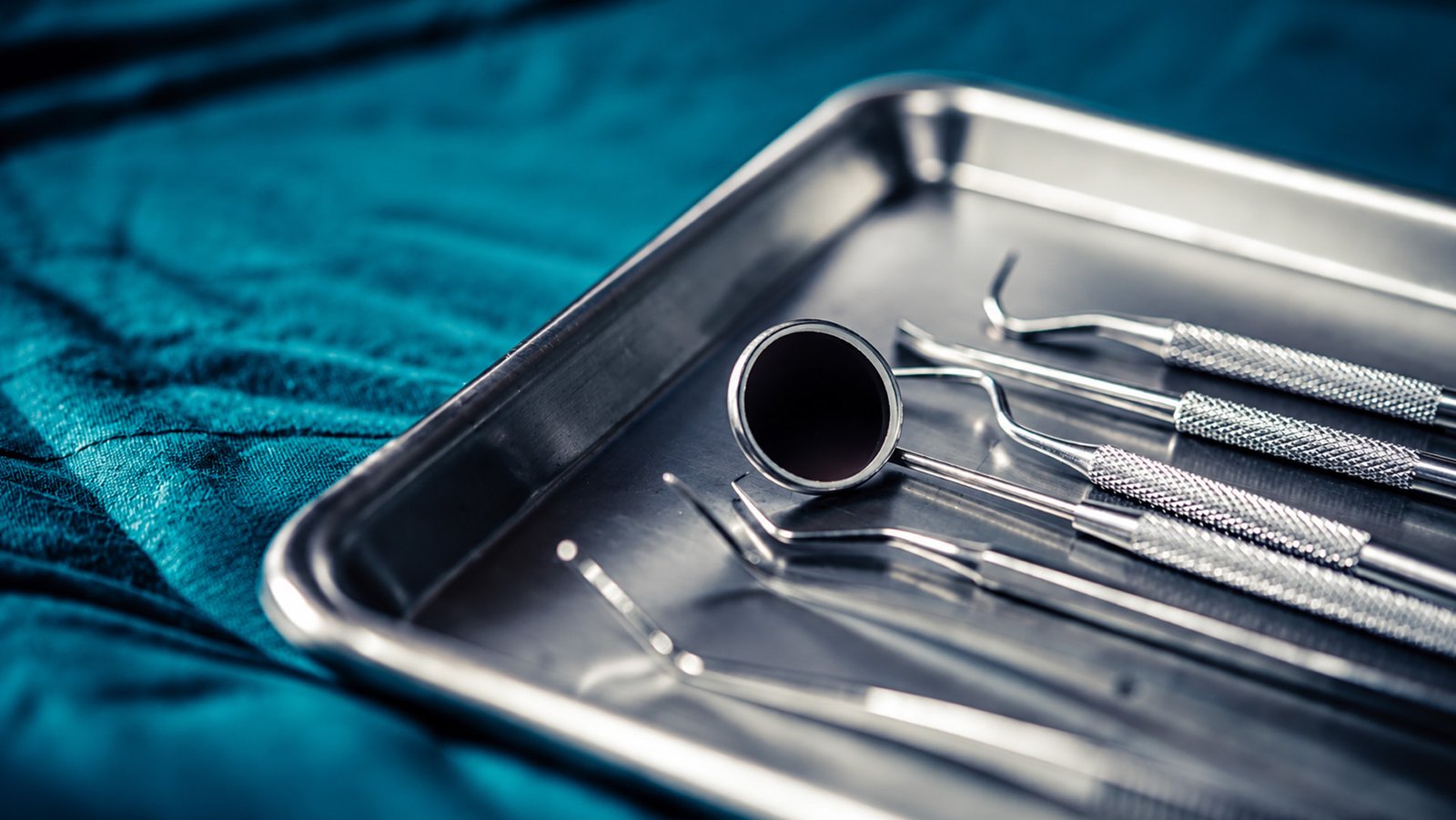
Dental instruments may look small, but their role in clinical care requires exceptional accuracy, durability, and consistency. From diagnostic examinations and extractions to restorative procedures and oral surgery, dental professionals depend on instruments that provide reliable handling and precise performance.
Pakistan has developed a strong reputation in surgical and dental instrument manufacturing, with dental instrument manufacturers concentrated particularly in Sialkot. According to the Trade Development Authority of Pakistan, Sialkot has a long-established surgical manufacturing cluster covering surgical, dental, and veterinary instruments, with a large share of production directed toward international markets.
But what actually goes into producing a high-quality dental instrument?
The answer involves much more than shaping stainless steel. Material selection, forging, machining, finishing, polishing, alignment, inspection, ergonomics, and quality control all contribute to the final product.
Why Pakistan Is a Global Hub for Precision Instruments
Most of this expertise is concentrated in Sialkot, a city in Punjab known for precision steelwork for over a century. Today, dental instruments manufacturers in Sialkot pair skilled artisans with CNC machining, laser marking, and in-house testing labs. This is why buyers in Europe, North America, and the Middle East who search for dental instruments manufacturers in Pakistan are so often led to the same industrial cluster.
Choosing the Right Raw Material
Quality begins with the steel. Reputable workshops use medical-grade stainless steel, commonly grades 304, 316, and the hardenable 420 series, chosen for strength, edge retention,n and corrosion resistance. Forceps, elevators, scalers, and other dental surgical instruments are exposed to blood, saliva, and repeated autoclave cycles, so weak or impure steel is simply not acceptable. Incoming material is checked against mill certificates, and sample testing confirms its chemical composition before a single tool is cut.
Forging and CNC Machining
Drop forging shapes heated steel into rough blanks with a dense grain structure, which is stronger than a part that is only cut from a bar. CNC machines then bring each blank to exact dimensions, with tolerances measured in hundredths of a millimetre. Jaws, serrations, hinges, and box-locks are milled, so they fit together without play.
Heat Treatment and Hand Finishing
Heat treatment hardens the steel, and tempering gives it the flexibility to avoid snapping under pressure. After that, skilled finishers grind, align, and polish each piece by hand. They check that tips meet perfectly, ratchets lock smoothly,y and scissors cut cleanly along their full length. Complex surgical and dental instruments still depend on this human touch, which is hard to automate and remains a key reason Pakistani tools are respected worldwide.
Surface Finishing and Passivation
Polishing, satin, and matte finishing give tools their final look and feel. A matte surface on dental surgical instruments reduces glare under bright operatory lights. Passivation then removes free iron from the surface and builds a protective oxide layer, which improves resistance to rust and staining.
Testing, Certification and Traceability
Quality is verified, not assumed. Factories working to ISO 13485 and CE requirements, and many with FDA registration, inspect at every stage. Typical checks include:
- Hardness testing (Rockwell scale)
- Corrosion and autoclave-cycle testing
- Dimensional checks with gauges and profile projectors
- Functional testing of hinges, locks and cutting edges
Every batch of surgical and dental instruments is traceable by lot number, so any issue can be tracked back to the material and process that produced it.
Cleaning, Packaging and Customisation
Finished tools are ultrasonically cleaned, dried, and packed to prevent scratches and moisture damage during shipping. Many exporters of dental instruments in Pakistan now also offer private labelling, laser-etched logos, and custom kits for clinics and distributors.
How Dental Instruments Are Made for Consistent Quality
The manufacturing process can vary depending on the instrument, material, design, and intended application. However, quality-focused production generally follows a controlled sequence.
Material Selection
The starting material has a major influence on instrument performance.
Stainless steel is widely used for reusable medical and dental instruments because it can provide strength, durability, corrosion resistance, and compatibility with appropriate sterilization processes.
Manufacturers need to select material according to the requirements of the specific instrument rather than treating all instruments as identical.
Material specifications can influence:
- Strength
- Hardness
- Flexibility
- Corrosion resistance
- Edge retention
- Surface quality
- Long-term durability
Forging and Forming
For many instruments, the initial shape is created through forging or forming.
This stage establishes the basic geometry of the instrument. Proper control is important because dimensional inconsistencies at the early stage can create problems later during machining and finishing.
Experienced dental instrument manufacturers in Pakistan may combine established craftsmanship with controlled production methods to achieve the required shape and strength.
Precision Machining
Some instruments require additional machining to achieve accurate dimensions and functional features.
Depending on the design, machining may be used for:
- Handles
- Working ends
- Joints
- Serrations
- Grooves
- Cutting edges
- Fine structural details
Modern machining can improve repeatability, while skilled technicians remain important for specialized finishing and detailed inspection.
Heat Treatment
Certain instruments require controlled heat-treatment processes to achieve appropriate mechanical properties.
The objective is to obtain the required balance of hardness, strength, flexibility, and durability for the instrument’s intended use.
Incorrect processing can affect performance, which is why manufacturing controls and process specifications are important.
Grinding and Polishing
Grinding removes unwanted material and refines the instrument’s shape. Polishing then improves the surface finish.
For dental instruments, surface quality is important for both functionality and maintenance. Rough or inconsistent surfaces may create unnecessary cleaning challenges or affect handling.
A carefully controlled finishing process helps produce a smoother and more consistent instrument.
What Buyers Should Look for in a Manufacturer
Choosing a manufacturer should involve more than comparing prices.
Healthcare procurement teams and distributors should evaluate:
Manufacturing Capability
Ask whether the manufacturer has the equipment, workforce, production processes, and capacity required for the desired instrument range.
Quality Management
Review the manufacturer’s quality system and request relevant documentation and certifications. Certification scope should always be verified against the actual products and manufacturing activities.
Material Specifications
Understand what materials are used and whether the material specification is appropriate for the intended application.
Product Consistency
Ask how the manufacturer maintains consistency between samples, production batches, and repeat orders.
Inspection Procedures
A reliable manufacturing process should include appropriate inspections for dimensions, finish, function, and other product-specific requirements.
Export Experience
International buyers should also consider the manufacturer’s experience with export documentation, packaging, labeling, logistics, and destination-market requirements.
Customization
For distributors and healthcare brands, OEM and private-label capabilities can be important when customized designs, branding, packaging, or instrument sets are required.
Case Study: Cutting Return Rates for a European Distributor
Background: A mid-sized exporter of dental instruments, Sialkot, supplied a distributor in Germany. After the first few shipments, about 6% of items were returned because of loose box-lock joints and uneven surface finishes.
Challenge: The distributor was close to switching suppliers. The exporter needed to fix consistency without raising prices significantly.
Solution: The manufacturer made four changes:
- Moved box-lock milling from manual to CNC machines
- Introduced hardness testing on every batch
- Added a three-stage inspection (in-process, pre-finishing, and final)
- Trained its finishing team on a standard checklist and validated passivation quality
Result: Within nine months, the return rate fell from 6% to under 0.5%. Repeat orders rose by roughly 40%, and the distributor signed a long-term supply agreement.
The lesson is simple: consistent quality comes from systems and discipline, not from one-time inspections.
What Buyers Should Look For
When evaluating suppliers, check for:
- ISO 13485, CE, and FDA credentials
- Material certificates for the steel used
- Sample approval before bulk orders
- Batch traceability and a clear return policy
- Willingness to support OEM or private-label requirements
If possible, audit the factory in person. Visiting dental instruments manufacturers in Sialkot lets you see their machines, testing lab,b and finishing floor first-hand.
How AMG Medical Supports Healthcare Buyers
AMG Medical works with hospitals, healthcare buyers, distributors, and other professional healthcare organizations seeking dependable medical and surgical products.
Its portfolio includes surgical instruments across specialties, including dental instruments, while its broader supply model supports product sourcing, documentation, procurement coordination, and global distribution.
For buyers evaluating dental instruments, whether from Sialkot suppliers or broader international sourcing options, the focus should remain on product quality, manufacturing capability, documentation, consistency, and supply reliability.
This buyer-focused approach helps healthcare organizations evaluate instruments based on their actual clinical and operational requirements.
Final Thoughts
High-quality dental instruments are the result of multiple controlled processes working together. Material selection, forging, machining, heat treatment, grinding, polishing, inspection, and final quality checks all contribute to the precision of the finished product.
Pakistan’s long-established surgical manufacturing ecosystem, particularly in Sialkot, provides access to specialized manufacturing expertise and an extensive supplier base.
For hospitals, dental clinics, distributors, and international procurement teams, the key is to look beyond the product catalogue. A reliable manufacturing partner should be able to demonstrate consistent quality, appropriate materials, controlled production, relevant documentation, and dependable supply.
Ultimately, precision is not a single manufacturing step. It is the result of a complete quality-focused process, from the first material selection to the instrument reaching the hands of a dental professional.
Faqs
Why is Sialkot known for making precision medical tools?
Sialkot has over a century of experience in steelwork. Skilled artisans, CNC machining, and in-house testing labs are all concentrated in one industrial cluster, which is why global buyers keep sourcing from it.
What should buyers check before purchasing dental instruments?
Buyers should evaluate material specifications, product dimensions, manufacturing quality, inspection procedures, certifications, documentation, production capacity, lead times, packaging, and supplier support.
What certifications should a reliable supplier have?
Look for ISO 13485 and CE certification, and ideally FDA registration. Also ask for material certificates for the steel used in your order.
Are dental instruments reusable?
Many dental instruments are designed for repeated use, but reusability depends on the specific product. Healthcare facilities should always follow the manufacturer’s cleaning, sterilization, inspection, and maintenance instructions.
How does AMG Medical support dental instrument procurement?
AMG Medical supports healthcare buyers through product sourcing, specification review, documentation support, supply coordination, and access to precision medical and surgical instruments.