

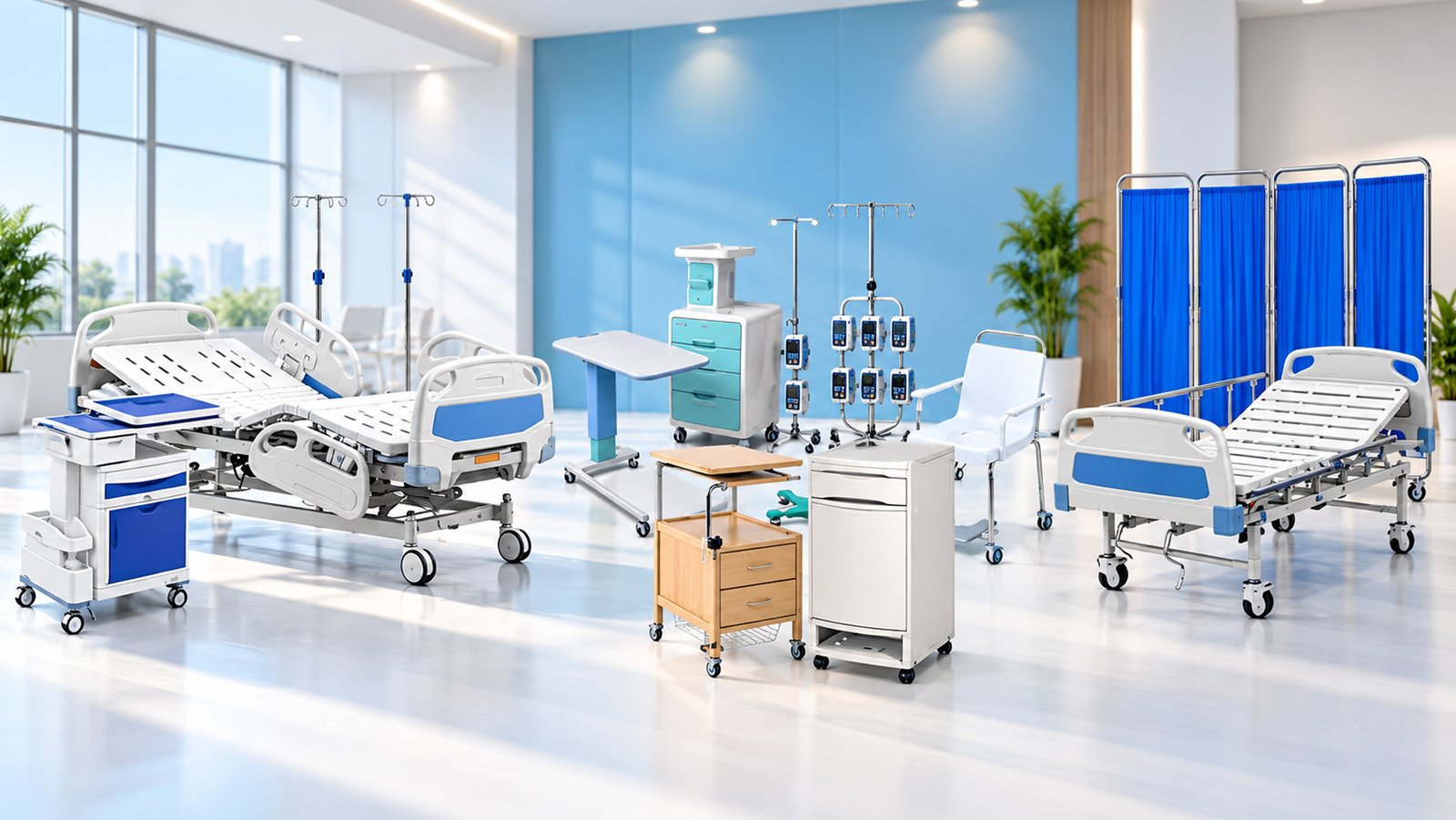
Hospital furniture is an essential part of a well-functioning healthcare environment. Patient beds, examination tables, medical trolleys, bedside cabinets, operating theatre furniture, and other healthcare furniture must do more than fill a clinical space. They need to support patient comfort, healthcare workflows, safety, durability, and efficient facility management.
For hospitals, clinics, healthcare institutions, procurement departments, and medical distributors, selecting the right hospital furniture suppliers in Pakistan is therefore an important investment decision. The focus should not be limited to finding affordable products. Healthcare buyers need furniture that delivers dependable performance, appropriate quality, practical functionality, and long-term value.
This is where AMG Medical approaches healthcare procurement differently. With a focus on quality, trusted medical products, and global healthcare supply, AMG Medical helps healthcare buyers and distributors evaluate solutions according to their actual operational and clinical requirements.
Why Quality Matters in Hospital Furniture
Hospital furniture is more than just a basic requirement. It directly influences the comfort, safety, and efficiency of a healthcare facility.
Unlike ordinary furniture, medical furniture must withstand frequent use, regular cleaning, and demanding healthcare environments.
Investing in high-quality hospital furniture provides several important advantages.
Improved Patient Comfort
Patients may spend extended periods in hospital beds or examination rooms. Comfortable and adjustable furniture can help support appropriate positioning and improve the overall patient experience.
Better Healthcare Efficiency
Well-designed medical furniture makes routine activities easier for doctors, nurses, and hospital staff. Adjustable beds, mobile trolleys, and organized storage units support smoother daily operations.
Durability and Long-Term Performance
High-quality furniture manufactured from suitable materials can withstand intensive usage. Durable frames, reliable moving parts, and corrosion-resistant finishes can help reduce frequent repairs and replacement costs.
Hygiene and Infection Prevention
Hospital furniture should have surfaces that are easy to clean and compatible with appropriate disinfectants.
A strong procurement decision therefore looks beyond the initial price and considers how effectively the furniture will perform throughout its expected service life.
What Healthcare Buyers Should Expect From Hospital Furniture
The requirements for hospital furniture can vary depending on the department, facility type, and intended application. However, quality healthcare furniture should generally be evaluated for construction, functionality, usability, and maintenance.
Important considerations include:
Durable Construction
Furniture used in hospitals and clinical environments needs to withstand regular and sometimes intensive use. Strong frames, dependable components, suitable finishes, and appropriate materials can contribute to longer service life.
Patient Safety and Comfort
Patient-facing furniture should support safe positioning, movement, and comfort. Features such as stable frames, locking systems, adjustable components, and appropriate dimensions can be particularly important.
Easy Cleaning and Maintenance
Healthcare furniture is routinely cleaned and disinfected. Surfaces and designs should therefore be practical to maintain and appropriate for the facility’s cleaning procedures.
Functional Design
Furniture should support the way healthcare professionals actually work. Trolleys, examination furniture, storage units, and patient beds should make essential tasks more organized and efficient.
Types of Hospital Furniture for Healthcare Facilities
Different healthcare environments require different furniture solutions. A hospital may need a combination of patient-care, examination, storage, transportation, and operating-theatre furniture.
Hospital Beds
Hospital beds are among the most important pieces of furniture in patient-care environments. Depending on the application, facilities may require manual, semi-electric, fully electric, or specialized ICU beds.
Features may include:
- Adjustable backrests
- Height adjustment
- Side rails
- Lockable wheels
- Patient positioning functions
- Mattress compatibility
The right selection depends on patient requirements, department needs, budget, and the level of functionality required.
Examination Tables
Examination tables are commonly used in consultation rooms, outpatient departments, clinics, and diagnostic environments.
A suitable examination table should provide:
- Patient stability
- Appropriate positioning
- Comfortable access
- Easy cleaning
- Durable construction
- Practical use for healthcare professionals
Medical Trolleys
Medical trolleys support the movement and organization of instruments, medicines, supplies, and other clinical materials.
Depending on their application, healthcare facilities may require instrument trolleys, dressing trolleys, medicine trolleys, emergency carts, or other specialized designs.
Bedside Cabinets and Overbed Tables
Bedside cabinets provide patients with convenient storage, while overbed tables can support activities such as eating, reading, and other daily needs.
These products can contribute to patient comfort while helping healthcare facilities maintain organized patient rooms.
Operation Theatre Furniture
Operating departments require specialized furniture designed around surgical workflows.
This can include:
- Operating tables
- Instrument stands
- Surgical stools
- Storage cabinets
- Procedure-related furniture
Stability, positioning, mobility, cleaning, and functionality should all be considered when selecting products for operating environments.
Quality and Affordability: Finding the Right Balance
The phrase “affordable solutions” should not be interpreted as simply choosing the cheapest furniture available.
The actual cost of healthcare furniture can include:
- Purchase price
- Installation
- Maintenance
- Repairs
- Replacement parts
- Cleaning requirements
- Downtime
- Replacement frequency
A low-cost product that requires frequent repairs or replacement may ultimately cost more than a durable product with a higher initial price.
This is why procurement teams should consider total cost of ownership when comparing furniture suppliers.
A quality-focused supplier can help healthcare facilities make purchasing decisions based on long-term value rather than short-term savings alone.
Materials Used in Healthcare Furniture
The choice of material has a direct impact on durability, cleaning, maintenance, and overall product performance.
Depending on the furniture type, manufacturers may use:
- Stainless steel
- Powder-coated steel
- Aluminum
- High-quality plastics
- Laminated boards
- Upholstery materials
- Other healthcare-grade components
The appropriate material depends on where the furniture will be used and what level of exposure it will experience.
For areas requiring frequent cleaning and disinfection, surfaces should be selected with hygiene and maintenance requirements in mind.
Choosing Hospital Furniture Based on Facility Requirements
There is no single furniture configuration that works for every healthcare facility.
Hospitals
Hospitals may require large volumes of furniture across multiple departments, including wards, emergency areas, outpatient departments, operating theatres, and specialized units.
Procurement teams may also need consistent specifications across different departments to simplify purchasing and maintenance.
Clinics
Clinics may have more limited space and therefore require compact, practical furniture for examination rooms, consultation areas, treatment rooms, and waiting spaces.
Diagnostic Centers
Diagnostic facilities may require examination tables, patient seating, storage, trolleys, and other furniture according to their clinical services.
Healthcare Distributors
Distributors have different requirements. They may need dependable products, consistent specifications, documentation, competitive commercial terms, and a supplier capable of supporting repeat or larger-volume orders.
For distributors, supplier reliability can be just as important as individual product specifications.
How to Evaluate a Hospital Furniture Supplier
Choosing a healthcare supplier should involve a structured procurement evaluation.
Review Product Specifications
Understand the materials, dimensions, functionality, load capacity, adjustment features, and intended application of each product.
Evaluate Manufacturing and Supply Capability
Buyers should understand whether the hospital supplier manufactures products directly, works with established manufacturers, or provides a combination of sourcing and distribution.
This distinction can help procurement teams understand quality control, customization possibilities, lead times, and supply continuity.
Check Quality and Documentation
Healthcare procurement often requires product specifications, certifications, technical information, warranties, and other documentation.
The required documentation will depend on the product and destination market.
Consider Customization
Healthcare facilities may have different layouts and operational requirements. Customized dimensions, configurations, finishes, or furniture combinations can be useful for larger projects.
Assess After-Sales Support
A reliable supplier should be able to provide clear information regarding installation, maintenance, spare parts, warranty terms, and ongoing support where applicable.
Consider Global Supply Requirements
For distributors and international healthcare buyers, procurement does not end with product selection. Packaging, documentation, shipping, import requirements, and delivery coordination may also need to be considered.
Hospital Furniture for Different Healthcare Facilities
Not every healthcare facility requires the same furniture configuration.
Hospitals
Hospitals typically require large quantities of furniture across multiple departments, including patient rooms, operating areas, emergency departments, outpatient clinics, and administrative spaces.
Clinics
Clinics often require more compact furniture solutions for examination rooms, consultation areas, waiting spaces, and treatment rooms.
Diagnostic Centers
Diagnostic facilities may need examination furniture, patient seating, storage, trolleys, and specialized support furniture depending on the services provided.
Specialized Medical Centers
Specialized facilities may require furniture designed around specific clinical workflows and patient needs.
Understanding the facility’s requirements before purchasing can help prevent unnecessary spending and improve space utilization.
AMG Medical: Supporting Healthcare Procurement
AMG Medical approaches healthcare supply with a focus on quality, accessibility, and dependable product sourcing.
For organizations researching hospital furniture suppliers in Pakistan, AMG Medical can support procurement requirements by helping healthcare buyers identify suitable products according to their facility, application, quantity, and quality expectations.
The objective is not simply to supply furniture but to support healthcare organizations in making informed procurement decisions.
AMG Medical’s broader healthcare product portfolio is built around professional medical requirements, with attention to product quality, functionality, documentation, and reliable supply.
Choosing the Right Hospital Furniture Partner
The right supplier should understand that healthcare furniture is part of the clinical environment.
A strong procurement partner should combine product knowledge with an understanding of healthcare requirements, quality expectations, delivery needs, and long-term supply.
For hospitals, clinics, distributors, and healthcare organizations, evaluating suppliers across these areas can help create a more reliable procurement strategy.
Final Thoughts
Choosing the right hospital furniture is about much more than finding products at an affordable price. Healthcare organizations need solutions that combine quality, durability, functionality, patient comfort, and long-term value.
For hospitals, clinics, diagnostic centers, procurement teams, and distributors, supplier evaluation should therefore cover product specifications, manufacturing or sourcing capabilities, documentation, customization, after-sales support, and supply reliability.
AMG Medical brings a quality-focused healthcare supply approach to buyers looking for dependable medical products and professional procurement support. With its emphasis on trusted care and global reach, the goal is to help healthcare organizations make informed purchasing decisions based on their actual clinical and operational requirements.
When quality and affordability are evaluated together, hospital furniture becomes more than a budget line—it becomes an investment in better healthcare environments and more efficient facility operations.
Faqs
What should I look for when choosing a hospital furniture supplier?
Look at product quality, materials, durability, functionality, documentation, customization options, warranty, after-sales support, production or sourcing capability, and delivery reliability.
Is the cheapest hospital furniture the most affordable option?
Not necessarily. The total cost can include maintenance, repairs, spare parts, replacement, installation, and downtime. A slightly higher initial investment may provide better long-term value.
What types of hospital furniture can healthcare facilities require?
Common requirements include hospital beds, examination tables, medical trolleys, bedside cabinets, overbed tables, patient seating, storage furniture, and operation theatre furniture.
Why is documentation important for healthcare procurement?
Documentation can help buyers evaluate product specifications, quality requirements, certifications, warranties, and other information relevant to procurement and regulatory needs.
Can AMG Medical support distributors as well as hospitals?
Yes. AMG Medical serves both healthcare procurement organizations and distributors, with a focus on dependable medical products, professional supply support, and long-term healthcare partnerships.