

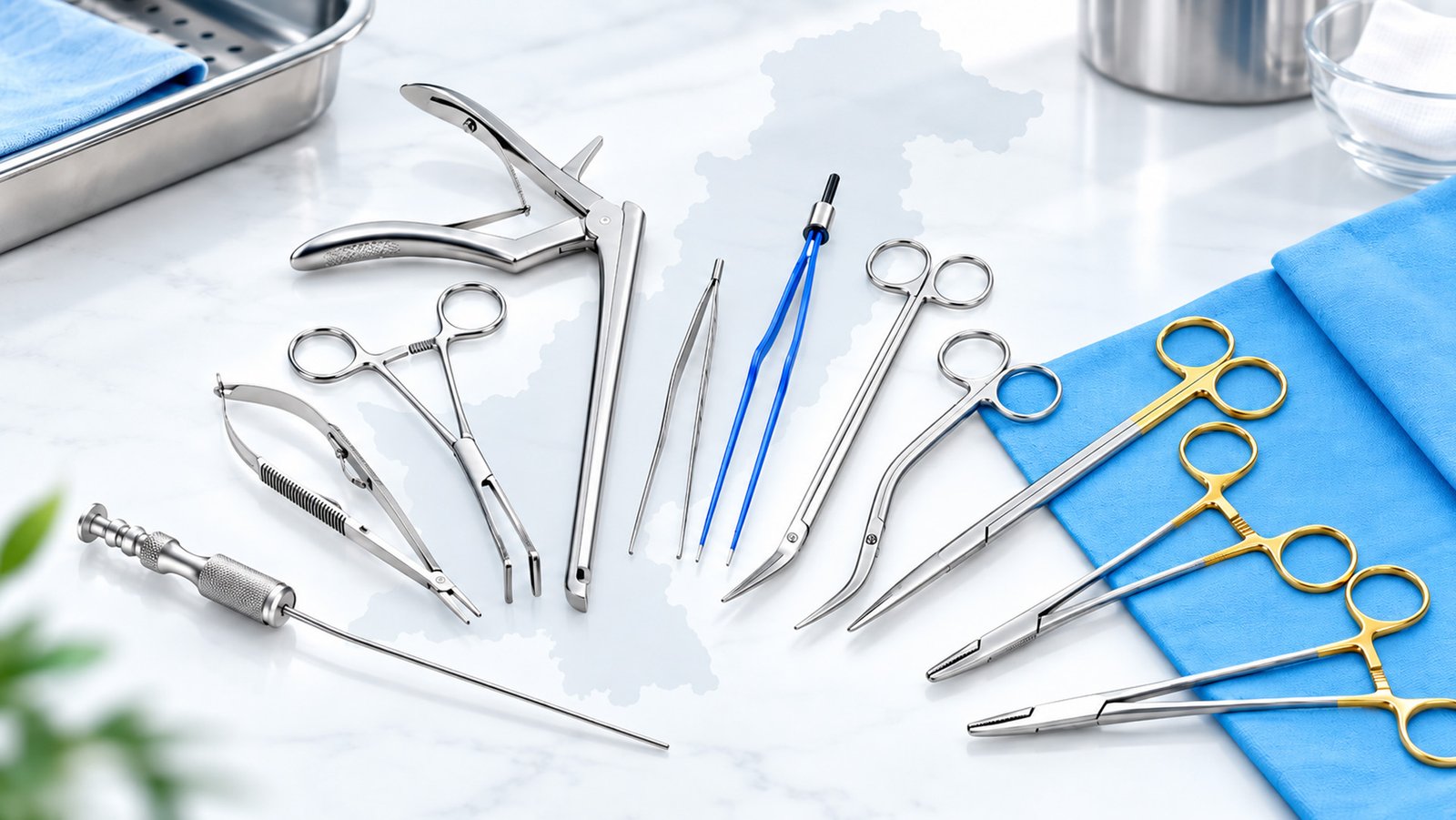
Hospitals, clinics, surgical centers, distributors, and healthcare procurement teams can’t afford to get the wrong supplier for surgical instruments. Instruments can impact the efficiency of an operating room, the life of the instrument, maintenance needs, and cost of procurement.
The healthcare sector in Pakistan has a variety of surgical instrument suppliers with a wide variety of products, manufacturers, and purchasing opportunities. But when choosing a supplier, it’s not all about price. All of these, such as product quality, material, manufacturing standards, certifications, consistency, delivery capabilities, and after-sales support, should be considered.
In healthcare environments, the aim is to build a stable supply chain that can meet the current needs of healthcare providers and their future requirements for supplies.
Why Supplier Selection Matters for Healthcare Facilities
Surgical instruments suppliers in Pakistan get used again, cleaned, sterilized, inspected, and stored. This requires tools that are purpose-built and can be handled and maintained in a suitable manner for healthcare facilities.
Collaborating with trusted surgical instruments suppliers can assist healthcare providers in sustaining high standards of product quality and make procurement easier across various departments and specialties.
A good supplier will be able to help healthcare providers:
- Consistent product specifications
- Procedure-specific instruments
- Complete surgical sets
- Appropriate documentation
- Quality-control information
- Bulk and recurring orders
- Packaging and delivery support
- Replacement/replenishment needs
The right supplier relationship can thus become a key element of an organization’s overall procurement strategy.
Choose the Right Surgical Instruments Suppliers in Pakistan
Look for Proven Manufacturing Quality
Precision-made surgical tools in Pakistan, especially the Sialkot cluster, are gaining a strong image as a world-class hub for such products. This expansion is the result of actual prowess in Pakistan’s surgical manufacturing base, where decades of skill and artistry have been paired with contemporary CNC manufacturing and quality assurance procedures.
For assessing a vendor, inquire about their production process, the grade of the stainless steel used, and whether they are ISO 13485 certified. A supplier that has its origins deep in this tradition of surgery in Pakistan is more apt to provide surgical instruments that comply with international standards.
Check the Breadth of Their Catalog
A reputable dealer should be more than just a one-size-fits-all seller. When it comes to your medical instrument needs, you don’t know what items you might need to start with, so be sure to look for a variety of medical and surgical tools for general surgery, orthopedics, dental, ENT, and gynecology.
A supplier that maintains a truly comprehensive inventory of medical and surgical instruments will make your life easier because you won’t need to deal with multiple suppliers, each sending you a different invoice, and it shows that they have the manufacturing capacity to work with you when you have more needs to meet.
Focus on Certifications and Compliance.
Always check if the company has the relevant certifications, including ISO 13485, CE marking, and FDA registration as applicable, before signing a contract. They are not simple forms, but a sign that the surgical instruments you are given have been tested against known safety and performance standards.
Request documentation, batch tests,s and material traceability. Any supplier who is reluctant to give this information is a red flag, even if their pricing seems competitive.
Evaluate Material and Build Quality
High-grade German or Japanese stainless steel, properly hardened and corrosion-resistant, is used in the manufacture of the best surgical equipment. Ask for samples before ordering in bulk, checking the finish, joint alignment, and weight balance of each tool. Any instrument that feels flimsy or appears rough under close inspection will not stand repeated cycles of sterilization.
Consider Pricing Without Compromising Safety
Having competitive pricing is crucial, particularly for clinics with small budgets, but the lowest price isn’t always the best. The price for the same materials will vary depending on quality, quantity, and customization requirements, with reputable local vendors offering tiered pricing. Ask several vendors for detailed pricing estimates, review warranty details, and consider the support that is offered after the sale instead of just price.
Assess Sourcing and Local Reliability
Advantages of using local surgical instruments in Pakistan are: it is quicker, easier to communicate with, and cheaper than importing from other countries. Most of the hospitals now opt to buy surgical instruments directly in Pakistan because it also makes it easier to avail replacement parts and service the items after surgery in case they need to be repaired.
Ask About After-Sales Support
The role of a supplier is not complete just after delivery. Inquire if they sharpen, repair instruments, and guarantee replacements. A long-term business partner is evident when they offer reliable customer support, quick response times, and are willing to fix any defects quickly and hassle-free.
Read Reviews and Ask for References
Ask for references from other hospitals and clinics that the supplier has worked with before placing a large order. Consistency and delivery times, as well as complaints and how they are dealt with, can be easily discovered through independent reviews, testimonials,s and even a facility visit.
Pakistan’s Surgical Instrument Industry
Pakistan has a well-developed surgical instrument manufacturing and exporting industry; especially Sialkot is a name associated with the manufacturing of surgical instruments.
Numerous companies are involved in the manufacturing chain in the country, catering to both domestic healthcare institutions and international buyers.
One factor that may come to mind for organizations doing research about surgical suppliers in Pakistan is location, although it should not be the sole basis for the selection of a surgical supplier.
When assessing individual companies, remember to consider each company’s:
- Product quality
- Manufacturing capabilities
- Quality-control procedures
- Certifications
- Product range
- Documentation
- Order capacity
- Delivery capabilities
- Customer support
In doing so, healthcare organizations can have the option to make procurement decisions based on their specific needs.
How AMG Medical Can Support Healthcare Procurement
AMG Medical is committed to satisfying the needs of healthcare organizations, procurement departments, and medical supply partners for trusted surgical and clinical products.
AMG Medical provides medical and surgical instruments to various healthcare needs and markets with an emphasis on quality, accessibility, and professional healthcare supply.
When it comes to choosing a supplier of surgical instruments in Pakistan, there’s more to it than looking for a company that has a huge catalogue of surgical instruments. The supplier should understand the facility’s needs, provide accurate product information, maintain consistent quality, and support ongoing procurement.
Healthcare organizations can create a more structured and reliable surgical-instrument procurement process with a professional supplier relationship.
Conclusion
Selecting appropriate suppliers is a crucial component of developing a strong and dependable surgical-instrument procurement method. Before ordering, healthcare professionals should assess quality, materials, certifications, manufacturing capacity, customization, delivery reliability, and long-term supplier support.
Having a wide variety of manufacturers and distributors available provides healthcare organizations with a variety of available products. But the key to successful procurement is considering each supplier based on defined clinical and operational needs.
By choosing suppliers systematically, healthcare institutions can build reliable partnerships that meet their surgical and clinical needs.