

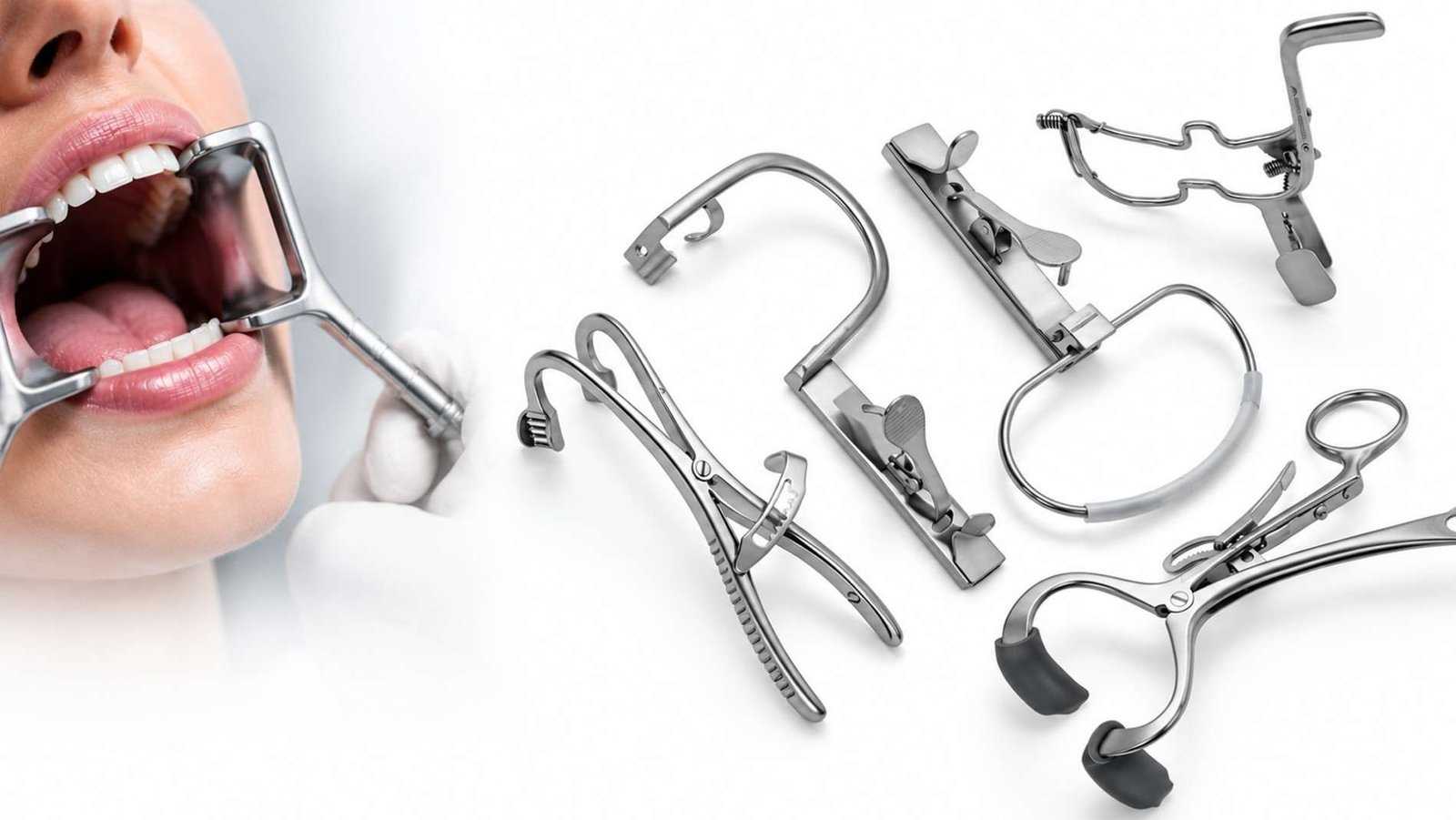
Oral procedures generally require precise access to the mouth, with no disruption of the surgical field, and a stable surgical field. It is at this point that mouth gags are valuable surgical instruments. These are instruments used to maintain an open mouth that can provide improved visualization and better access by the clinician during a procedure.
Dental and maxillofacial procedures range from routine to complex, with various designs available for each. Familiarity with the various types, applications, materials, and selection factors will assist healthcare facilities in selecting the right instruments for their operating room and dental departments.
What Is a Mouth Gag?
Mouth gags are surgical devices that are used to keep the mouth open during certain procedures. It helps the surgical team gain access to the oral cavity by maintaining a good separation of the jaws, and they can also minimize the need for constant manual jaw opening.
Depending on the design, a mouth gag may feature blades, handles, and/or a ratchet or interchangeable parts. This will be decided based on the procedure, patient anatomy, and access.
Examples of surgical instruments include those used in dentistry, oral surgery, ENT surgery, and certain maxillofacial surgeries where access to the oral cavity plays a key role.
Why Are Mouth Gags Important in Oral Surgery?
Access to surgical areas may be blocked during oral surgeries because of the position of the jaws, tongue, cheeks, and other tissues. A sizeable gag will prevent the opening from becoming too constricted and will give the clinician a more comfortable working space.
Key benefits include:
- Surgical access: Assists in maintaining access within the oral cavity.
- Hands-free retraction: Makes continuous manual retraction easier.
- Improved visualization: Facilitates visibility of the treatment area during appropriate procedures.
- Controlled positioning: Allows the mouth to be free to remain in a desired position during the process.
- Procedural efficiency: May be able to make access easier and more predictable during extended interventions.
- Design suitability: A variety of clinical needs can be met with different designs.
The aim is not only to find a way to open the mouth as much as possible. On the contrary, it should provide a suitable and regulated access, and the instrument has to be chosen and used according to the procedure and the needs of the patient.
Types of Mouth Gags Used in Surgical Procedures
There are several types of mouth gags, and the various types have qualities that are more suited to specific uses. The instrument should be chosen by the healthcare practitioner based on the procedure, rather than for each procedure.
Davis-Boyle Mouth Gag
The Davis-Boyle design is usually the preferred method for procedures which require oral access for a longer duration. It is used to keep the mouth open and to enable the surgeon to operate in the oral cavity.
May be utilized in specific oral, ENT, and head and neck surgeries where controlled exposure is desired.
Jennings Mouth Gag
The Jennings design is a swing mechanism to help keep the mouth open. It can be adjusted for a fixed separation of the jaws for the right procedure.
If the dentist needs to open the mouth for a longer period of time during a treatment, this type of open mouth gag is appropriate.
McIvor Mouth Gag
The McIvor is commonly utilized when treating orofacial surgery for the oral cavity and oropharynx. It is designed such that it can provide access, but also can help to keep the mouth open.
Depending on the clinician’s needs, it can be used in selected ENT and oral surgical procedures.
Denhardt Mouth Gag
Another type of gag for controlled oral access is the Denhardt gag. They are helpful in some procedures in which the study subject needs to be immobilized for exposure.
The selection should depend upon the type of the procedure and anatomy involved and the clinician’s preference.
Doyen-Jansen Mouth Gag
This design aims to provide safety for separation of the jaws and access to the oral cavity. As with other surgical gags, it should be chosen based on the procedure and suitable surgical technique.
Mouth Gag vs. Mouth Spreader
Oral surgical instruments can have the same names, and different instruments can serve the same function.
A dental instrument for Mouth Spreading may have its primary purpose to control Mouth Opening or separation, and a Surgical Gag may also have features that hold the Gag position during a specific procedure.
This is particularly true for procurement teams. Buyers should not choose instruments to buy only because of general terminology; they should look at the actual design, dimensions, mechanism, blade configuration, etc., as well as the intended application.
Common Uses of Dental Mouth Gags
When a dental Mouth Gag is necessary to open the mouth, it can be used for controlled access. Depending on the design and its clinical use, mouth opening devices can aid in oral, dental, tongue, throat, or other mouth-related procedures.
Potential applications include:
- Oral surgical procedures
- Selected dental procedures
- Maxillofacial procedures
- ENT-related interventions
- Procedures that involve prolonged exposure to the mouth.
- The techniques chosen for the throat and oropharynx are:
Signs will depend on the instrument design and clinical protocol. The instruments should always be selected and used by healthcare professionals according to accepted surgical practice.
How to Choose the Right Surgical Mouth Gag
Choosing the appropriate surgical mouth gag requires more than considering its size. Several factors should be taken into consideration before making a purchase for the hospital, dental clinic, and procurement teams.
Procedure Requirements
Begin at the end, with the intended application. A gag used for one kind of oral procedure might not be the most appropriate for another.
Consider:
- Type of procedure
- The amount of exposure required
- Duration of use
- Anatomical area involved
- Additional instruments/accessories are needed.
Instrument Design
Mechanism and blade shape may have a significant impact on its ease of use. Buyers should determine if the instrument affords the necessary opening and if the design of the instrument is compatible with the procedure.
Adjustability or interchangeability of components or blades may also apply in the clinical setting.
Size and Dimensions
The sizes of instruments may vary depending on the patient and procedure. A facility may, therefore, require several sizes or set-ups instead of a single universal instrument.
The size chosen should be suitable for the patient and planned use.
Material and Construction
Surgical instruments should be made from materials suitable for repeated clinical use and for repeated sterilisation. Many surgical tools are reusable, and stainless steel is a popular choice for their construction due to its durability and resistance to corrosion when properly cared for.
When buying materials, procurement teams should consider material specifications, manufacturing quality, the surface finish, and overall construction.
Sterilization and Maintenance
Reusable instruments must be compatible with the healthcare facility’s cleaning, disinfection, sterilization, inspection, and storage procedures.
Facilities should ensure that the manufacturer of the instrument will provide them with instructions on how to properly clean and sterilize the instrument and that the instrument is compatible with the facility’s validated processes prior to purchase.
Ergonomics and Handling
The clinical team should be able to position, operate, clean, and inspect the instrument. Handling can be more predictable with a well-designed mechanism during procedures.
Ergonomic issues are particularly important with the repetition of instruments in high-traffic operating rooms or in dental departments.
Quality Considerations for Oral Surgical Instruments
Quality is especially significant when buying instruments to be used for repeated clinical use. A facility should not only consider the price of the instrument, but also the instrument’s total value.
Important considerations include:
- Material quality
- Manufacturing precision
- Surface finish
- Mechanical performance
- Consistency between instruments
- Sterilization compatibility
- The inspection and maintenance needs are discussed. Inspection and maintenance needs are discussed.
- Supplier documentation
- Accessibility of spare parts as appropriate.
When choosing a hospital or professional dental facility, both cost and usability should be taken into account.
The Role of Mouth Gags in Dental and Oral Procedures
Access and visibility are important practical considerations in oral dental surgery. Gags can be used to ensure that the mouth is held in the correct position for procedures, helping to maintain control of the working environment.
A wide range of retractors, gags, forceps, elevators, and other instruments enables the clinical teams in the dental surgery department to match their instrumentation to the various procedures performed rather than relying on a combination of universal instruments.
Likewise, the purchasing of surgical dental instruments should concentrate on quality, consistency, suitability of size, and supply.
Procurement Tips for Hospitals and Dental Clinics
Mouth gags should be considered within the context of the total surgical instrument strategy to be used by a healthcare procurement team.
Before placing an order, consider:
Determine the requirement: Specify procedures or departments using instruments.
Compare designs: See various gag designs and don’t just buy because of the product name.
Review specifications: Ensure dimensions, material, mechanism, blade configuration, and purpose are correct.
Assess supplier reliability: Product consistency, documentation, availability, lead time, and after-sales support.
Think costs: A lower price may not be a better value if it is not durable or requires extensive maintenance or replacement.
Standardise instruments (where appropriate): Set preferred specifications of instruments if clinically appropriate across different departments.
Why Supplier Selection Matters
The quality of a surgical instrument is only one part of a successful procurement decision. The supplier’s ability to provide consistent products and dependable service also matters.
A reliable medical equipment supplier can help healthcare facilities evaluate product specifications, identify appropriate configurations, manage repeat orders, and maintain a more predictable procurement process.
For hospitals managing multiple departments, supplier consistency can also simplify inventory planning and reduce unnecessary variation in surgical instruments.
AMG Medical and Surgical Instrument Solutions
Surgical instruments for healthcare facilities and distributors need to be chosen based on a combination of quality, functionality, availability, and procurement efficiency. AMG Medical specializes in enhancing healthcare buyers’ experience in the purchase of medical and surgical equipment for professional healthcare settings.
From sourcing instruments for oral procedures, dental departments, ENT applications, to general surgical needs, procurement teams can benefit from dealing with suppliers who understand the significance of product specifications, reliability of supplies, and value for life.
Conclusion
Mouth gags are useful devices for when an individual’s mouth must be opened during a procedure, and it is important for the individual to have controlled access. There are a number of available designs for various clinical uses, so the instrument chosen must be suitable for the type of procedure, size, construction, ergonomics, sterilisability, and trustworthiness of the supplier.
Healthcare distributors, dental clinics and hospitals can benefit from a procurement strategy that can help them ensure that oral surgical instrumentation fulfills clinical needs while providing value to their long-term operations. The right instrument is the one that is designed, specified, and used for the procedure and for the needs of the clinical team and is not just one that opens the mouth.
FAQS
What is a mouth gag used for?
A mouth gag is used to help maintain controlled mouth opening during selected oral, dental, ENT, and maxillofacial procedures, providing clinicians with access to the oral cavity.
What is the difference between a mouth gag and a mouth spreader?
Both instruments can help separate or maintain the mouth in an open position, but their designs and intended applications can differ. The appropriate instrument should be selected according to the specific procedure and clinical requirements.
How do I choose a mouth gag?
Consider the procedure, required access, instrument size, design, material, sterilization requirements, ergonomics, and supplier specifications before making a selection.
Are mouth gags reusable?
Some mouth gags are designed as reusable surgical instruments, but reusability depends on the specific product and manufacturer’s instructions. Healthcare facilities should always follow the applicable cleaning, sterilization, and maintenance instructions.
Why is instrument quality important in oral surgery?
Consistent construction, appropriate materials, reliable mechanisms, and proper maintenance can help healthcare professionals use surgical instruments more effectively and support dependable operating-room workflows.