


In the contemporary busy healthcare setting, precision and clarity in surgery are essential to achieve the optimal patient outcome. Among the many tools used in the modern operating room, retractor systems and hi-tech surgical retractors are indispensable- silently helping the surgeon in his work of precision, efficiency, and control in undertaking a surgery.
Clinical research conducted by the National Center of Biotechnology Information states that there is a positive correlation between improved exposure during surgery and fewer intraoperative complications and enhanced accuracy of the procedure. The use of retractor tool in retractor surgery is helpful in providing a stable and clear operating room and the avoidance of unnecessary tissue manipulation, and contributes to improved surgical performance.
What Are Surgical Retractors?
A retractor is a special instrument that is used to suspend tissues, organs, or incisions during surgery. These essential surgical retractors give an accessible and open field of operation where the surgeons work more precisely and put less strain on the tissues they are working with.
These instruments play a key role in the control, visibility, and efficiency of the modern operating rooms in both routine and in the application of complex surgery with retractors.
Importance of Retractors in Surgery
The purpose of a retractor in surgery is much more than mere support:
- Enhances the transparency of the area where the surgery is performed to increase accuracy.
- Gives consistent access to deep tissues with relevant retractor instruments.
- Lowers the chances of accidental injury through stabilization of structures around it.
- Helps to maintain the sterility of the field during the procedures.
- Improves manoeuvrability in complicated retractor surgery.
In areas like general surgery, orthopedics, and neurosurgery, surgical retractors are crucial in enhancing outcomes.
Types of Retractors and Their Applications
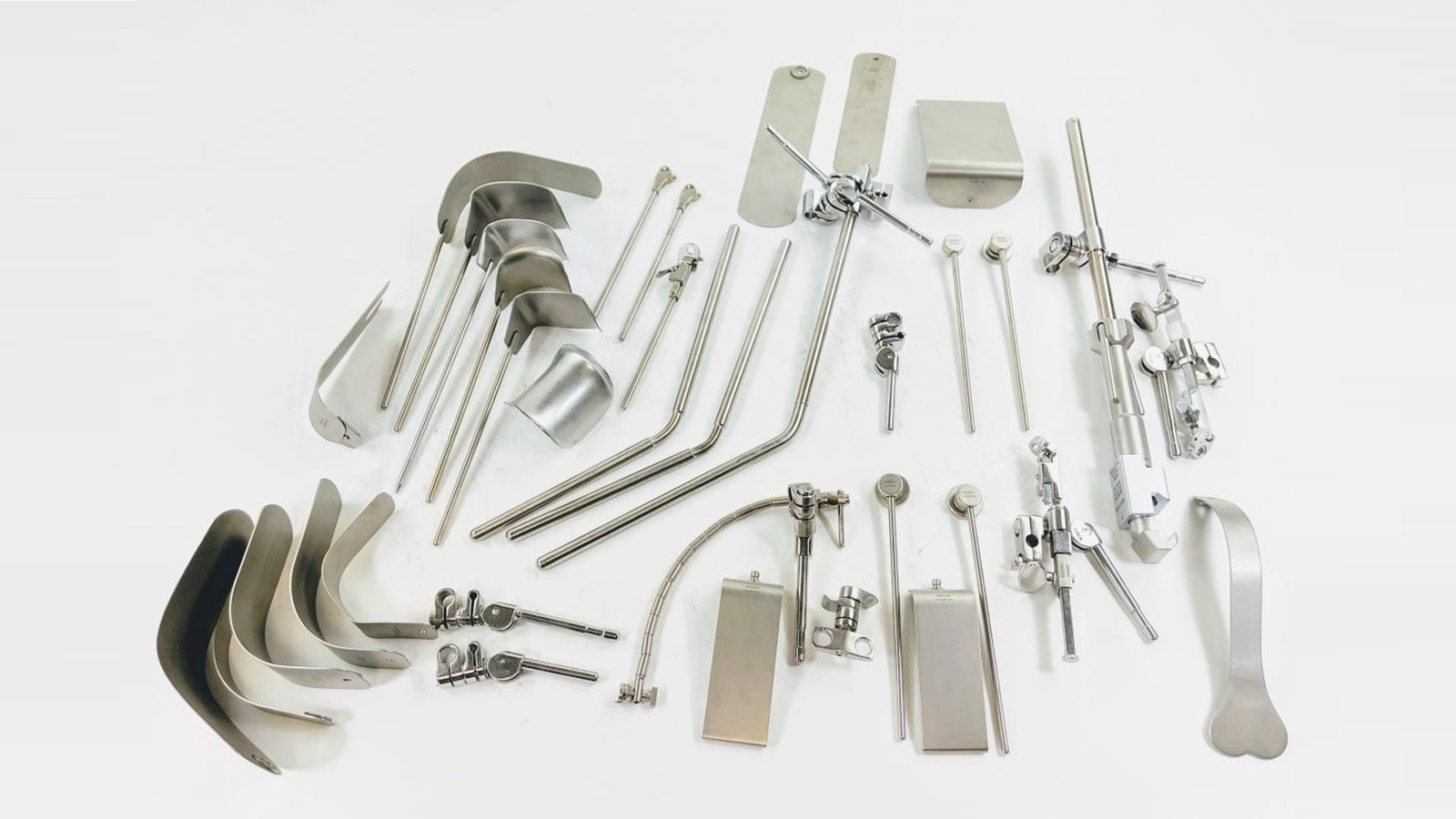
The knowledge of various types of surgical retractors emphasizes their flexibility in the field of contemporary surgery:
Handheld Retractors
These are hand-operated retractor tools that are usually used in shorter procedures or controlled procedures.
Examples include:
- Senn Retractor – best used with small cuts and handling soft tissue.
- Army-Navy Retractor – Double-ended in case of shallow exposure.
- Kelly Retractor – Often employed in the controlled retraction of tissues in sensitive operations.
Self-Retaining Retractors
These surgical retractors do not need to be supported by hand, so they are more efficient even in the case of longer interventions.
Examples include:
- Weitlaner Retractor – This is used frequently in orthopedic surgeries.
- Gelpi Retractor – It is applied in neurosurgical practices.
- Balfour Retractor -A popular Balfour retractor in abdominal surgery.
Specialty Retractors
Specifically designed to meet procedural and anatomical requirements.
Examples include:
- Langenbeck Retractor – Applied in abdominal access and orthopedic.
- Deaver Retractor – This type of deaver retractor is frequently used to provide a deep abdominal and thoracic exposure.
- Malleable Retractor – Flexible to tailor positioning.
The retractor tools are all aimed at enhancing accessibility and reducing tissue trauma- a vital element in modern surgical innovation.
Retractor Materials and Design Considerations
Surgical retractors of high quality are generally made out of surgical-grade stainless steel and, therefore, are durable and corrosion-resistant. There are also some operations that can make use of disposable retractor equipment to decrease the risk of infections.
The main design characteristics are:
- Rounded edges to reduce tissue damage.
- Better control by ergonomic handling.
- Repeated use of sterilization.
- Flexible designs for various retractor surgery requirements.
Quality manufacture means that all retractors will work reliably even in the stressful surgical environment.
AMG Medical: Supporting Precision Through Advanced Retractor Solutions
At AMG Medical, we specialize in providing high-quality surgical retractors and new medical equipment to meet the needs of the modern surgical setting. Our solutions can be customized to increase accuracy, optimize workflow, and contribute to improved patient outcomes.
Our line of retractor equipment consists of:
- Senn, Army-Navy, and Langenbeck retractors of controlled procedures.
- Weitlaner and Gelpi retractors are self-retaining.
- Abdominal apparatus,s such as thBalfourur retractor, to expose in a complex way.
- The Deaver retractor of deep surgical access is an advanced solution.
- Retractors with a unique design that suit some clinical needs.
AMG Medical has integrated quality, reliability, and innovation to ensure that all retractors used in surgery provide the same performance.
Safety and Best Practices in Using Retractors
Although surgical retractors are mandatory, inappropriate handling of a retractor device may cause such complications as tissue injury or nerve compression.
Best practices include:
- Choosing the right retractor to use in the procedure.
- Avoidance of sensitive structures by proper location during retractor surgery.
- Checking pressure and time of usage.
- Regular checking and maintenance of retractor tools.
The proper sterilization procedures are also essential to ensure safety and prolong the lifespan of the instruments.
Innovations and Trends in Surgical Retraction
As surgery improves with the development of surgical methods, the use of retractors in surgery is also developing. Modern innovations include:
- Light-up operating retractors to improve clarity.
- Infection control retractor tools are disposable.
- Custom 3D printed retractors.A combination of the least invasive surgery and robots.
Continued studies found in PubMed Central underline the manner in which innovation of retractor surgery instruments is enhancing clinical and surgical effectiveness.
Conclusion
A retractor has much more than just basic functionality in surgery. These are critical surgical retractors that offer the visibility, control, nd access necessary to achieve successful procedures. Regardless of the type of retractor, be it a Balfour retractor, deaver retractor, or other specialized retractor instruments, they still play the primary role in the practice of modern-day surgery.
At AMG Medical, we also believe in providing quality medical equipment that will facilitate excellence in surgery. Innovation, precision, and reliability enable us to empower healthcare professionals with superior retractor solutions that can be applied to achieve better results.