

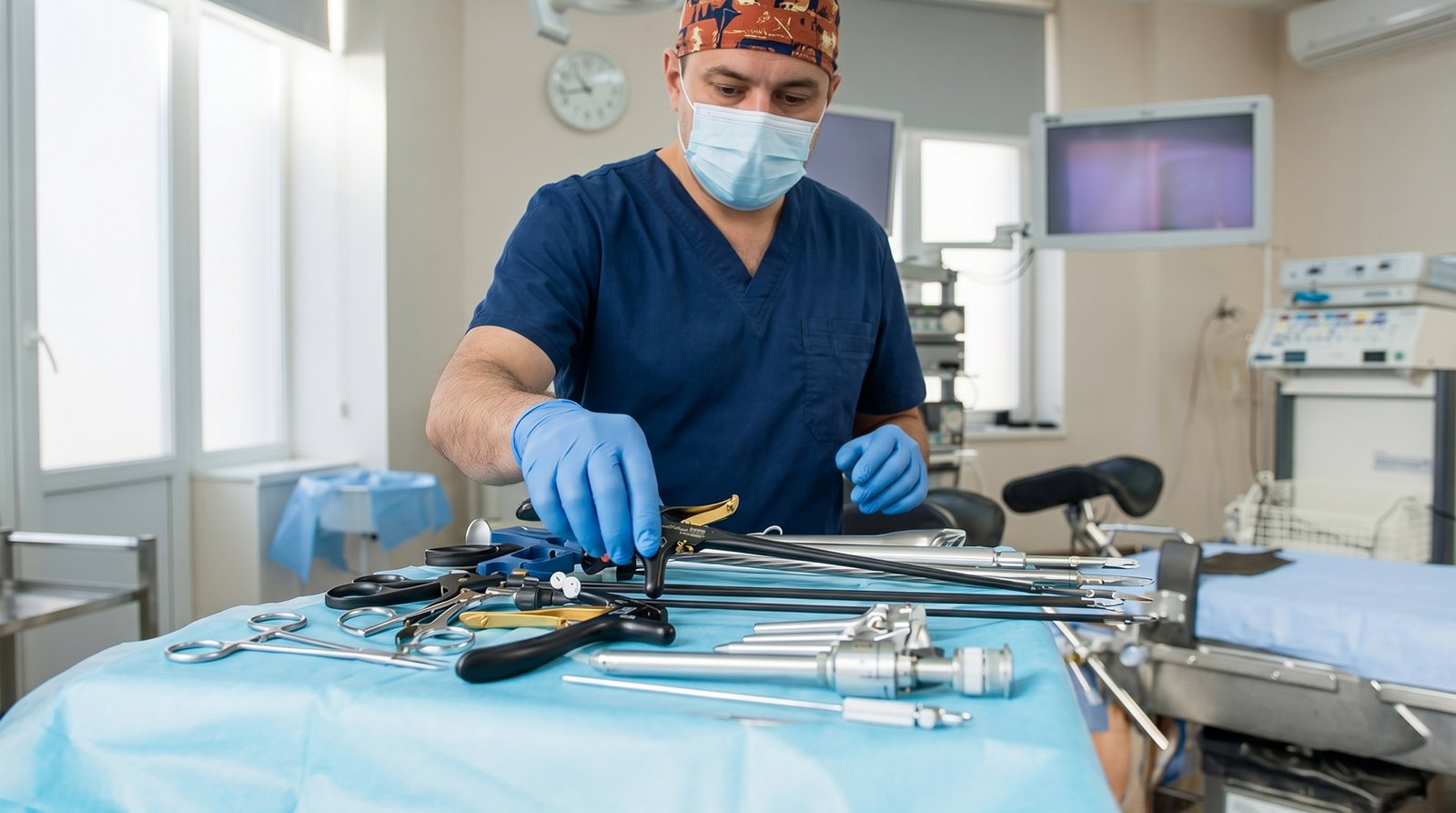
The human brain contains roughly 86 billion neurons, and operating on it demands an equally extraordinary level of precision. Neurosurgery stands as one of the most technically demanding disciplines in all of medicine, where a margin of error measured in fractions of a millimeter can determine the difference between recovery and permanent neurological deficit.
The numbers behind this field are staggering. According to Grand View Research (2024), the global neurosurgical instruments market was valued at USD 1.76 billion in 2024 and is projected to reach USD 2.62 billion by 2030, growing at a compound annual growth rate of 7.0%. The WHO reported in March 2024 that neurological conditions affect more than 3 billion people globally, a statistic that underscores the enormous and growing demand for high-precision surgical tools. Meanwhile, data published by ScienceDirect estimates that approximately 22.6 million neurosurgical consultations occur annually worldwide, with over 13.8 million cases requiring operative intervention.
Research published in Frontiers in Neurology (2025) reinforces that deep learning and AI-assisted instrument tracking are now enabling more precise intraoperative feedback than was possible even five years ago. A separate 2025 systematic review in Cureus confirmed that intraoperative imaging significantly enhances surgical precision, safety, and patient outcomes in combined neurosurgical procedures. The message from clinical science is clear: the instruments surgeons hold in their hands, and the supporting surgical equipment used in the operating room, have never mattered more.
At AMG Medical, we understand that behind every successful neurosurgical outcome is a suite of meticulously crafted instruments and advanced neurology tools. Our commitment to surgical excellence drives us to supply the operating room with tools that are not merely functional, but engineered for the uncompromising demands of neurological surgery.
What Are Neurology Surgical Instruments?
Neurology surgical instruments are a specialized category of precision-engineered tools designed for use in surgical procedures involving the brain, spinal cord, cranial nerves, and peripheral nervous system. Unlike general surgical instruments, neurosurgical tools must meet exceptionally strict requirements for:
- Dimensional accuracy — tolerances measured in fractions of a millimeter
- Material integrity — typically high-grade stainless steel or titanium alloys to prevent magnetic interference during intraoperative MRI
- Ergonomic design — balanced for controlled, fatigue-free handling during procedures that can last six to twelve hours
- Sterilization compatibility — built to withstand repeated autoclaving without degradation
These neurosurgery instruments span a wide spectrum — from basic retractors and scissors to highly specialized bipolar forceps, stereotactic frames, and neuroendoscopes — each serving a critical, defined role in the surgical workflow.
Categories of Neurology Surgical Instruments
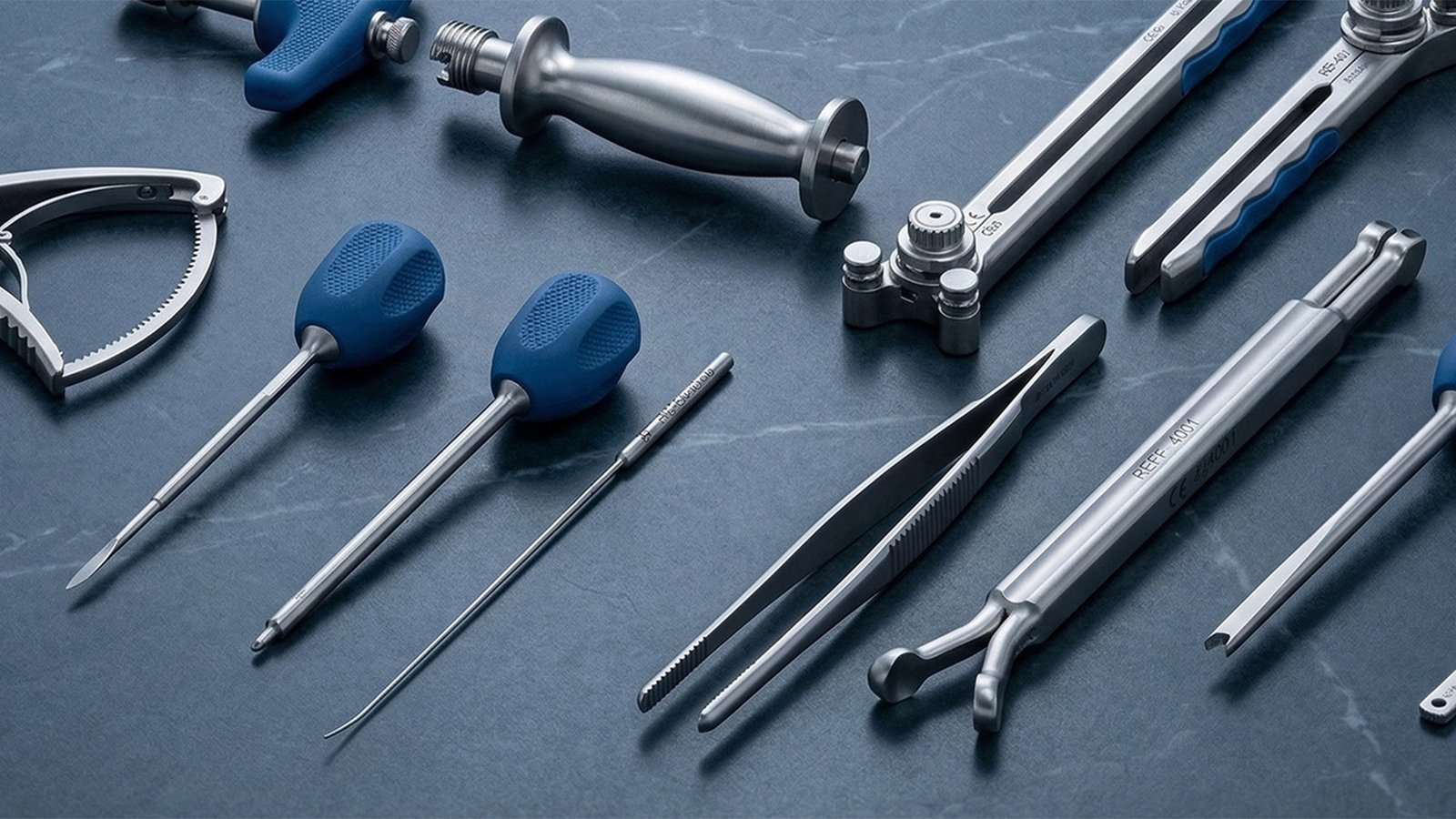
1. Cutting and Dissecting Instruments
Precision cutting is the cornerstone of neurosurgery. These instruments allow surgeons to make controlled incisions through tissue with minimal surrounding disruption.
Key instruments include:
- Neurosurgical scalpels — ultra-fine blades for scalp incisions and dural opening
- Micro scissors — spring-loaded scissors designed for delicate cortical dissection
- Ultrasonic aspirators (CUSA) — use ultrasonic vibration to emulsify and remove tumor tissue while sparing surrounding healthy structures
- Kerrison rongeurs — punch-style cutting tools used in spinal decompression to remove bone and ligament tissue
The precision of these instruments directly determines how cleanly the surgeon can approach deep-seated pathologies without disrupting adjacent functional tissue.
2. Grasping and Holding Instruments
Neurosurgery demands the ability to hold, position, and manipulate the most delicate tissue in the human body. Grasping instruments in this category are designed to provide secure control without applying crushing force.
Key instruments include:
- Bipolar forceps — the gold standard in neurosurgical hemostasis; they deliver electrical current between two tips to coagulate blood vessels precisely, with no current spread to surrounding tissue
- Micro bayonet forceps — angled for deep operative fields where straight instruments would obstruct the surgeon’s line of sight
- Tumor forceps — designed to grasp and debulk soft tissue within confined cranial spaces
- Dura forceps — used for elevating and holding the dura mater during craniotomy
Among these, bipolar forceps represent one of AMG Medical’s flagship instrument categories — available in a range of tip configurations, lengths, and insulation profiles to support every neurosurgical specialty.
3. Retractors and Exposure Instruments
Achieving adequate surgical exposure without causing unnecessary retraction injury is one of the central challenges of neurosurgery.
Key instruments include:
- Brain spatulas — flexible, paddle-shaped retractors that gently hold brain tissue aside during exposure
- Yasargil retractor systems — self-retaining retractor systems widely used in microsurgery for fixed, hands-free exposure
- Cerebellar retractors — specifically shaped for posterior fossa approaches
- Spinal retractors — tubular or blade-based systems for minimally invasive spinal access
Self-retaining retractor systems are particularly valuable because they eliminate the need for an assistant to hold retraction manually, freeing the surgical team and reducing fatigue-related inconsistency during long procedures.
4. Drilling and Bone Work Instruments
Access to the intracranial space requires safe, controlled removal of the calvarium. Bone work instruments must balance cutting power with the absolute imperative of protecting underlying neural tissue.
Key instruments include:
- Cranial perforators — drill bits designed to penetrate skull bone and automatically disengage when the inner cortex is breached, preventing plunge injuries
- Craniotomes — powered saws used to connect burr holes and remove bone flaps
- Rongeurs — manual bone-biting instruments for enlarging defects or removing small fragments
- High-speed drills — used for microsurgical skull base procedures requiring controlled bone removal around vital structures
The precision engineering of modern cranial perforators — with their automatic depth-limiting mechanisms — is a prime example of how instrument design directly translates into patient safety.
5. Irrigation and Suction Instruments
Maintaining a clear operative field in neurosurgery is not optional — it is essential. Blood, cerebrospinal fluid (CSF), and irrigation fluid must be continuously managed.
Key instruments include:
- Frazier suction tips — thin, angled suction cannulas ideal for deep surgical corridors
- Neurosurgical irrigation cannulas — for gentle tissue irrigation to prevent desiccation during prolonged procedures
- Pituitary suction tips — specifically designed for transsphenoidal approaches to the pituitary gland
These instruments, though seemingly simple, require precise sizing and material quality to function reliably in the confined, fluid-filled environments of cranial and spinal surgery.
6. Stereotactic and Navigation Instruments
Modern neurosurgery increasingly relies on image-guided, frameless navigation and stereotactic systems to localize targets with sub-millimeter accuracy.
Key instruments include:
- Stereotactic frames — rigid headframes that establish a three-dimensional coordinate system for targeting deep brain structures
- Biopsy needles — used in stereotactic biopsy procedures to sample lesions with minimal cortical disruption
- Deep brain stimulation (DBS) electrodes — placed via stereotactic guidance for conditions including Parkinson’s disease and treatment-resistant depression
- Neuronavigation probes — instrument-mounted sensors tracked in real time against preoperative MRI or CT data
According to research published in PMC (2025), intraoperative CT-based navigation significantly improves safety and precision in complex spinal neurosurgery — enabling tailored surgical strategies that avoid neurovascular injury. These findings affirm the growing clinical dependence on navigation-integrated instrumentation.
7. Closure and Hemostasis Instruments
The final phase of any neurosurgical procedure demands meticulous closure to prevent CSF leak, hematoma, and infection.
Key instruments include:
- Dura repair needles and sutures — fine-gauge needles for watertight dural closure
- Bone wax applicators — for controlling bleeding from bony edges
- Hemostatic clips — titanium or polymer clips for permanent vessel occlusion
- Wound closure forceps — for scalp layer-by-layer closure under controlled tension
How Do These Instruments Improve Surgical Precision?
The relationship between the quality of a surgical instrument and surgical precision is direct and measurable. Here is how well-designed neurosurgical instruments translate into better outcomes:
Reducing Collateral Tissue Damage
Instruments like bipolar forceps and ultrasonic aspirators are engineered to act only on their target — delivering energy or force precisely where needed while leaving surrounding functional tissue intact. Every millimeter of healthy brain or spinal cord preserved translates into neurological function retained.
Extending the Surgeon’s Capabilities
Micro instruments — bayonet forceps, micro scissors, Frazier suction tips — effectively extend the surgeon’s hands into spaces the unaided hand cannot reach safely. They amplify fine motor control, turning a macro hand movement into a micro surgical action.
Enabling Longer, More Complex Procedures
Ergonomically optimized instruments reduce hand fatigue during procedures that routinely span six to twelve hours. When a surgeon’s grip remains steady in hour eight of a cerebral aneurysm clipping, instrument design has directly influenced the outcome.
Supporting Real-Time Feedback
Navigation-integrated instruments, combined with intraoperative imaging modalities like MRI and CT, provide surgeons with continuous spatial feedback — allowing adjustments in real time rather than relying solely on anatomical landmarks that may have shifted due to brain shift or tissue removal.
Standardizing Outcomes Across Teams
High-quality, consistently manufactured instruments reduce variability in surgical performance. When every member of a surgical team works with instruments that behave predictably, the risk of instrument-related complications falls significantly.
AMG Medical: Precision You Can Trust in the Operating Room
At AMG Medical, our neurosurgical instrument range is built on a single unwavering principle: the instrument must never be the limiting factor in a surgeon’s performance.
Every instrument in our catalog is:
- Manufactured from premium-grade stainless steel and titanium alloys
- Designed in collaboration with neurosurgical specialists for real-world clinical performance
- Available in standard and custom configurations to meet the needs of cranial, spinal, and peripheral nerve surgery
- Fully compatible with validated sterilization protocols including steam, EO, and plasma sterilization
From micro forceps and retractor systems to stereotactic accessories and closure instruments, AMG Medical supplies surgical teams with the confidence to operate at the highest level.
Conclusion
Neurology surgical instruments are fundamental to the success of modern neurosurgery. From micro forceps and dissectors to suction devices and bipolar forceps, each instrument is designed to support accuracy, safety, and efficiency in highly complex procedures.
As neurosurgical technology continues to evolve, precision-engineered neurosurgical instruments remain essential for improving surgical outcomes, minimizing tissue trauma, and supporting advanced minimally invasive techniques. Healthcare providers who invest in high-quality neurosurgical instruments can enhance both surgical performance and patient care.
At AMG Medical, we remain dedicated to delivering innovative surgical solutions that empower surgeons to achieve the highest standards of precision and excellence.