

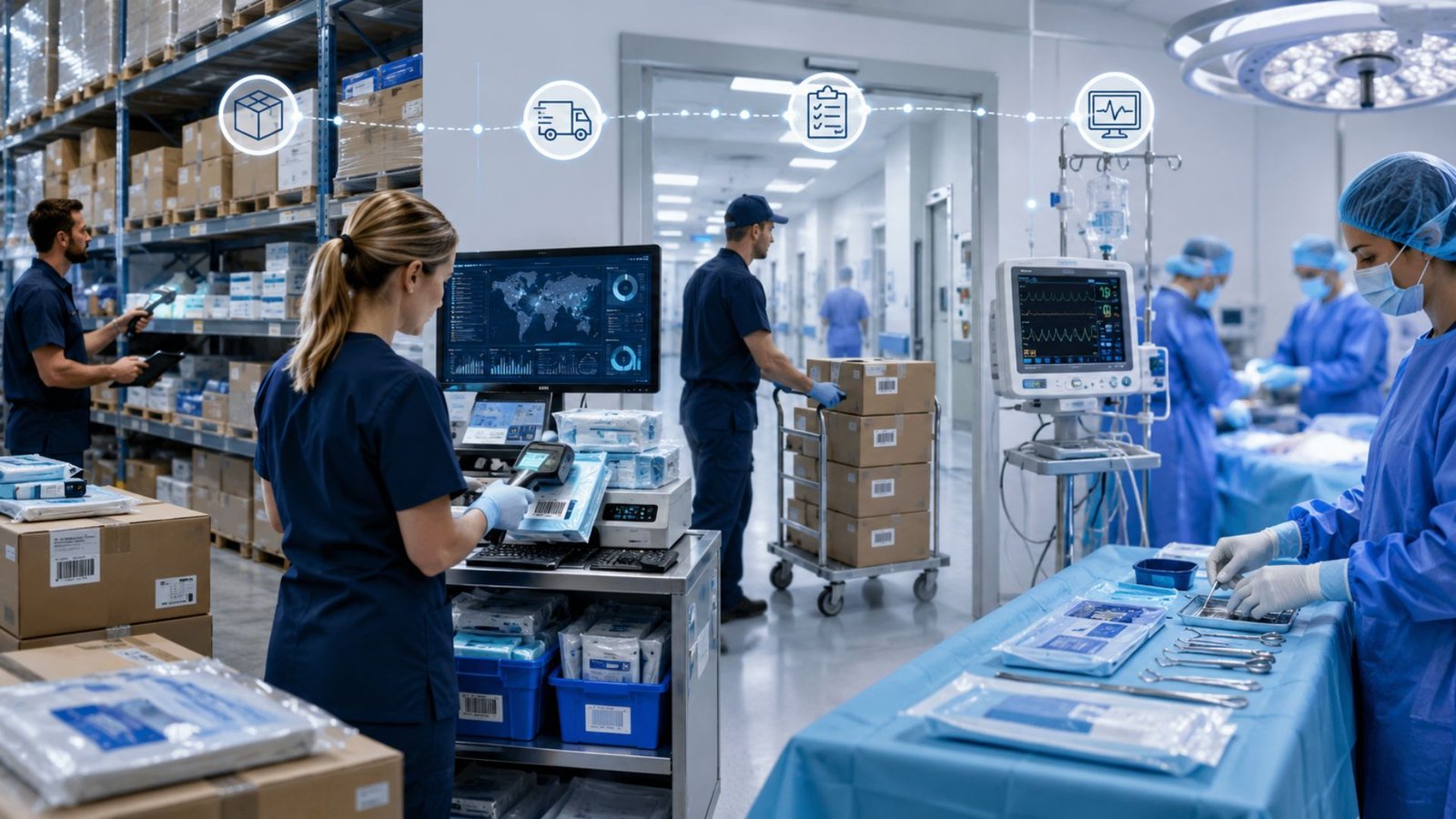
A modern health system requires more than competent doctors, cutting-edge technology, and cutting-edge hospitals. In every successful surgery, correct diagnosis and life-saving treatment, there is a well-organized supply chain that keeps medical devices and surgical equipment available when they are needed. Whether in an operating room, emergency room, outpatient clinics, or diagnostic laboratory, health care professionals depend on the uninterrupted supply of safe, effective medical products to meet their patient-care needs.
Over the past few years, global healthcare systems have encountered a lot of issues in their supply chain due to pandemics, geopolitical conflicts, transportation delays, and the increased requirement for medical equipment. One significant truth that emerged from these challenges was that no matter how well-trained a health-care worker is, he or she could not deliver quality health care without timely availability of medical devices. The World Health Organization (WHO) states that building health care supply chains is essential for bolstering health systems’ resilience and maintaining uninterrupted access to medical products. In a similar way, health care companies around the world are adopting smarter procurement practices, digital inventory management, and secure supplier relationships in order to boost their operations’ resiliency.
This is where Medical Device Supply Chain Management is a strategic business enabler and not just a business function. The efficient supply chain ensures that hospitals are able to get the right product, at the right time, in the right condition, with the right quality, and manage costs.
The importance of medical device supply chain management, common challenges in medical devices, and how healthcare organizations can benefit from implementing a more reliable medical device supply chain in the future are explained in this article.
What Is Medical Device Supply Chain Management?
Medical Device Supply Chain Management refers to the lifecycle of planning, purchasing, producing, storing, moving, and delivering medical devices across the healthcare supply chain. It encompasses all the processes along a product’s lifecycle, from raw material sourcing to its arrival at hospitals, clinics, laboratories, and healthcare providers.
In contrast to many supply chains, patient safety is directly impacted by healthcare supply chains. All medical devices, from surgical instruments to diagnostic machines, patient monitors, or orthopedic implants, have to pass rigorous quality checks before they are made available to healthcare professionals. Improperly delivered clinical services can interrupt clinical workflow and affect patient care.
In a well-managed medical device supply chain, healthcare providers can be assured of having the medical devices they need when they need them and keeping them in compliance with international standards without incurring unnecessary operational costs.
Why Medical Device Supply Chain Management Matters More Than Ever
Healthcare organizations are open 24 hours a day and require consistent care for patients, which means healthcare supply chain reliability is crucial. Medical equipment is essential for all departments to run smoothly.
Reliable medical devices without interruptions enable healthcare providers to carry out surgeries on time, deal with emergencies promptly, and provide uniform treatment without delay. But when supply chain management is not effective, it can lead to stock-outs, delayed procedures, higher procurement costs, and patient dissatisfaction.
In the modern healthcare setting, technology-enabled medical devices are becoming more and more vital, and efficient supply chain management is more crucial than ever. Rather than merely buying equipment, hospitals are seeking long-term partners in their supply chain that can deliver quality, consistency, and reliability.
Supporting Better Patient Care Through Reliable Supply Chains
The ultimate goal of all healthcare entities is patient care. A dependable medical device supply chain has a direct impact on improved clinical performance by making sure healthcare providers have access to medical devices at all times.
Suppose a surgeon and an operating room staff are all readied for a complicated surgery, and one of the essential instruments has not been delivered in time. Suppose a surgeon and an operating room staff are all prepared for a complicated surgery when one of the necessary instruments is not received in time. A small disruption in supplies can cause surgeries to be postponed, elevate patient anxiety, and put extra strain on the hospital.
The following steps are taken to minimize these risks in an efficient supply chain:
- Critical surgical instruments are always available.
- Medical equipment is promptly delivered to the ED.
- The level of stock is sufficient in the hospital.
- Medical devices comply with international safety and quality standards.
- When replacing equipment, it comes quickly when needed.
Reliable product availability allows healthcare providers to reduce the time spent in product shortages and focus on patient care.
Improving Operational Efficiency Across Healthcare Facilities
Thousands of medical products are handled every day in hospitals. If there is no organized procurement and inventory system, healthcare facilities can suffer from unnecessary delays, duplicate orders, and excess inventory.
The supply chain management for medical devices helps to streamline procurement processes, enhancing visibility throughout the supply chain. Using digital inventory systems means that procurement teams can keep track of inventory levels in real-time, minimising the risk of low inventory and overstocking.
The benefits of increased operational efficiency also extend to healthcare professionals. Clinical staff can dedicate time to the provision of high-quality patient care, rather than time searching for equipment or making emergency purchases.
Optimized supply chains benefit hospital administrators by enhancing resource efficiency, streamlining procurement processes, and minimizing administrative burden in various departments.
Reducing Costs Without Compromising Quality
For healthcare providers, the task of keeping costs under control while sustaining top-tier patient care is an ongoing struggle. Procurement of medical devices is a large component of a hospital’s budget; therefore, the optimization of the procurement chain is important for cost savings.
The lack of inventory control can result in expired products, last-minute ordering, high storage expenses, and waste. Healthcare companies can strategically buy products that will reduce unnecessary costs by increasing demand forecasting and supplier cooperation.
Having established long-term relationships with trusted manufacturers also offers financial benefits. Healthcare providers can better control their budgets and product quality with consistent pricing, bulk purchasing options, and reliable delivery times.
Cost reduction should not be at the cost of patient safety. Medical device supply chain management aims to provide efficiency while maintaining compliance, reliability, and clinical performance.
Ensuring Regulatory Compliance and Product Quality
Medical devices are one of the most highly regulated products globally. Healthcare providers should ensure that all devices purchased meet national and international regulatory requirements.
Compliance is achieved by ensuring that the supply chain is well managed, with complete documentation, traceability, and quality control of the product throughout the procurement process. This involves strict quality control practices throughout the manufacturing, packaging, transportation, and final delivery.
Certified manufacturers minimize compliance risks and help build trust in products that meet international standards like ISO certifications, CE marking, and regulatory compliance.
Additionally, complete traceability allows healthcare professionals to act quickly in case of product recall or safety information, safeguarding patients and healthcare workers.
The Growing Role of Technology in Medical Device Supply Chain Management
In the last 10 years, healthcare supply chains have dramatically evolved with technology. With digital solutions, healthcare organizations can keep a closer eye on inventory, predict demand, and track shipments than ever before.
AI is assisting procurement teams to forecast future purchases from historical data and seasonal demand trends. The Internet of Things (IoT) technologies give real-time visibility to shipment location and storage conditions, so that sensitive medical devices are protected during transportation.
Cloud-based inventory management systems can enhance collaboration between suppliers, distributors, and healthcare facilities by providing real-time inventory data. Data analytics also facilitate strategic decision-making, enabling businesses to spot trends in purchases, supplier performance, and operational improvements.
Healthcare organisations can now be proactive, not reactive, thanks to this technological innovation, making their supply chain more resilient and their efficiency even greater.
Common Challenges Facing Healthcare Supply Chains
While supply chains are constantly evolving, they still encounter several challenges in healthcare that can impact procurement, operational efficiency, and patient care. The most frequent difficulties are:
- Global Transportation Disruptions: Ships can be delayed due to shipping issues, geopolitical conflict, natural disasters, and other occurrences that occur globally, which can cause critical medical devices and equipment to be delayed in their delivery.
- Growth in Healthcare Demand: As patient numbers grow and healthcare demands increase, manufacturers and distributors are under pressure to continue to produce and supply healthcare products.
- Regulatory Requirements: There are different regulatory requirements and compliance standards across countries, which make international procurement and distribution more challenging.
- Counterfeit Medical Devices: The risk of counterfeit or substandard medical products continues to grow, making supplier verification, quality assurance, and product traceability essential.
- Poor Inventory Management: Hospitals without integrated inventory management systems can find themselves with duplicate purchase requests, stock-outs, or overstocking due to lack of visibility.
- Supply Chain Coordination: Poor communication between manufacturers, distributors, logistics providers, and healthcare facilities can result in delays, inefficiencies, and increased operational costs.
Achieving these challenges demands significant collaboration, technologies that enable digital supply chains, reliable supplier relationships, and proactive planning to develop a more resilient and efficient healthcare supply chain.
Best Practices for Building a Strong Medical Device Supply Chain
Organizations in the healthcare industry that regularly attain supply chain excellence adhere to several best practices that enable them to boost efficiency, minimise risks, and guarantee uninterrupted treatment delivery.
- Develop and Nurture Long-Term Supplier Relationships: Developing supplier relationships over time with trusted suppliers, rather than on a price-only basis, will enhance communication, lead to reliable deliveries, and keep products available during peak demand periods.
- Invest in Digital Technologies: By adopting inventory management software, automation, and real-time tracking systems, businesses can achieve greater visibility into their inventory, better demand forecasting, and lower manual error rates.
- Regularly review supplier performance: Hospitals should assess their suppliers’ performance through key performance indicators (KPIs) like delivery reliability, product quality, regulatory compliance, and customer support to guarantee consistent performance.
- Create Contingency Plans – To deal with unforeseen disruptions: diversify suppliers, build up safety stocks, and improve logistics network resilience.
- Data-Driven Decision Making: Healthcare organizations can leverage procurement data and inventory analysis to make informed decisions and enhance supply chain efficiency.
These best practices can help healthcare organizations create a more resilient, efficient, and cost-effective medical device supply chain while navigating market shifts.
Why Choosing the Right Medical Device Supplier Matters
Suppliers are the backbone of any healthcare organisation’s supply chain. Choosing the medical device manufacturer is one of the most critical decisions in medical device distribution or hospital procurement.
Quality products are not enough from a reliable supplier. They offer a steady production capacity, reliable logistics, regulatory knowledge, technical assistance, and customer service. They also spend on quality management technologies to safeguard healthcare providers against product faults and compliance hazards.
Good supplier relationships help streamline procurement processes, enhance inventory management, and eliminate the worry of running out of stock in times of high demand.
It is important to assess the potential suppliers not only by their price but also by their manufacturing capabilities, quality certifications, delivery performance, international experience, and customer support.
How AMG Medical Supports Modern Healthcare Supply Chains
Healthcare providers need more than just medical devices; they need reliable supply chain solutions that enable continuity of patient care. This is why we are committed to understanding their needs at AMG Medical.
We don’t just make surgical instruments; we go the extra mile. We have a thorough understanding of hospitals, distributors, and healthcare bodies, and can provide you with a secure procurement solution that ensures consistent product quality, meets international standards, and streamlines global logistics.
AMG Medical’s rigorous quality control, responsive customer service, and reliable distribution capabilities ensure that healthcare providers have access to the equipment they require, while minimizing procurement hurdles and optimizing operational efficiency.
Through the establishment of long-term partnerships that are based on trust, quality, and reliability, AMG Medical has been helping healthcare organizations build the future of the medical device supply chain.
Conclusion
Medical Device Supply Chain Management has become one of the most important foundations of modern healthcare. As healthcare systems become more complex and patient expectations continue to rise, organizations must ensure that medical devices are available whenever and wherever they are needed.
An efficient supply chain improves patient safety, supports regulatory compliance, enhances operational efficiency, reduces procurement costs, and strengthens healthcare resilience during unexpected disruptions. By investing in digital technologies, building strong supplier partnerships, and implementing strategic procurement practices, healthcare organizations can create sustainable supply chains that support long-term clinical success.
Ultimately, successful healthcare delivery depends not only on skilled professionals and advanced technology but also on the strength of the systems working behind the scenes. A reliable medical device supply chain ensures that hospitals remain prepared to provide safe, timely, and high-quality patient care, today and in the future.
FAQs
What is medical device supply chain management?
Medical device supply chain management is the management of the medical devices sourced, manufactured, stored, and delivered to health care facilities. It guarantees timely product delivery, quality, compliance, and efficiency.
What is the significance of supply chain in healthcare?
It enables healthcare providers to have a consistent supply of medical devices, lower expenses, and be more efficient in their operations. A robust supply chain also contributes to improved patient care and safety.
What are the biggest challenges in medical device supply chains?
Factors that are common problems are supply disruptions, regulatory compliance, inventory management, counterfeit products, and increased need for healthcare. These can have an impact on product availability and affect healthcare operations.
What are the advantages of technology in healthcare supply chains?
Technology allows for real-time inventory management, forecasting, and automated purchasing. It enhances efficiency, minimizes errors, and provides greater visibility into the supply chain.
Where should hospitals look for a medical device supplier?
Hospitals should check the product quality, regulatory compliance, reliability of product delivery, international distribution, and customer service. As long as a trusted supplier is chosen, there will be a consistent availability of reliable and quality medical devices.