

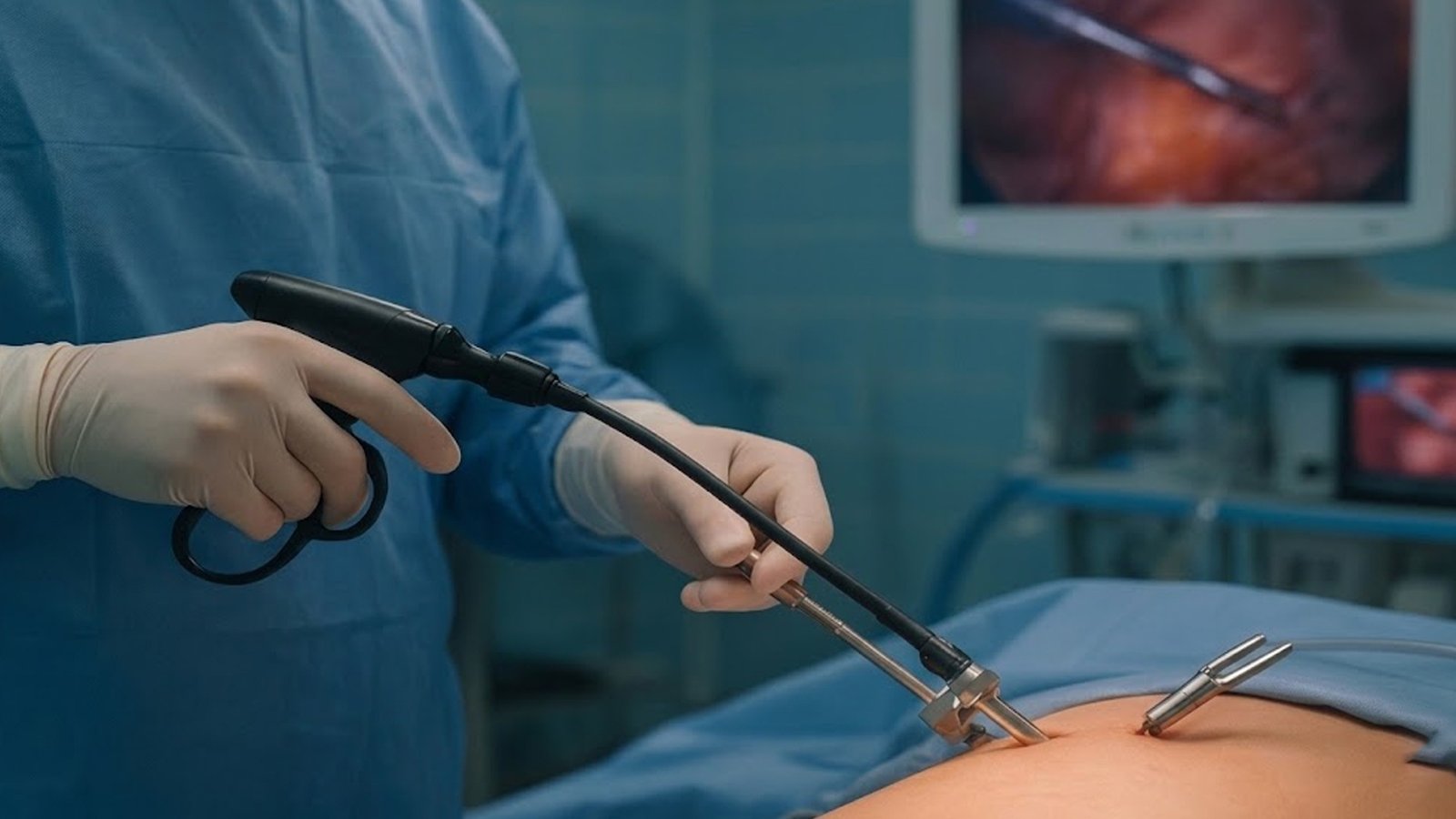
In this modern high-tech surgical space, the call to accuracy, safety, and efficiency has resulted in the proliferation of new instruments such as surgical clips. At AMG Medical, we realize that contemporary healthcare providers need dependable surgical instruments that can assist in clinical excellence as well as enhance operational performance. This solution has revolutionized the process of managing bleeding and fixation of tissues by surgeons during operations. It allows a more rapid and controlled procedure as compared to the conventional ones and is particularly useful in minimally invasive surgery. Its capability to minimize operating time and still be highly accurate facilitates improved clinical outcomes in a variety of specialties.
Its effectiveness and safety are also confirmed by clinical research. One of the studies in PubMed Central points out that the laparoscopic surgery clip has reliable vessel closure with minimal complications. The results support its effectiveness in enhancing surgery and lowering risks during surgery.
With proven clinical value and increasing adoption, this surgical solution continues to play a critical role in advancing modern surgical practices.
What Are Surgical Clips?
These are sterile medical equipment instruments, usually made of high-grade titanium or high-grade polymers, used to clamp blood vessels or ducts in the course of surgery. In AMG Medical, the accuracy of the surgical instruments is controlled by their precision, which makes it possible to use them effectively with the help of specialized tools and allows the surgeons to work more accurately with a minimum of tissue damage.
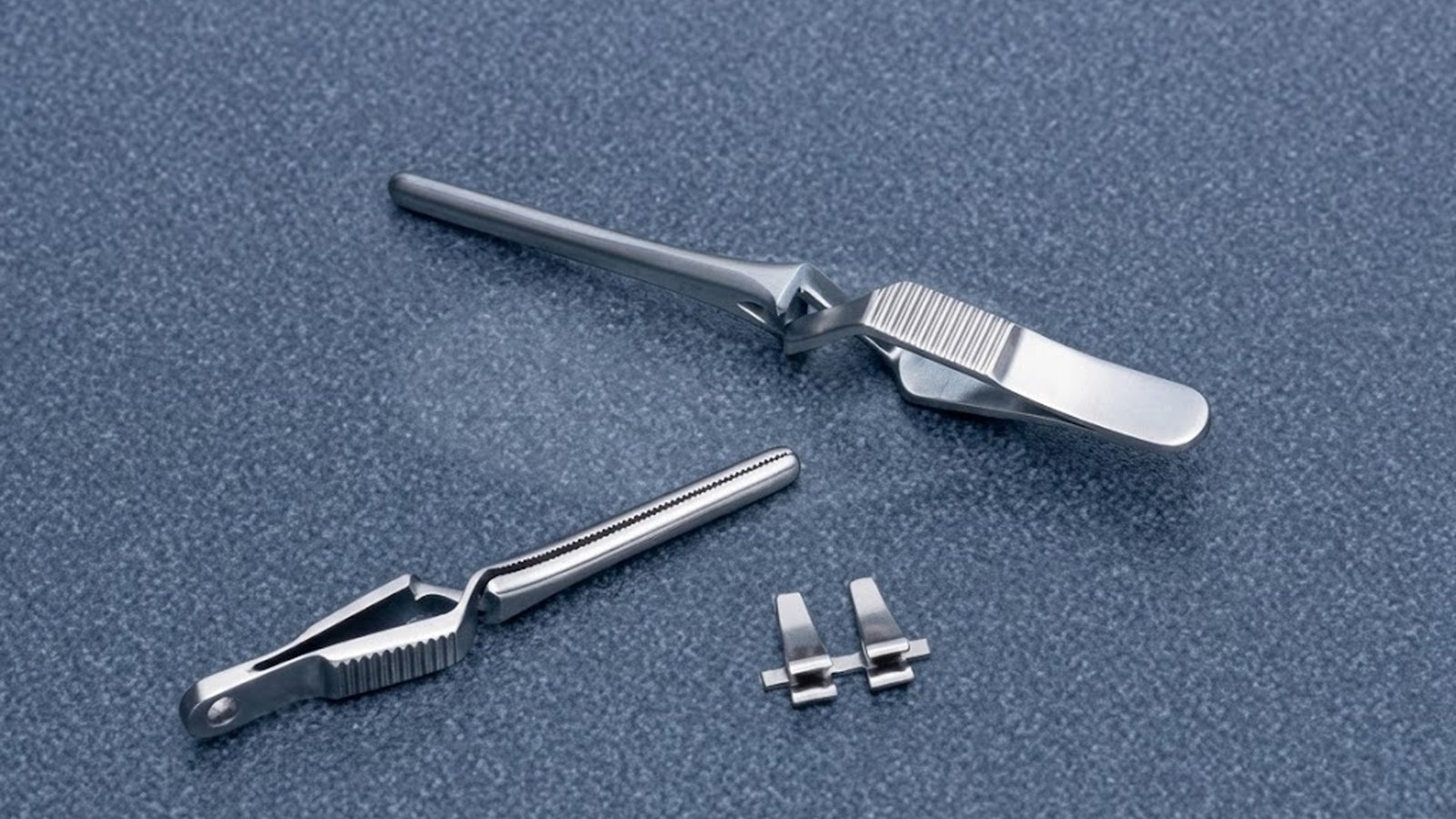
Why Choose Surgical Clips for Effective Medical Procedures?
The reason why this solution will be selected is the fact that it improves surgical performance and patient outcomes. This is the reason why it is popular in contemporary medical facilities:
Quick and more efficient processes.
They can also be used in seconds as opposed to traditional sutures, which take time to be stitched and knotted. This will decrease the total length of surgery clip and enhance the efficiency of the operating room, and reduce anesthesia exposure to patients.
Good and Stable Hemostasis.
They offer safe sealing of blood vessels, with the promise of effective bleeding control during and after surgery. This accuracy aids in minimizing problems and facilitates more secure surgical results.
Fit Greater Minimal Invasive Surgeries.
This tool is easy to use and has consistent performance in laparoscopic procedures where accuracy and space are crucial. It is also designed to enable surgeons to carry out precise surgical clipping in sensitive regions due to its small size.
Reduced Tissue Trauma
It also involves less manipulation of adjacent tissues as compared to traditional suturing techniques. This reduces tissue damage, decreases the risk of infection, and helps patients recover faster.
High Biocompatibility
Other materials used, like titanium, are non-reactive and very compatible with the human body. They are more resistant to corrosion and will not cause adverse reactions, which guarantees long-term safety and reliability.
Benefits of Surgical Clips in Modern Medical Practices
Good Hemostasis and Safe Closure.
It offers consistent and safe closure of blood vessels and tissues to enable surgeons to retain control throughout the surgery and enhance surgical safety.
Multipurpose in Medical Fields.
The solution is the most common in cardiovascular, gastrointestinal, and general surgical instruments, and it is thus very versatile to be applied to various clinical procedures.
Surgery and User-friendliness.
Its fast deployment enables surgeons to be more productive, cutting down on time spent on the procedures and enhancing workflow in busy surgical environments.
Better Patient Comfort and Recovery.
It reduces the trauma to tissues and therefore minimizes postoperative pain and enhances quicker healing, which translates into improved patient satisfaction.
Training Requirements and Considerations.
To be used correctly, it requires proper training. The healthcare providers should also be mindful of patient-specific aspects and be clear on usage.
Comparative Analysis: Surgical Clips vs. Traditional Methods
The use of surgical clips is rapidly becoming the method of choice in contemporary procedures because of its accuracy and effectiveness. They allow a less invasive method, quicker application, and better visualization in the operating room. These clips can be a convenient benefit to healthcare professionals concerned with quality and consistency compared to traditional approaches.
Conversely, conventional suturing methods might be time-consuming and might cause tissue injury when poorly done. This may lead to an increased recovery period in patients. Although new techniques need training, surgical tools like the Surgical Clip Applier can greatly improve the accuracy and effectiveness of using clips.
All these advantages notwithstanding, proper technique and constant professional training are the keys to successful implementation. Issues like a wrong placement of the clip migration are the reasons why it is important to develop skills and review procedures. When properly utilized, these medical equipment solutions provide high-quality and predictable results in accordance with the current surgical standards.
Cost-Effectiveness in Healthcare Settings
In the case of healthcare organizations, cost-effectiveness is an important aspect. The solution contributes to a decrease in the time spent on the procedure and the use of resources, which makes it a feasible solution in the current surgical setting. It is reported to be able to considerably decrease the total cost of surgery by increasing efficiency and decreasing complications.
Surgical Clip Appliers are used to improve the process of surgery, making it more efficient and reliable. Performance is further enhanced with the use of special applicators, which guarantee quicker and more precise application of surgical equipment. It helps in minimizing the operating time, recovery time, and enhancing patient throughput.
Conclusion
The AMG Medical innovation has become a critical part of contemporary surgical practice as it provides a stable and effective substitute for the conventional techniques. It is a useful solution for medical equipment in various specialties due to its capability to offer safe closure, shorten surgical time, and enhance recovery rates.
In a clinical and operational sense, it brings quantifiable advantages, specifically, improvement in safety, efficiency, and cost-effectiveness. With the constantly changing healthcare technology, continuous innovation in this field will enhance its functions in the enhancement of patient care and surgery standards.