
How AMG Medical Supported Surgical Efficiency Through Precision-Engineered Instruments
In modern surgical environments, precision, consistency, and instrument reliability play a critical role in supporting efficient clinical workflows. As surgical complexity increases, healthcare professionals require instruments that deliver dependable handling, ergonomic comfort, and long-term durability.
This case study explains how AMG Medical supported a multi-specialty surgical team by providing precision-engineered surgical instruments designed to improve workflow consistency, instrument handling, and operational efficiency.
Client Background
A senior general surgeon working within a multi-specialty hospital environment was performing a growing number of routine and advanced surgical procedures. As procedural demands increased, the surgical team identified the need for more consistent, ergonomic, and durable instruments that could better support precision-focused workflows.
The team sought a surgical instrument partner capable of delivering:
- International-quality manufacturing standards
- Reliable instrument performance
- Ergonomic usability
- Multi-specialty instrument availability
- Long-term operational consistency
Challenges
1. Inconsistent Instrument Handling
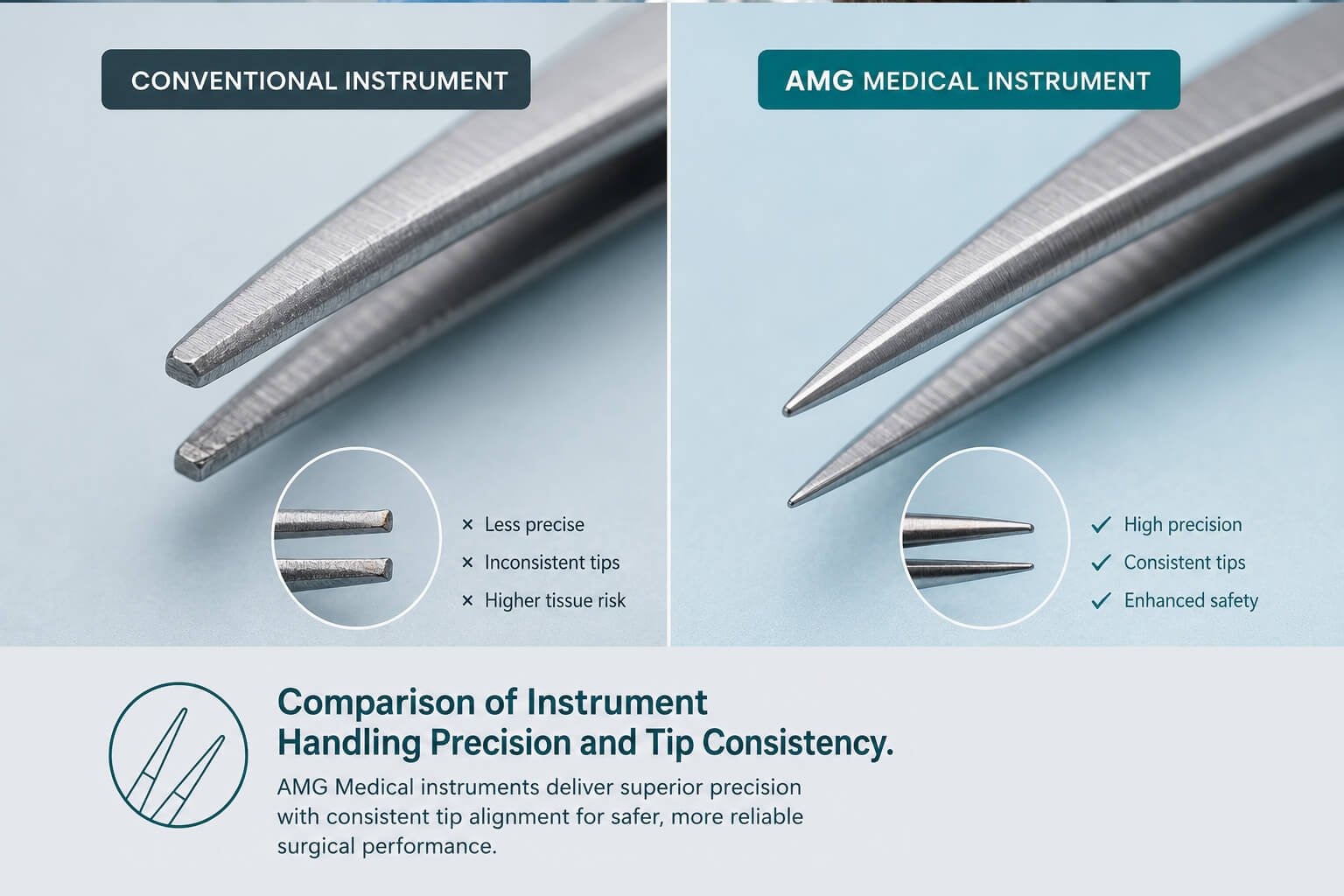
The existing instruments varied in grip balance, sharpness retention, and tactile response, creating inconsistencies during delicate surgical tasks and tissue handling.
2. Surgeon Discomfort During Longer Procedures
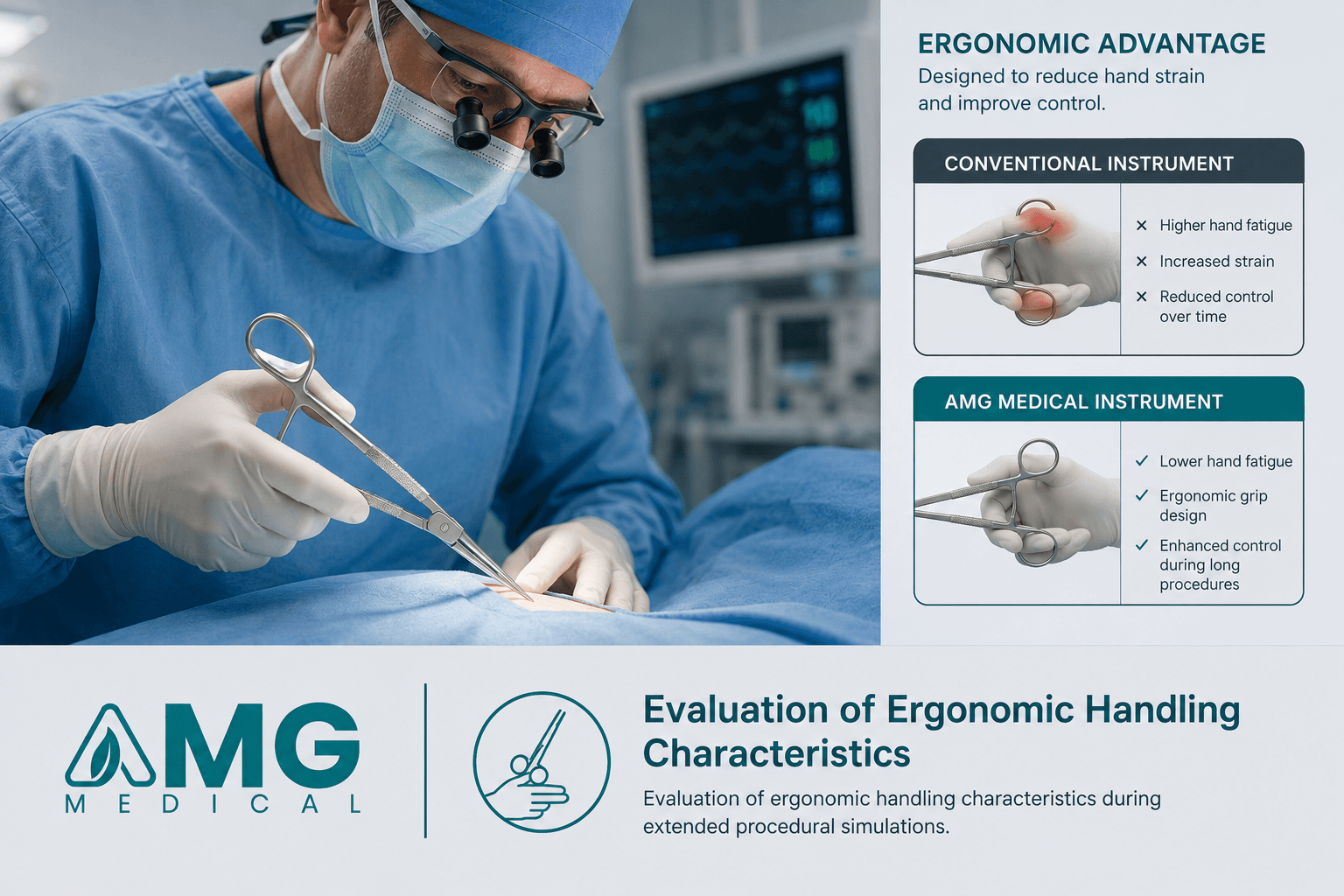
Some instruments lacked ergonomic optimization, contributing to hand strain and reduced comfort during extended procedures.
3. Frequent Maintenance & Replacement Needs
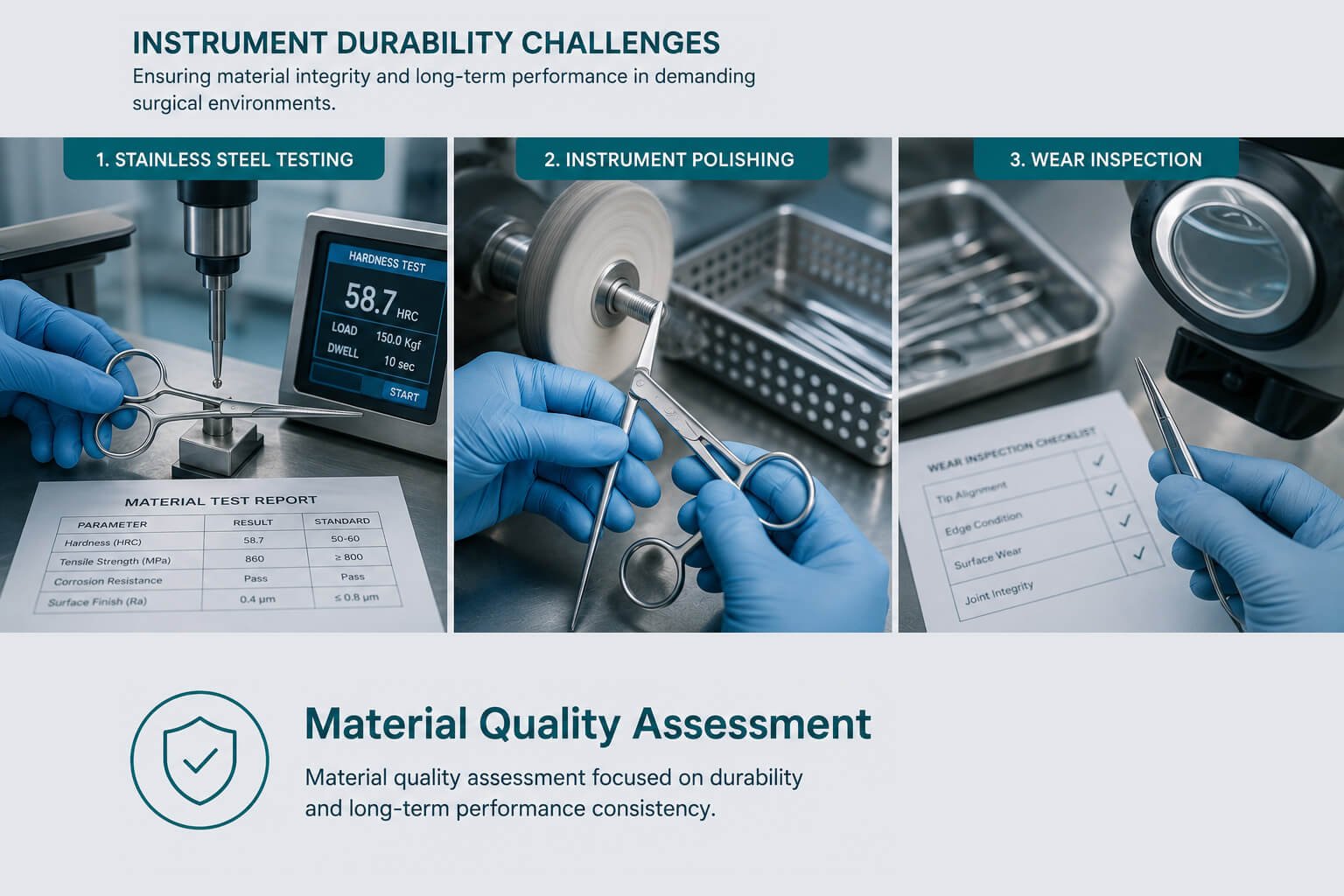
Wear-related inconsistencies and varying material quality increased the frequency of maintenance and replacement cycles.
4. Limited Procedure-Specific Optimization
The surgical team required better access to procedure-focused instruments that aligned more effectively with modern surgical workflows.
AMG Medical’s Strategic Approach
1. Precision-Engineered Surgical Instruments
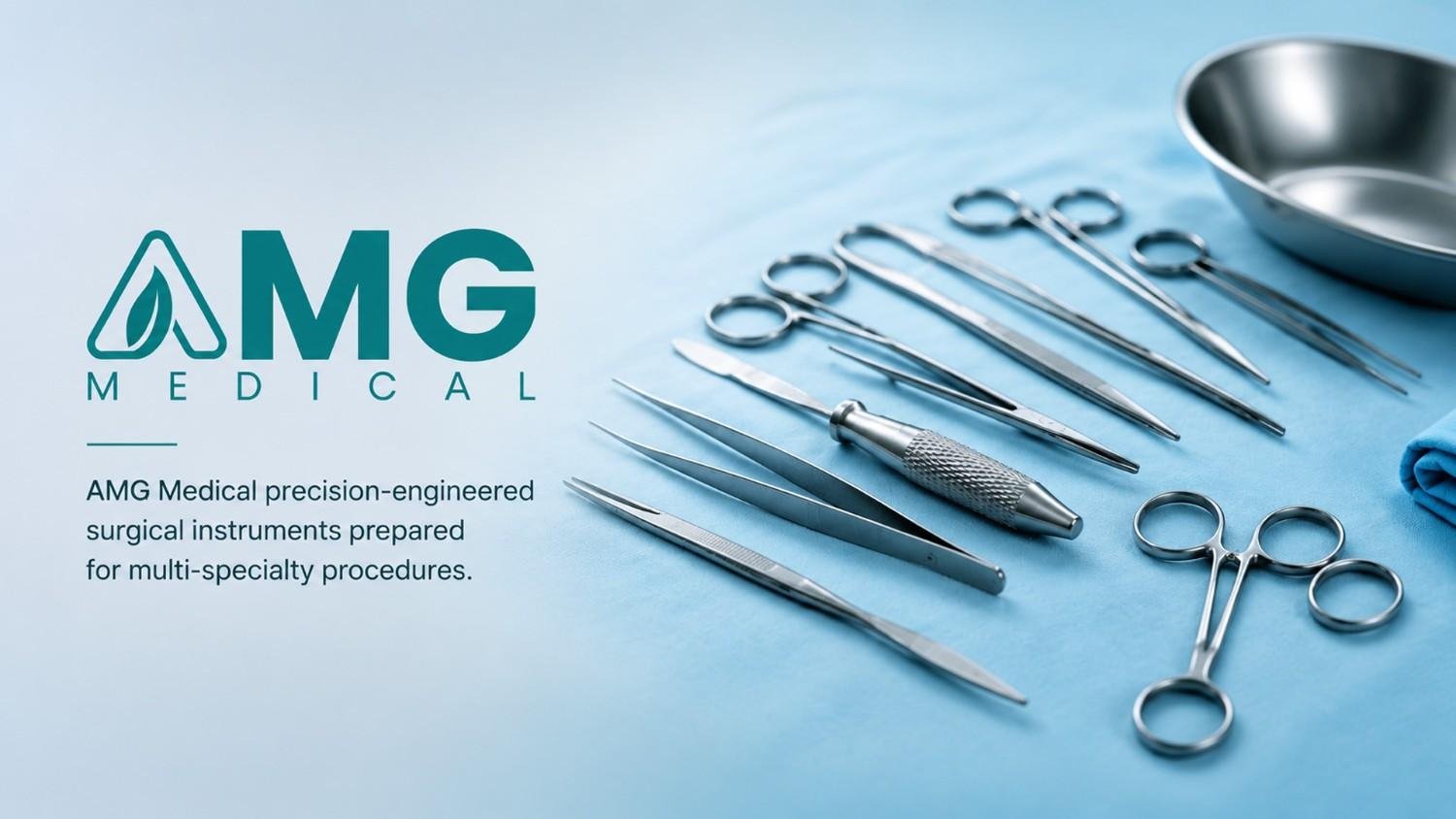
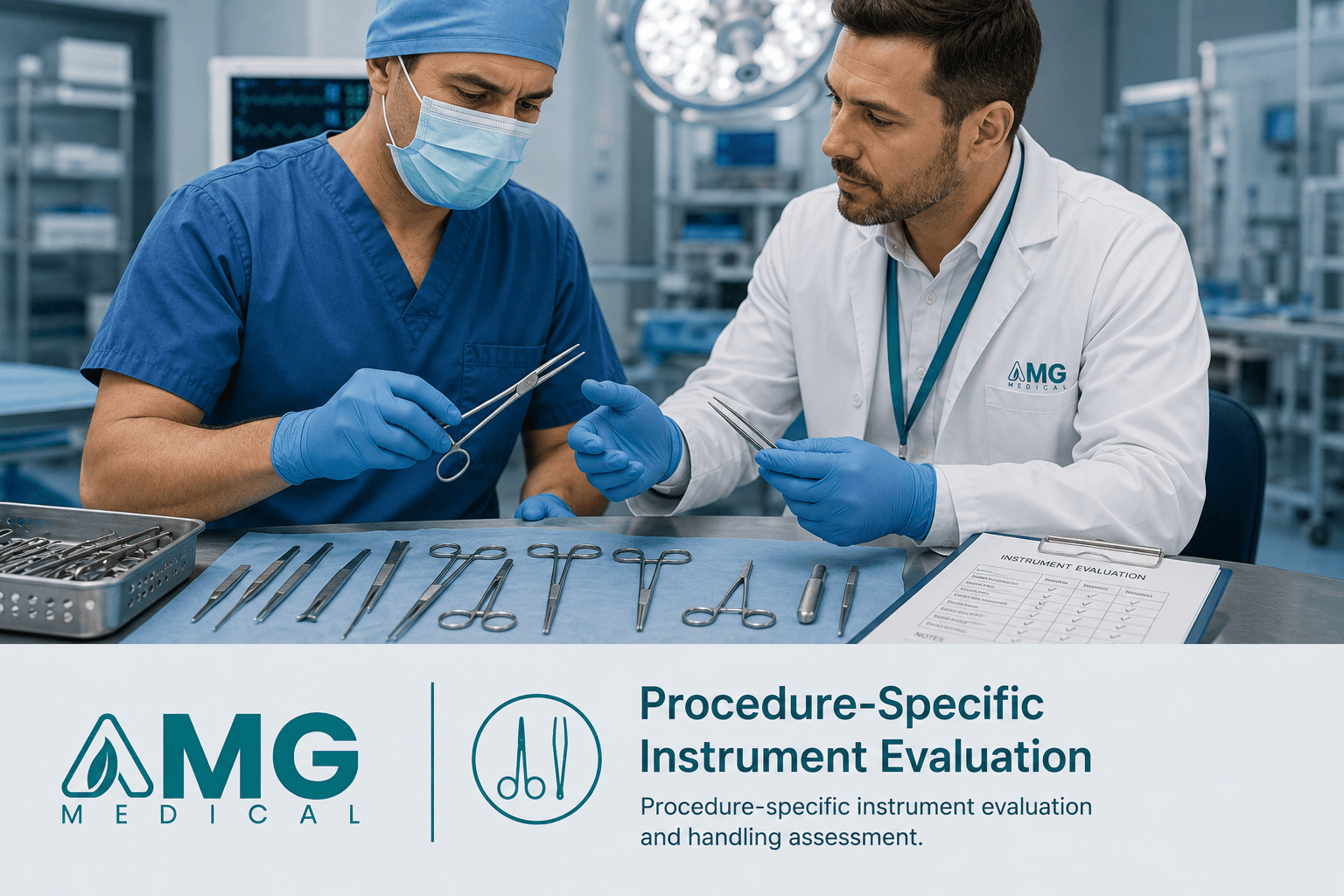
AMG Medical supplied a curated range of precision-focused surgical instruments manufactured according to internationally recognized quality standards. The instruments were selected to support handling consistency, control, and workflow reliability across multiple surgical applications.
2. Ergonomic Instrument Design
The instruments featured surgeon-focused ergonomic handling characteristics intended to support grip stability and user comfort during prolonged procedures.
3. Durable Surgical-Grade Materials
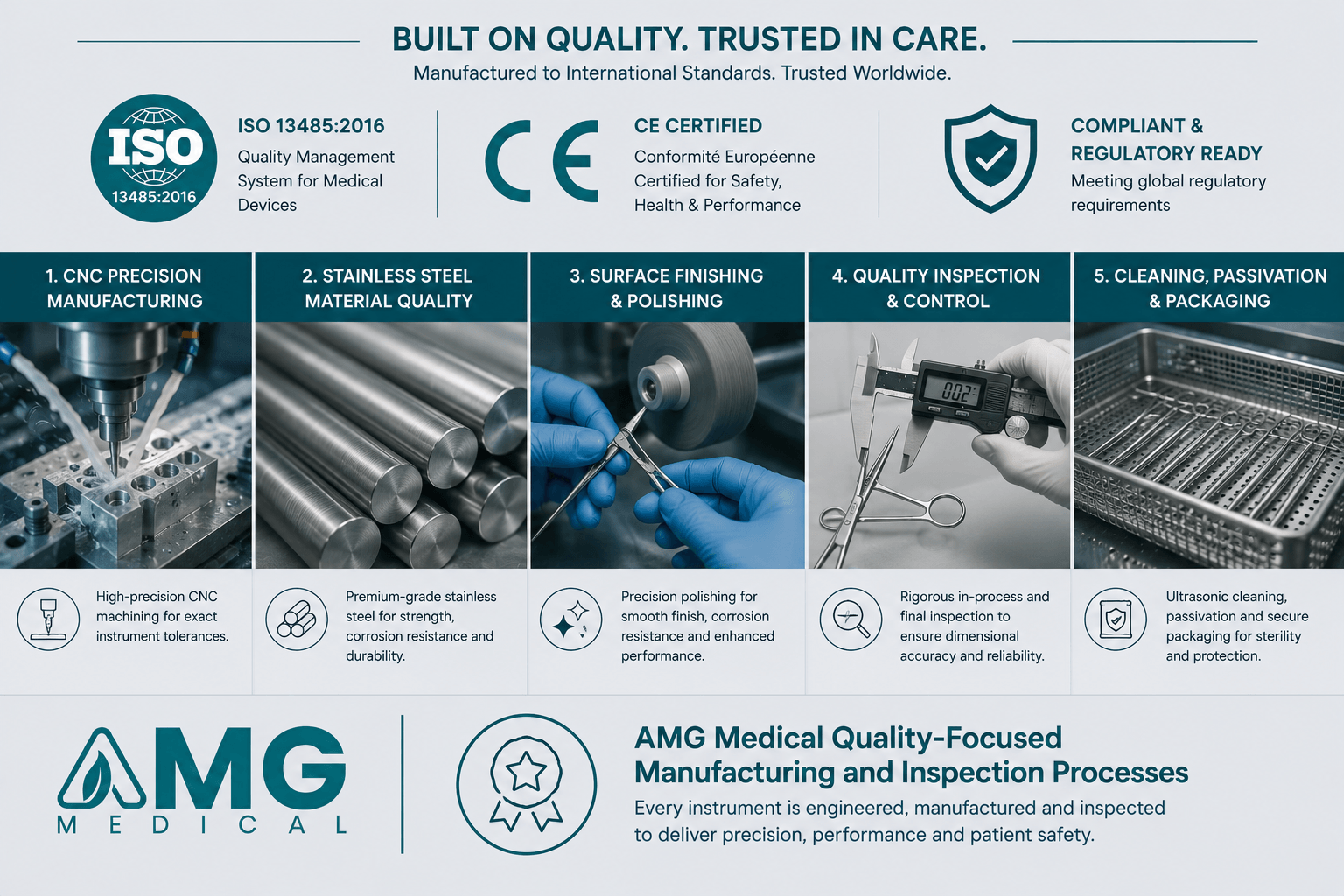
AMG Medical instruments were manufactured using surgical-grade stainless steel designed for durability, corrosion resistance, and long-term operational reliability.
4. Multi-Specialty Instrument Support
The surgical team gained access to a broader range of specialty-specific instruments, helping improve procedural organization and tray standardization.
Implementation Process
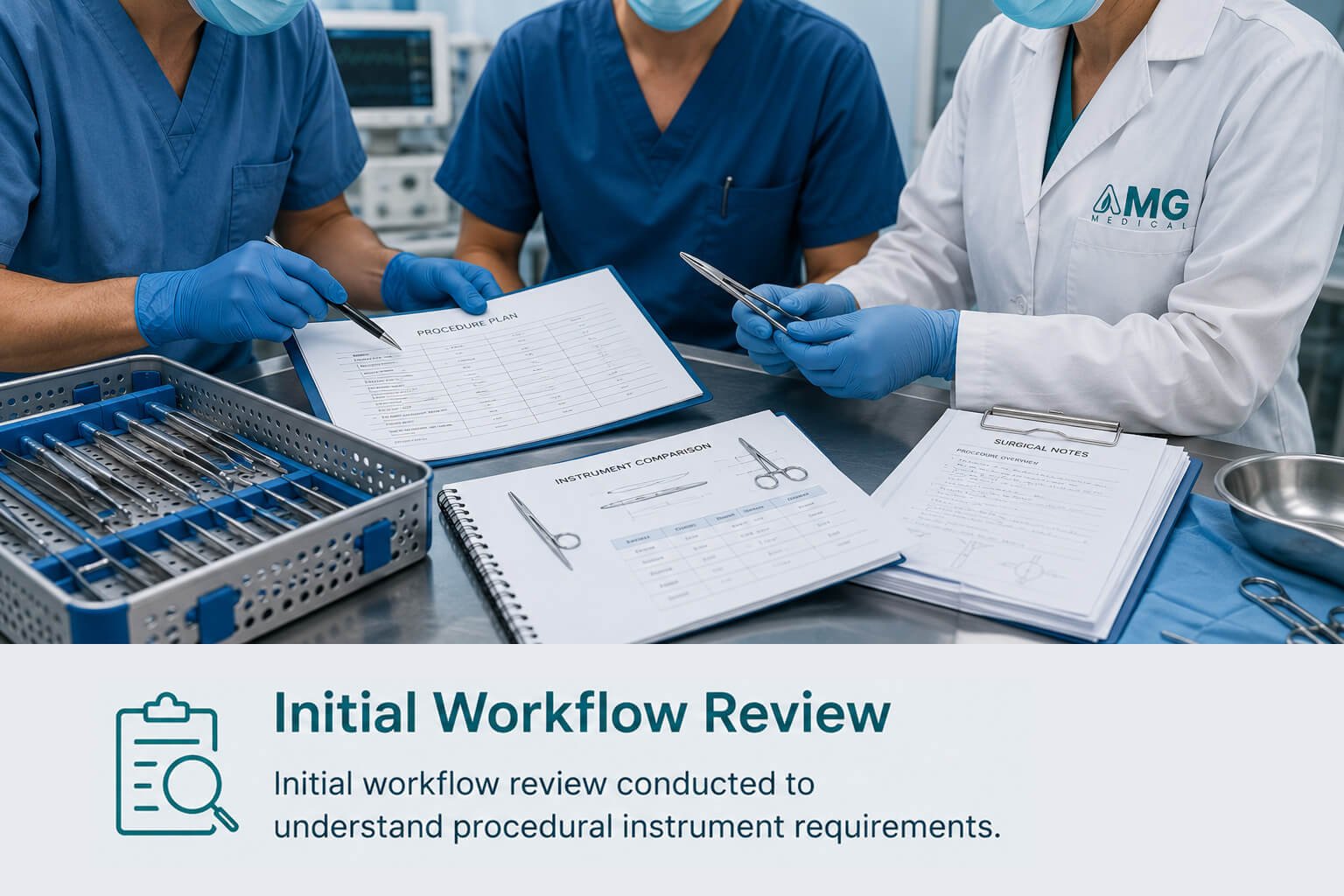
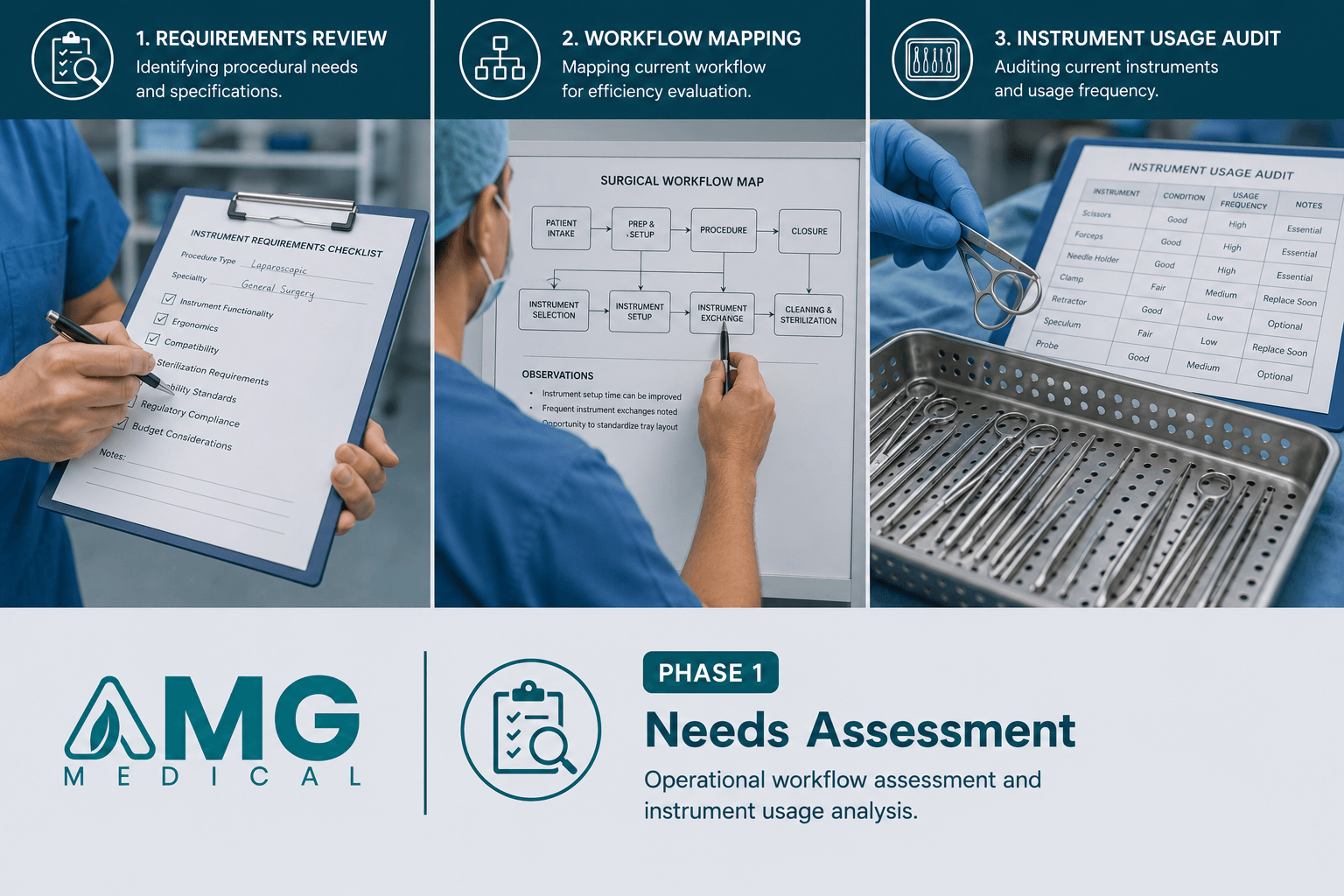
Phase 1: Workflow & Needs Assessment
AMG Medical conducted an operational assessment focused on:
- surgical workflow requirements,
- instrument usage patterns,
- handling preferences,
- and areas where workflow consistency could be improved.
The evaluation helped identify opportunities for better instrument standardization and ergonomic optimization.
Phase 2: Instrument Selection & Integration
Based on the assessment findings, AMG Medical recommended a tailored instrument selection aligned with the surgical team’s procedural requirements.
The integration process was designed to support smooth adoption while minimizing workflow disruption.
Phase 3: Team Familiarization & Handling Guidance
The surgical team received guidance on:
- instrument handling,
- care procedures,
- cleaning protocols,
- and maintenance best practices.
This supported smoother operational adaptation and long-term instrument performance.
Phase 4: Continuous Operational Feedback
AMG Medical maintained ongoing communication with the surgical team to gather operational feedback related to:
- handling consistency,
- usability,
- workflow efficiency,
- and instrument durability.
This feedback-supported approach enabled continuous refinement and long-term relationship support.
Results & Operational Impact
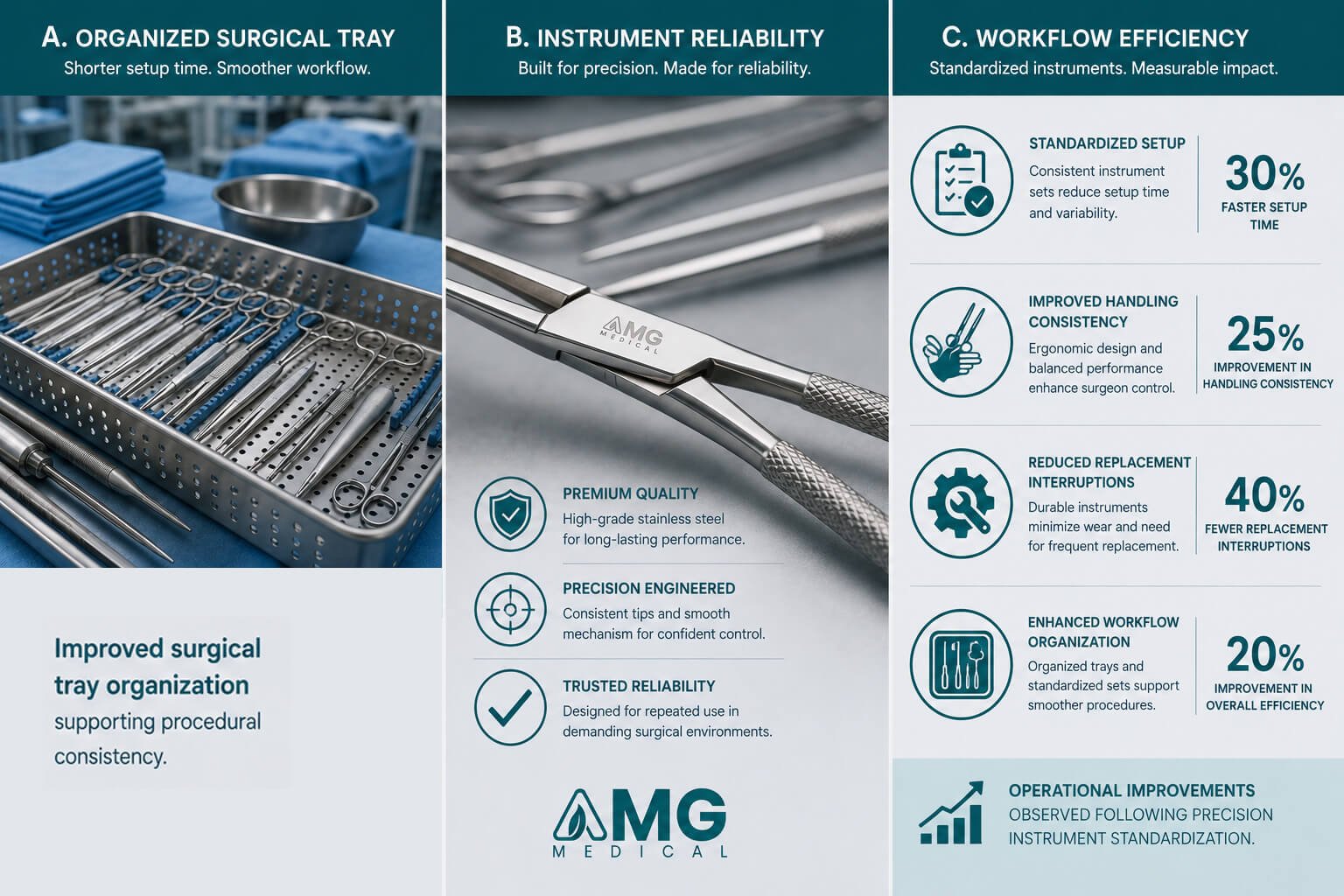
Following implementation, the surgical team reported improvements in:
- handling consistency,
- grip stability,
- workflow organization,
- and instrument reliability during procedures.
The ergonomic characteristics of the instruments also helped support surgeon comfort during extended operating sessions.
Additionally, improved instrument standardization contributed to smoother tray preparation and reduced workflow interruptions related to instrument replacement and maintenance.
The case demonstrates how precision-focused surgical instruments can help support operational consistency, clinician confidence, and organized surgical workflows in demanding healthcare environments.
Conclusion
This representative case study reflects AMG Medical’s commitment to supporting healthcare professionals through precision-engineered surgical instruments designed for reliability, usability, and workflow consistency.
By combining quality-focused manufacturing, ergonomic design, and multi-specialty support, AMG Medical continues to help healthcare providers build efficient and dependable surgical environments globally.