

Introduction
Reliable medical equipment repairs are essential for delivering timely and effective patient care. When critical devices experience unexpected failures, healthcare facilities risk delayed procedures, reduced operational efficiency, and increased maintenance costs. To address these challenges, AMG Medical partnered with a leading healthcare provider in the United States to improve equipment reliability through responsive repair services and a proactive maintenance strategy.
By combining rapid technical support, preventive maintenance, and structured equipment management, the organization minimized equipment downtime, maintained uninterrupted clinical operations, and strengthened patient care across multiple departments.
Client Background
Horizon Valley Medical Center is a large multi-specialty healthcare facility serving thousands of patients each month through its emergency department, operating rooms, intensive care units, diagnostic imaging center, and outpatient clinics.
As patient admissions continued to increase, Jennifer Lawson and her clinical engineering team encountered growing challenges in maintaining the hospital’s expanding inventory of biomedical equipment. Frequent equipment failures, delayed repairs, and inconsistent maintenance schedules began affecting clinical workflows, placing additional pressure on healthcare professionals responsible for delivering uninterrupted patient care.
Recognizing the need for a more reliable maintenance partner, Horizon Valley Medical Center collaborated with AMG Medical to establish a comprehensive equipment repair program designed to improve reliability, reduce downtime, and support continuous clinical operations.
The Challenge: Equipment Downtime Affecting Critical Care
The hospital depended on hundreds of biomedical devices to support daily patient care, diagnostics, surgical instruments procedures, and emergency services. As equipment utilization increased, unexpected breakdowns became more frequent, making it difficult for clinical teams to maintain uninterrupted workflows.
Repair requests often required extended response times, while inconsistent preventive maintenance allowed minor technical issues to develop into major equipment failures. Some departments were forced to reschedule procedures due to limited equipment availability, increasing operational pressure and reducing overall efficiency.
Without a structured maintenance strategy, the hospital faced rising repair costs, growing maintenance backlogs, and unnecessary disruptions that affected both staff productivity and patient experience.
Strategic Approach
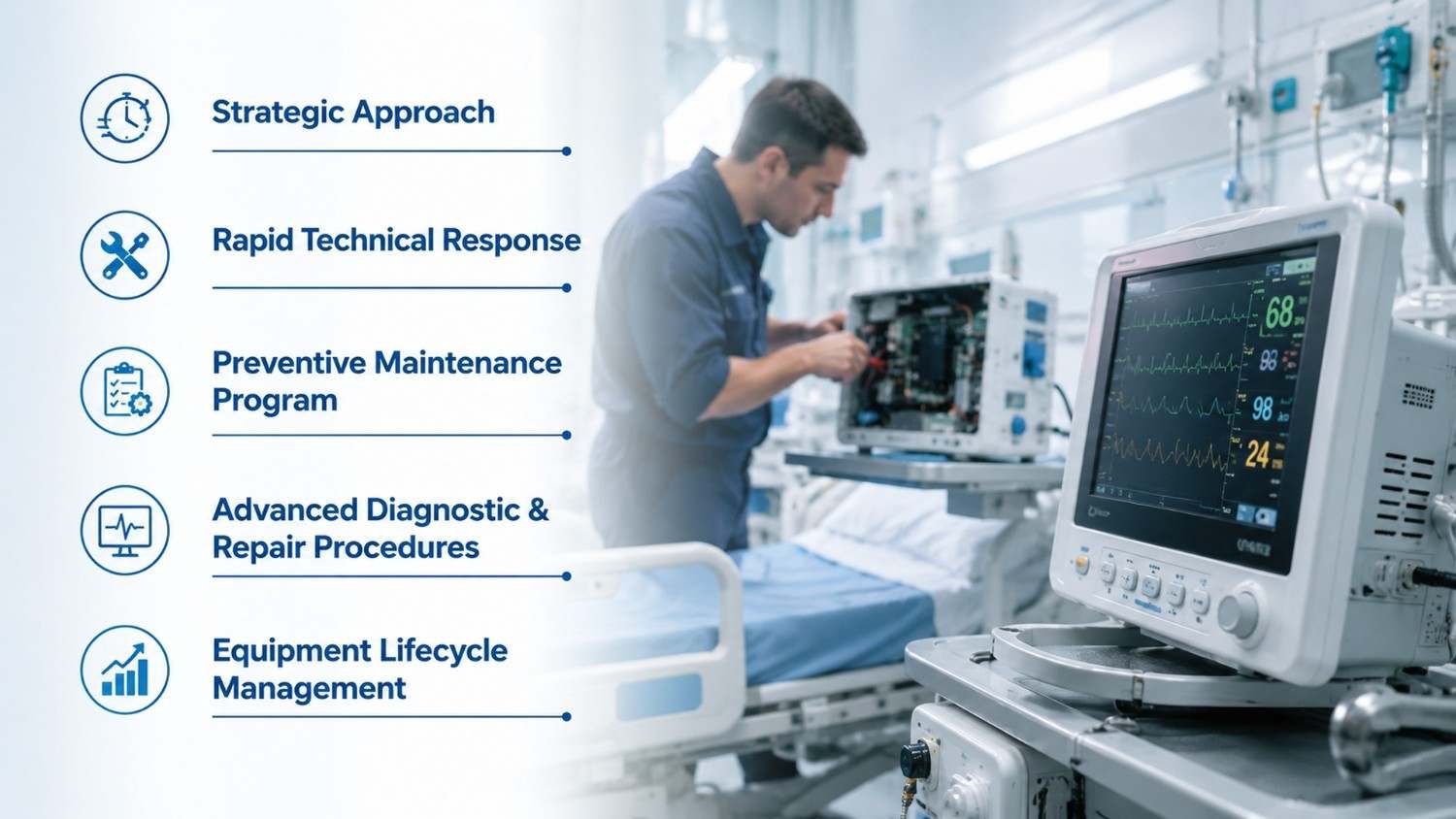
Rapid Technical Response
A dedicated technical support process was implemented to ensure equipment failures were assessed and addressed as quickly as possible. Priority response protocols enabled critical devices to be restored with minimal interruption to hospital operations.
Preventive Maintenance Program
A comprehensive preventive maintenance schedule was established to identify potential issues before they resulted in equipment failure. Routine inspections, calibration, performance testing, and servicing improved long-term equipment reliability while reducing unexpected breakdowns.
Advanced Diagnostic & Repair Procedures
Modern diagnostic tools and standardized repair procedures were introduced to improve repair accuracy and reduce service turnaround times. Every repaired device underwent detailed testing before returning to clinical use.
Equipment Lifecycle Management
Maintenance records, repair history, and equipment performance data were analyzed to support long-term planning. This enabled hospital leadership to make informed decisions regarding future upgrades, replacements, and maintenance priorities.
Implementation Process
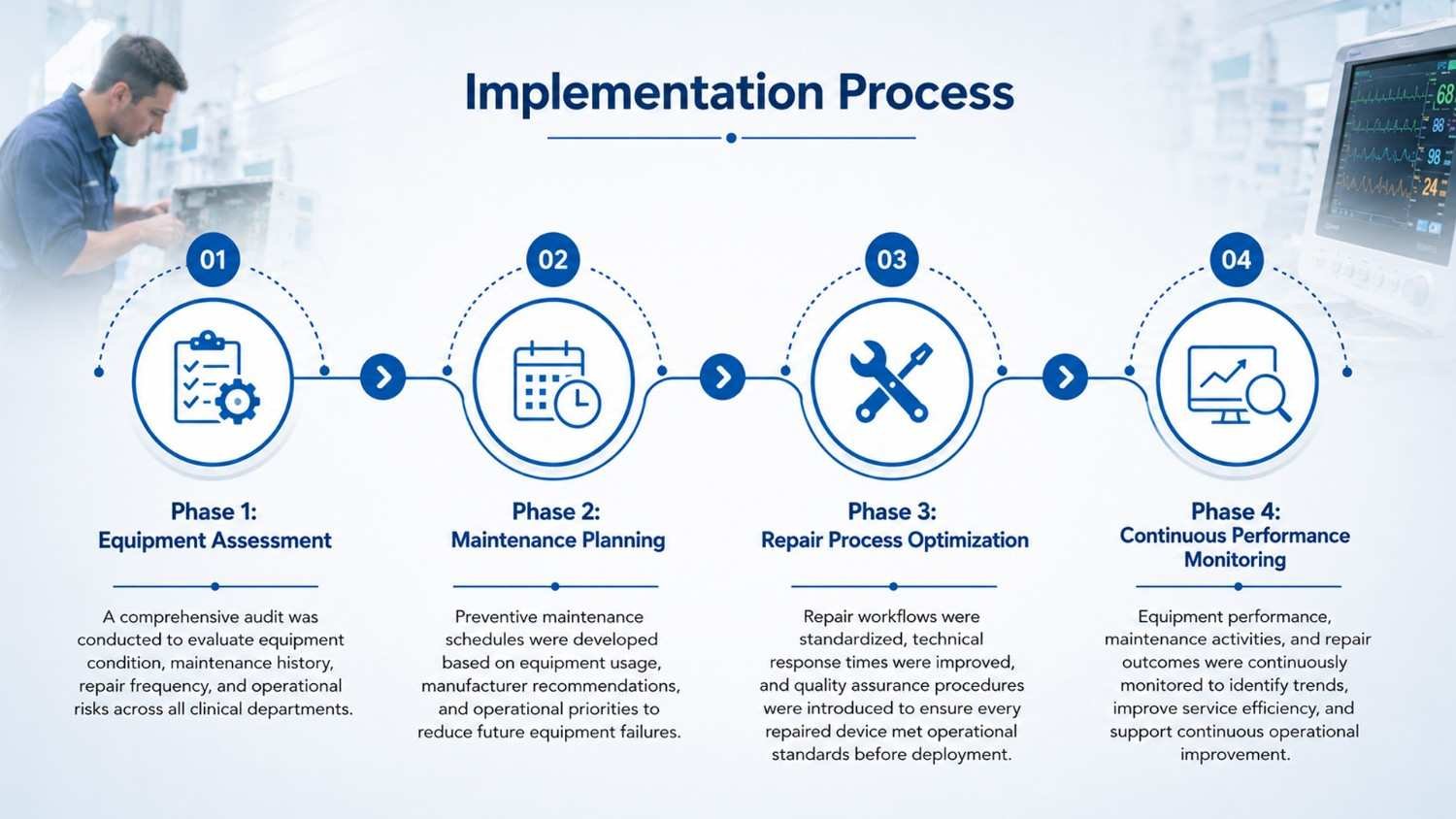
Phase 1: Equipment Assessment
A comprehensive audit was conducted to evaluate equipment condition, maintenance history, repair frequency, and operational risks across all clinical departments.
Phase 2: Maintenance Planning
Preventive maintenance schedules were developed based on equipment usage, manufacturer recommendations, and operational priorities to reduce future equipment failures.
Phase 3: Repair Process Optimization
Repair workflows were standardized, technical response times were improved, and quality assurance procedures were introduced to ensure every repaired device met operational standards before deployment.
Phase 4: Continuous Performance Monitoring
Equipment performance, maintenance activities, and repair outcomes were continuously monitored to identify trends, improve service efficiency, and support continuous operational improvement.
Results & Impact
The implementation of the new repair and maintenance strategy significantly improved equipment availability throughout the healthcare facility. Faster repair response times reduced equipment downtime, allowing clinical departments to maintain uninterrupted patient care and daily operations.
Preventive maintenance reduced unexpected failures, while improved repair processes extended equipment lifespan and lowered long-term maintenance expenses. Hospital leadership also gained greater visibility into equipment performance, enabling more effective maintenance planning and resource allocation.
Key Outcomes
- Reduced equipment downtime across critical clinical departments
- Faster repair response and equipment restoration
- Improved preventive maintenance performance
- Increased equipment reliability and operational readiness
- Reduced procedure delays caused by equipment failures
- Extended equipment service life
- Lower long-term maintenance costs
- Improved clinical efficiency and patient care continuity
Conclusion
Maintaining reliable medical equipment is essential for ensuring safe, efficient, and uninterrupted healthcare delivery. By implementing a proactive repair strategy, preventive maintenance program, and continuous performance monitoring, Horizon Valley Medical Center successfully strengthened its clinical operations while minimizing equipment-related disruptions.
This case study demonstrates how a structured biomedical equipment repair program can improve operational efficiency, enhance equipment reliability, and support better patient outcomes. Through responsive technical expertise and a commitment to service excellence, healthcare organizations can build a resilient maintenance strategy that supports long-term clinical success.