


Overview
Managing procurement across multiple hospital departments can be a complex and resource-intensive process. Different specialties often require unique surgical instruments, medical equipment, and supplier relationships, creating operational inefficiencies and administrative burdens. This case study explores how AMG Medical helped Dr. Faisal, Director of Procurement & Supply Chain at Al Noor Specialist Medical Center, a leading healthcare facility in Riyadh, Saudi Arabia, streamline procurement operations by consolidating sourcing across multiple specialties under a single trusted partner. The result was improved efficiency, standardized product quality, reduced procurement complexity, and enhanced operational performance across the organization.
Client Background
Dr. Faisal, Director of Procurement & Supply Chain at Al Noor Specialist Medical Center, oversees purchasing and supply chain operations for a large healthcare network serving thousands of patients annually across Saudi Arabia. The hospital supports multiple departments, including general surgery, orthopedics, ENT, cardiology, gynecology, and dentistry.
As the organization expanded its clinical services and patient volumes continued to grow, managing multiple suppliers across different departments became increasingly challenging. Procurement teams faced growing administrative workloads, inconsistent product standards, and difficulties maintaining supplier coordination across specialties. The hospital needed a procurement solution capable of supporting multiple departments while ensuring consistent quality, operational efficiency, regulatory compliance, and long-term scalability.
Challenges
1. Multiple Suppliers Across Departments
Each department relied on separate vendors for specialized instruments and medical products. This fragmented procurement model increased administrative complexity, created inefficiencies in purchasing processes, and made supplier management more difficult.
2. Inconsistent Product Standards
Different suppliers often delivered varying levels of quality, resulting in inconsistencies across departments. Maintaining standardized clinical performance and ensuring product reliability became increasingly challenging for surgical and healthcare teams.
3. Increased Procurement Workload
Managing multiple contracts, purchase orders, delivery schedules, and supplier communications required significant time and resources. Procurement teams spent considerable effort coordinating vendors rather than focusing on strategic operational improvements.
4. Limited Visibility and Inventory Control
With products sourced from numerous vendors, inventory management became more complicated. This occasionally led to overstocking certain items while experiencing shortages of critical products required for patient care.
Strategic Approach
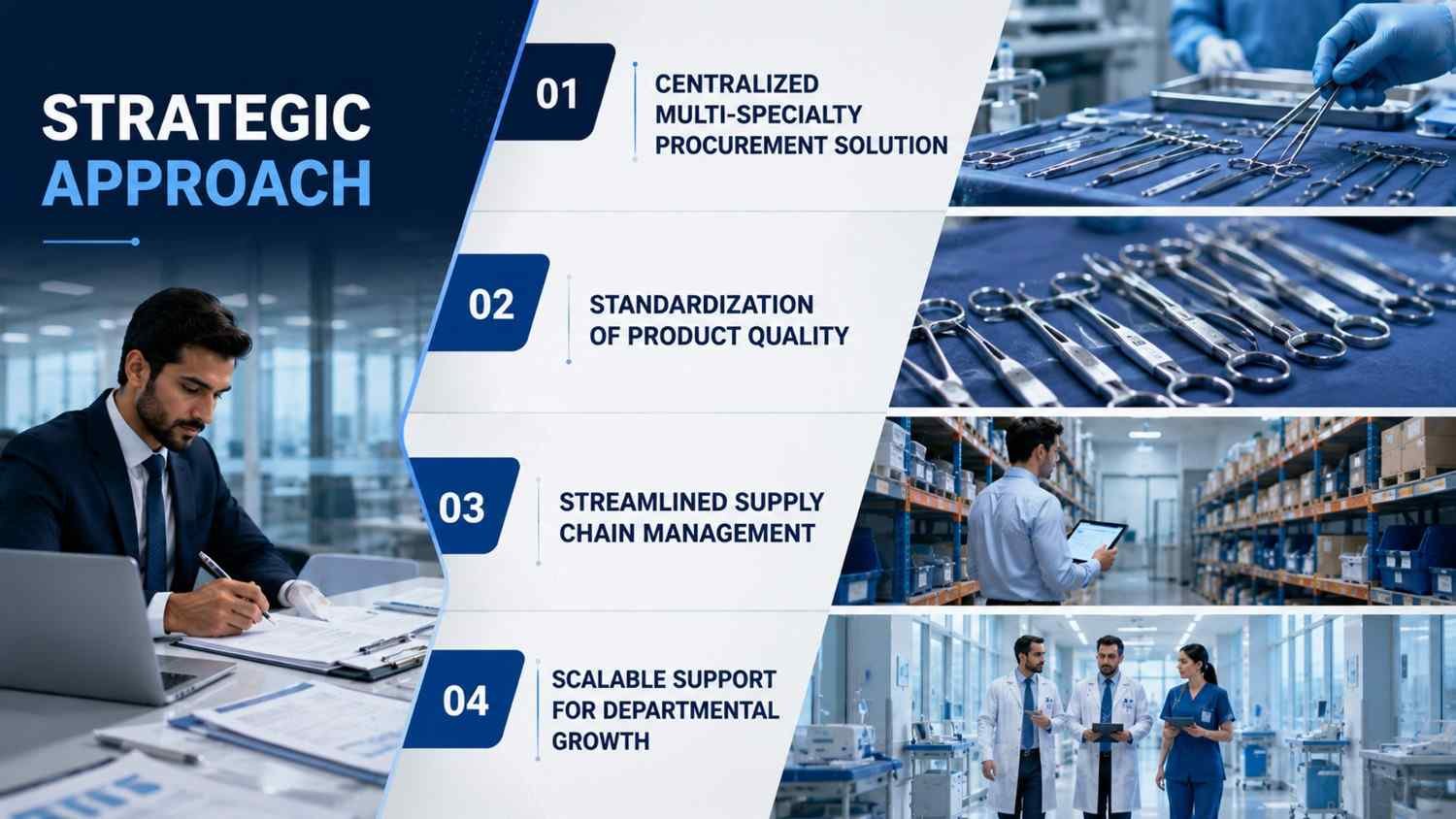
1. Centralized Multi-Specialty Procurement Solution
A comprehensive portfolio of surgical instruments and medical equipment covering multiple specialties was introduced to support centralized purchasing. This enabled the hospital to consolidate procurement activities while maintaining access to department-specific products and specialized healthcare solutions.
2. Standardization of Product Quality
Certified, precision-engineered surgical instruments manufactured to international quality standards were implemented across departments. This helped establish greater consistency in product performance while supporting reliable clinical outcomes throughout the healthcare facility.
3. Streamlined Supply Chain Management
A coordinated procurement and distribution strategy was implemented to simplify ordering, improve inventory planning, and ensure timely product availability. This reduced operational complexity while improving overall supply chain efficiency.
4. Scalable Support for Departmental Growth
As clinical demand increased, procurement systems and supply processes were designed to adapt to evolving departmental requirements. This ensured long-term flexibility without adding unnecessary administrative burdens.
Implementation Process
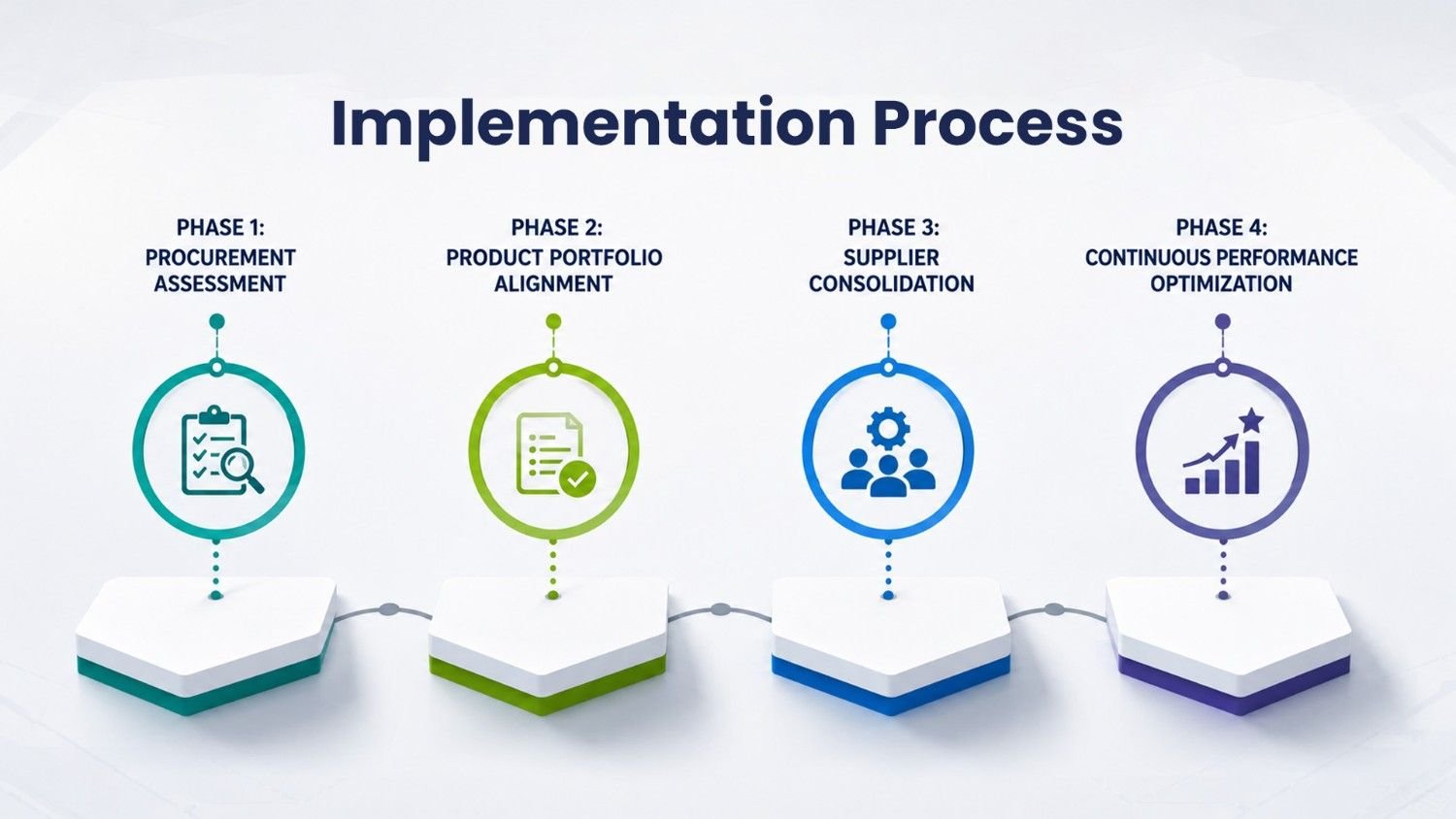
Phase 1: Procurement Assessment
A detailed evaluation was conducted to analyze supplier relationships, purchasing patterns, inventory management practices, and departmental requirements. This assessment identified opportunities to consolidate procurement processes and improve operational efficiency across the organization.
Phase 2: Product Portfolio Alignment
A customized procurement framework was developed to ensure that each department received the specialized instruments and medical products required for daily operations. Product selection was aligned with clinical needs while supporting centralized purchasing objectives.
Phase 3: Supplier Consolidation
Multiple supplier relationships were streamlined into a unified procurement model. Ordering processes, delivery schedules, and inventory management systems were aligned to support greater efficiency, visibility, and consistency.
Phase 4: Continuous Performance Optimization
Regular performance reviews and ongoing collaboration helped maintain consistent service levels, reliable product availability, and continuous process improvements. This ensured long-term procurement efficiency and sustainable operational success.
Results & Impact
The transition to a centralized procurement model significantly reduced administrative complexity across the organization. Procurement teams spent less time managing vendors, contracts, and order coordination, allowing them to focus on strategic initiatives that improved overall operational performance.
Standardized product quality improved consistency across surgical and clinical departments, increasing confidence among healthcare professionals and reducing variability in instrument performance. Enhanced inventory visibility also helped optimize stock levels, reduce waste, and improve purchasing decisions.
In addition, streamlined supply chain processes improved product availability and reduced procurement delays, helping departments maintain uninterrupted clinical operations. By consolidating sourcing across multiple specialties, Al Noor Specialist Medical Center achieved greater efficiency, stronger inventory control, and improved procurement outcomes throughout the organization.
Client Testimonial
“What began as an effort to simplify purchasing quickly evolved into a strategic advantage for our organization. Having a single trusted partner supporting multiple specialties has improved efficiency, reduced administrative burden, and strengthened our ability to deliver exceptional patient care.”
— Dr. Faisal, Director of Procurement & Supply Chain, Al Noor Specialist Medical Center
Conclusion
This case study demonstrates how healthcare organizations can simplify complex procurement operations by partnering with a trusted supplier capable of supporting multiple specialties through one integrated solution. Through precision, reliability, and scalable support, AMG Medical helped Al Noor Specialist Medical Center streamline procurement processes, improve consistency, and strengthen operational performance across departments.
By combining high-quality surgical solutions, efficient supply chain management, and a commitment to long-term partnership, healthcare providers can reduce procurement complexity while maintaining the highest standards of patient care and clinical excellence.